

Maddy summaryThe PROVE IT Act of 2024 directs the U.S. Energy Secretary to study and publicly report on the greenhouse gas emissions intensity of key U.S. manufactured products (like steel, aluminum, lithium batteries, and critical minerals) compared to those produced in "covered countries" (including the EU, China, and major trading partners). It requires a transparent methodology for calculating emissions data, identifies gaps in existing data, and establishes a public online database showing U.S. emissions advantages for these products. The bill also mandates an annual report on foreign countries using forced labor or human rights abuses in the production of critical minerals or rare earths. Importantly, it clarifies the study does not create new taxes, fees, or mandatory reporting requirements.
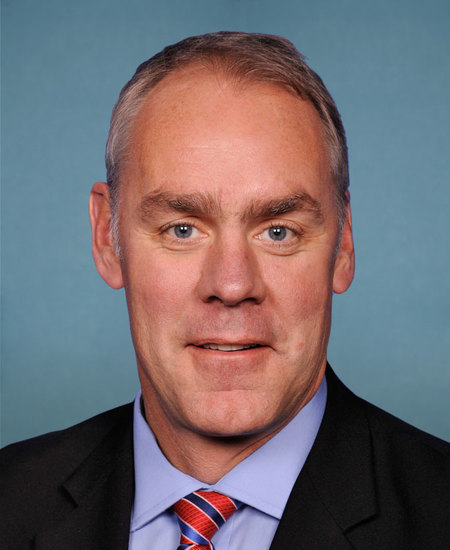
Rep. Ryan K. Zinke
Sponsored bills
Maddy summaryThis bill cancels Executive Order 14072, which aimed to protect old-growth forests, and prohibits the Agriculture and Interior Secretaries from implementing, enforcing, or developing rules related to that order or similar policies. It specifically blocks the finalization of a planned environmental review for managing old-growth forests across national forests, as outlined in a June 2024 Forest Service notice. The bill directly affects federal forest management decisions by halting actions tied to the canceled executive order. It focuses on reversing specific administrative steps rather than creating new environmental standards.
Maddy summaryThis bill removes a requirement for ambulatory surgical centers participating in Medicare to report the COVID-19 vaccination status of their healthcare workers. Specifically, it directs the Secretary of Health and Human Services to revise Medicare regulations (42 CFR §§ 416.300-416.330) within 45 days of enactment to eliminate this reporting mandate. The change directly affects ambulatory surgical centers that receive Medicare funding, removing a specific administrative burden related to employee vaccination data. The bill focuses solely on modifying existing reporting rules, with no new funding or program requirements.
Maddy summaryThe Preserving Seniors’ Access to Physicians Act of 2023 increases the Medicare payment adjustment rate for physicians from 1.25% to 4.62%, directly affecting doctors who treat Medicare patients (primarily seniors). It also reduces the funding for the Medicaid improvement fund from $5,796,117,810 to $3,973,117,810. These changes impact Medicare providers and Medicaid programs, with the Medicare adjustment aimed at supporting physicians adjusting to payment changes. The bill does not specify how the Medicaid funding reduction relates to its stated goal of preserving seniors' access to physicians.
Maddy summaryThe Maximum Pressure Act (HR 6114) is a legislative proposal that would maintain and expand U.S. sanctions against Iran. The bill would codify existing sanctions, require Iran to meet 12 specific conditions before sanctions could be lifted (including ending support for terrorism, releasing hostages, and ending nuclear enrichment), and expand sanctions on Iran's Revolutionary Guard Corps and missile programs. It also establishes new reporting requirements for the U.S. government to monitor Iran's activities and the impact of sanctions. The legislation would require congressional review before any sanctions could be lifted or modified, preventing the executive branch from unilaterally easing restrictions.
Maddy summaryHR 5107, the Pandemic Unemployment Fraud Recoupment Act, extends the statute of limitations for enforcing fraud related to pandemic unemployment benefits from 3 years to 10 years across multiple programs, including Pandemic Unemployment Assistance, Federal Pandemic Unemployment Compensation, and Lost Wages Assistance. It requires states to recover overpayments from individuals who knowingly received benefits they weren’t entitled to, through deductions from future unemployment benefits, while maintaining existing due process protections like hearings before repayment. States may waive repayment if the overpayment wasn’t the individual’s fault or if repayment would be unfair. The bill applies directly to individuals who received pandemic-era unemployment benefits through fraudulent means, ensuring states have a longer timeframe to address these cases under established fraud procedures.
Maddy summaryHR 4961 requires U.S. Customs and Border Protection (CBP) to maintain the operating hours at all U.S. ports of entry along the U.S.-Canada border at or above the levels in effect before the COVID-19 pandemic's public health emergency declaration. This directly affects CBP operations and travelers, commercial truckers, and businesses relying on cross-border trade through these ports. The key provision mandates CBP to ensure hours equal to or greater than pre-pandemic schedules without requiring new approvals. The bill creates a concrete policy change by legally binding CBP to specific operational hours, avoiding any reduction below the 2019 baseline.
Maddy summaryThis bill creates a presumption that minerals from the Democratic Republic of Congo (DRC) containing cobalt and lithium, mined with child or forced labor, cannot be imported into the United States. It requires the U.S. government to develop an enforcement strategy to identify and block such imports, including monitoring supply chains and working with international partners. The bill mandates diplomatic efforts to address child and forced labor in the DRC's mining sector and establishes sanctions against foreign entities that facilitate or engage in such labor practices. The focus is on minerals critical for electric vehicles and electronics, which are heavily sourced from the DRC and processed in China, with specific attention to Chinese mining companies like China Molybdenum that dominate the DRC's cobalt sector.
Maddy summaryThis bill simplifies regulations for rural health clinics (RHCs) by reducing administrative burdens. It allows RHCs to contract with physician assistants and nurse practitioners (instead of requiring direct employment), updates the definition of "rural" to exclude areas with 50,000+ residents, and removes outdated lab service requirements by requiring only "prompt access" to clinical labs. These changes directly affect RHCs, enabling them to more flexibly staff and operate while complying with state practice laws. The amendments take effect January 1, 2024, applying to services provided on or after that date.
Maddy summaryHR 3033, the Solidify Iran Sanctions Act of 2023, repeals the expiration date (sunset) from the 1996 Iran Sanctions Act. This permanently maintains existing U.S. sanctions targeting Iran's weapons programs, ballistic missile development, and support for terrorism. The bill directly affects Iran's government and entities involved in these activities by ensuring sanctions remain in effect without needing periodic renewal. It does not impose new sanctions but preserves current policy by removing the automatic expiration provision.