

Maddy summaryHR 645, the National Constitutional Carry Act, would prevent all U.S. states and localities from requiring permits or imposing penalties for carrying firearms in public. It directly affects eligible U.S. citizens (including non-residents) who legally possess firearms under state and federal law, removing current permit requirements for public carry. The bill’s key provision amends federal law to invalidate any state or local law that criminalizes or discourages public firearm carry, except where private property owners clearly prohibit firearms or security screening occurs. This would override existing state permit laws, making permitless carry legal across all states and territories for qualified individuals.
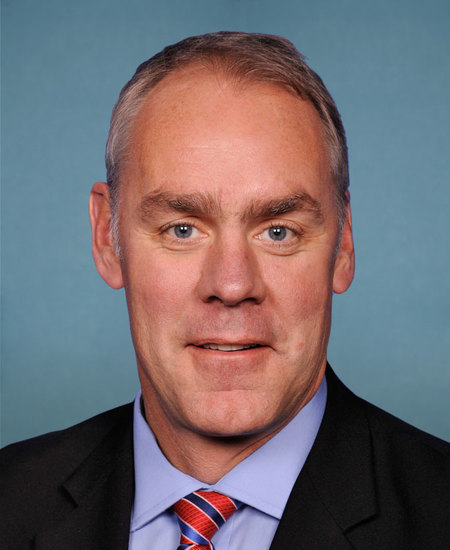
Rep. Ryan K. Zinke
Sponsored bills
Maddy summaryHR 703, the Main Street Tax Certainty Act, makes a key tax deduction permanent for small business owners. It removes the temporary sunset provision (subsection (i)) from Section 199A of the tax code, ensuring the qualified business income deduction remains available for eligible small businesses. This change directly affects pass-through business owners (like S-corps, partnerships, and sole proprietorships) who currently qualify for this deduction. The permanent change takes effect for tax years starting after December 31, 2025.
Maddy summaryHR 662 amends the tax code to change how oil and gas companies calculate taxable income related to intangible drilling and development costs. It allows companies to disregard certain depreciation and depletion expenses recorded on their financial statements when computing taxable income, effectively reducing their tax burden on these specific costs. The bill directly affects oil and gas producers who use intangible drilling costs in their operations. The changes apply to taxable years beginning after December 31, 2025. This is a tax code adjustment, not a direct policy change for energy production.
Maddy summaryHJRES 28 proposes a constitutional amendment to permanently fix the number of justices on the U.S. Supreme Court at nine. This would require ratification by 38 state legislatures (three-fourths of states) within seven years to become part of the Constitution. The amendment directly affects the structure of the Supreme Court, which has had nine justices since 1869 but could otherwise be altered by future congressional action. It does not change current court operations or create new laws, but instead seeks to make the nine-justice composition a permanent constitutional requirement.
Chiropractic Medicare Coverage Modernization Act of 2025 This bill expands Medicare coverage of chiropractic services to include all services provided by chiropractors, rather than only subluxation corrections through manual manipulation of the spine.
This joint resolution recognizes the sacrifice of veterans of the Vietnam War and commends them for their sacrifice to the United States. The joint resolution also urges the President to formally acknowledge the widespread mistreatment of such veterans as part of the ongoing Vietnam War Commemoration and issue a formal apology to the veterans and their families. Additionally, the joint resolution expresses urgent support for increased education to better reflect the sacrifice and treatment of Vietnam veterans.
Maddy summaryHR 404, the "Hearing Protection Act," reclassifies firearm silencers (devices that reduce gunfire noise) as firearms for federal tax and regulatory purposes. It imposes a 10% federal tax on silencers, requires the destruction of all existing federal silencer registration records within one year, and preempts state laws that tax or regulate silencers. The bill clarifies that silencers are treated as firearms under federal law, including for licensing and marking requirements, and defines "firearm silencer" to include specific components. Note: The bill’s title is misleading - it addresses firearm silencer regulation, not hearing protection for people.
Maddy summaryHR 450, the FORCE Act, prevents the U.S. government from removing Cuba from the State Sponsors of Terrorism list. It requires the President to make a specific determination under the 1996 LIBERTAD Act before Cuba can be removed. The bill directly affects Cuba's international designation status and U.S. foreign policy actions toward the country. It does not change existing law but blocks any removal until the specified determination is made. The provision applies to both the President and the Secretary of State.
Maddy summaryHR 28, the *Protection of Women and Girls in Sports Act of 2025*, amends Title IX to prohibit federally funded schools from allowing male-identified individuals (based on biological sex at birth) to compete on women’s or girls’ sports teams. It explicitly states that such participation would violate federal civil rights law, with exceptions only for training/practice that doesn’t displace female athletes from roster spots, competitions, scholarships, or other benefits. The bill mandates a Comptroller General study to define "other benefits" lost by girls when males compete in single-sex sports, including impacts on psychological well-being, scholarship access, and safe participation environments. This bill directly affects all athletic programs receiving federal funding, requiring compliance with its biological-sex-based eligibility rules.
Maddy summaryThis bill grants the Secretary of Homeland Security authority to temporarily suspend entry of certain individuals at U.S. borders to achieve "operational control" (defined as effective border management). It specifically applies to people seeking entry without proper documentation who would be denied entry under current law (e.g., lacking visas or asylum eligibility). The Secretary must block entry if they cannot detain or process these individuals as required by existing immigration law. States may also sue the government if they believe border security rules are violated.