

This joint resolution nullifies the final rule issued by the Consumer Financial Protection Bureau titled Small Business Lending under the Equal Credit Opportunity Act (Regulation B) and published on May 31, 2023. The rule requires financial institutions to collect and report to the bureau credit application data for small businesses. On July 31, 2023, the U.S. District Court for the Southern District of Texas ordered the bureau not to implement or enforce the rule until a related pending case is resolved.
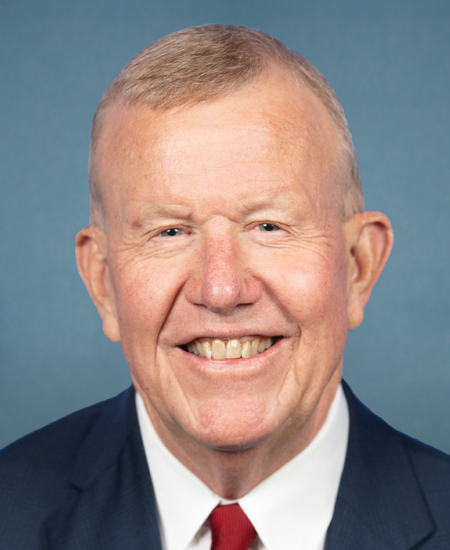
Rep. Mike Ezell
Sponsored bills
Maddy summaryHR 1818, the Aviation Workforce Development Act, expands tax-advantaged savings plans (529 plans) to cover costs for specific aviation training programs. It allows funds from these plans to pay for tuition, fees, and required materials at FAA-certified aviation maintenance technician schools (Part 147) or commercial pilot training programs (Part 61 or 141). This directly affects students pursuing careers as aircraft maintenance technicians or commercial pilots by making these training costs more affordable through existing tax-advantaged savings. The bill amends the tax code to include these programs under "qualified higher education expenses" for 529 plan distributions.
Investing in Our Communities Act This bill reinstates the exclusion from gross income for interest on certain bonds issued to advance the refunding of a prior bond issue. The exclusion was repealed for bonds issued after 2017.
Maddy summaryHR 1831 would award Billie Jean King a Congressional Gold Medal to honor her lifelong advocacy for equal rights in sports and society. The bill directs the Secretary of the Treasury to strike the medal and have it presented by congressional leaders, recognizing her pivotal role in advancing women's equality through tennis (including founding the Women’s Tennis Association and securing equal prize money) and her broader impact on society through initiatives like Title IX advocacy.
Maddy summaryHR 1806, the Small LENDER Act, reduces reporting burdens for small lenders by creating a phased transition period for new data collection rules under the Equal Credit Opportunity Act. It requires regulators to give qualifying small lenders a 3-year period to comply with new rules and a subsequent 2-year "safe harbor" period during which they aren’t penalized for non-compliance. A "small business lender" is defined as one originating at least 500 small business loans (defined as loans to entities with $1 million or less in annual revenue) in each of the two prior calendar years. This directly affects small lenders meeting these volume thresholds, easing their administrative burden without changing existing lending standards.
Maddy summaryThe Bank Loan Privacy Act (HR 1810) requires the Consumer Financial Protection Bureau (CFPB) to issue a rule with public notice and comment before deleting or modifying data related to credit applications. The rule must describe the intended data changes and explain how they protect consumer privacy. This law directly affects the CFPB's procedures for handling credit data, adding a transparency step before any data modifications. It does not change credit reporting content but mandates public input for privacy-focused data adjustments.
Maddy summaryHR 5, the Parents Bill of Rights Act, would require public schools receiving federal funding to provide parents with greater access to educational information. The bill mandates that schools post curricula online or widely distribute it to parents, include school budgets in report cards, and provide specific information about school activities including violent incidents and plans to eliminate gifted programs. It also guarantees parents the right to meet with teachers twice a year, review library materials, and address school boards. These requirements would apply to all local educational agencies and schools covered by the Elementary and Secondary Education Act. The bill amends existing education laws to strengthen parental transparency and involvement in their children's education.
Let Experienced Pilots Fly Act of 2023 This bill raises the mandatory retirement age for pilots engaged in commercial aviation operations from 65 to 67 years of age, unless the operation takes place in (1) the territorial airspace of a foreign county where such operations are prohibited by the foreign country, or (2) international airspace where such operations are not in compliance with the Annexes to the Convention on International Civil Aviation. The Federal Aviation Administration must also submit a report to Congress on further increasing the age limitation for pilots engaged in commercial aviation operations.
Maddy summaryH.J. Res. 30 seeks to block a Department of Labor rule that would have required retirement plan managers (like those handling 401(k)s) to follow strict "prudence and loyalty" standards when selecting investments and voting on company matters. The rule, published in December 2022, aimed to protect retirement savings by ensuring fiduciaries prioritize participants' interests. This resolution, if passed, would prevent the rule from taking effect, avoiding new compliance requirements for retirement plan managers and sponsors. It directly affects retirement plan administrators and the millions of participants in these plans.
Maddy summaryHR 1700, the ATF Transparency Act, requires the Bureau of Alcohol, Tobacco, Firearms, and Explosives (ATF) to provide firearm transfer applicants with background check details and appeal options if their application is denied. It sets a 90-day deadline for the ATF to process transfer or manufacturing applications, automatically approving them if no decision is made by then. The bill also mandates that applicants denied based on background checks can appeal and seek reimbursement for attorney fees if successful. Additionally, it requires reports on unresolved background checks from 2010-2021 and a new agreement between the ATF and FBI to improve background check processing.