

Maddy summaryHR 5947 terminates specific U.S. waivers and licenses related to Iran, ending a 2023 waiver that allowed funds transfer from South Korea to Qatar. It prohibits the Treasury Department from reissuing similar waivers or licenses for the same purpose and blocks the President from granting Iran access to certain designated financial accounts established under prior laws. The bill directly affects U.S. foreign policy implementation by restricting how Treasury handles Iran-related financial transactions. It enacts concrete policy changes by ending existing authorizations and preventing future approvals for Iran to access specific accounts.
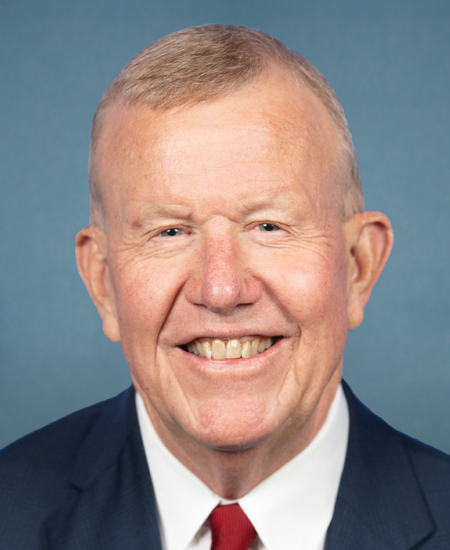
Rep. Mike Ezell
Sponsored bills
Maddy summaryHR 5530, the VA Emergency Transportation Access Act, prevents the Department of Veterans Affairs (VA) from lowering payment rates for specialized transportation used by veterans and eligible individuals (like ambulances or wheelchair vans) without strict requirements. It mandates that any rate change that could reduce access to care must first undergo a detailed review analyzing economic impacts on the VA and transportation industry, and ensure the new rate covers actual costs. The VA must also develop a formal process for rate changes and consult with industry experts, veterans' groups, and healthcare agencies before implementing such changes. This bill directly affects veterans relying on specialized transportation for medical care, particularly those in rural or underserved communities, by safeguarding their access to necessary emergency transport services.
Maddy summaryHRES 1148 is a resolution passed by the U.S. House of Representatives that condemns the Iranian government for supporting terrorism, regional proxy conflicts, and internal suppression of dissent - including its crackdown on protests following Mahsa Amini's death in 2022. It specifically calls for maintaining sanctions against Iran, supporting the Iranian Resistance's Ten-Point Plan (which advocates for a democratic, secular, nonnuclear Iran), and protecting Iranian political refugees in Albania. The resolution also affirms the Iranian people's right to self-determination under international law and urges the U.S. to recognize their struggle for freedom. As a non-binding resolution, it does not create new laws but formally expresses congressional stance.
Maddy summaryHR 8011, the Iranian Terror Prevention Act, requires the U.S. Secretary of State to designate 12 Iranian-affiliated military groups and any entity controlled by Iran's Revolutionary Guard Corps as Foreign Terrorist Organizations within 90 days. It mandates the President to decide within 60 days whether to impose sanctions under existing law (Executive Order 13224) on these groups, which would block their U.S. assets and restrict transactions. The bill also requires the Secretary of State to submit regular reports to Congress on new entities meeting designation criteria and the President to explain any decisions not to impose sanctions. This law directly affects the listed Iranian military groups and any new entities linked to Iran's Revolutionary Guard Corps.
Maddy summaryThis bill prohibits U.S. federal funds from being provided to international financial institutions (like the World Bank) if those funds could finance foreign shrimp farming, processing, or shrimp exports. It directly affects international financial institutions receiving U.S. funding, requiring them to avoid supporting foreign shrimp operations. The bill also mandates an annual report from the Government Accountability Office (GAO) to Congress on whether U.S. representatives at these institutions are following this restriction. The key mechanism is conditioning U.S. financial support on the institutions' adherence to this prohibition.
Maddy summaryHR 7645, the Clothes Dryer Reliability Act, modifies how the U.S. Department of Energy sets and enforces energy efficiency standards for clothes dryers. The bill requires the Department to determine that any new or existing standard is technologically feasible, won't increase costs for consumers (including purchase, maintenance, and replacement), and will result in significant energy savings before it can be imposed or enforced. This directly affects the Department of Energy's authority and manufacturers of clothes dryers by adding these specific conditions to the standard-setting process. The law does not create new standards but restricts the Department from implementing standards that fail to meet these three criteria.
Maddy summaryThis bill directs the Attorney General, working with the Health and Human Services Secretary, to issue final regulations within one year of enactment. These regulations would establish a "special registration" process for healthcare providers using telemedicine to prescribe controlled substances under existing law. The bill itself does not create new policy but mandates federal agencies to complete a required regulatory step already outlined in the Controlled Substances Act. It affects telemedicine providers seeking to legally prescribe controlled medications remotely.
Maddy summaryThis bill protects licensed amateur radio operators' ability to install antennas for emergency communications by preventing homeowners' associations and private land use restrictions from blocking such installations. It requires communities to allow antennas that don’t impair emergency use, with exceptions only for safety, structural requirements, or minimal visual impact (e.g., screened enclosures). Small antennas (under 1 meter diameter), flagpoles (under 43 feet), and wire/vertical antennas don’t require prior approval, and communities must approve applications within 45 days. The law directly affects over 770,000 licensed amateur operators who rely on these antennas for life-saving emergency communications during disasters.
Maddy summaryHR 7770, the Rosie the Riveter Commemorative Coin Act, authorizes the U.S. Mint to produce and sell three commemorative coins honoring women who worked on the U.S. home front during World War II. It specifies $5 gold coins (max 50,000), $1 silver coins (max 400,000), and half-dollar coins (max 750,000), all to be issued between January 1, 2025, and December 31, 2025. Each coin sale includes a surcharge ($35 for gold, $10 for silver, $5 for half-dollar), with all surcharge funds directed to the Rosie the Riveter Trust for maintaining the Rosie the Riveter WWII Home Front National Historical Park and educational programs. The coins will feature designs reflecting the legacy of diverse women workers and must meet specific weight, diameter, and composition standards.
Maddy summaryThe FISH Wellness Act requires fishing vessel operators and crews to receive safety training addressing mental health, substance use disorders, and fatigue risks. It increases annual funding for health services from $3 million to $6 million (for 2024-2025) to support programs addressing behavioral and physical health risks in the commercial fishing industry. Grants will be awarded competitively by the Department of Health and Human Services, with criteria developed alongside the Coast Guard. The bill updates vessel safety standards to integrate health training into operational requirements.