

Maddy summaryHR 4167, the Expanding Access to Lending Options Act, amends the Federal Credit Union Act to extend the maximum time federally chartered credit unions can hold mortgage loans from 15 years to 20 years (or longer by NCUA regulation). This change directly affects federally chartered credit unions by allowing them to offer longer-term mortgage products to members. The key provision modifies Section 107(5) of the Federal Credit Union Act, specifically updating the time limit for mortgage loans held by credit unions. The bill also includes a non-binding sense of Congress statement emphasizing safety and soundness in NCUA oversight, but the core policy change is the extended mortgage holding period.
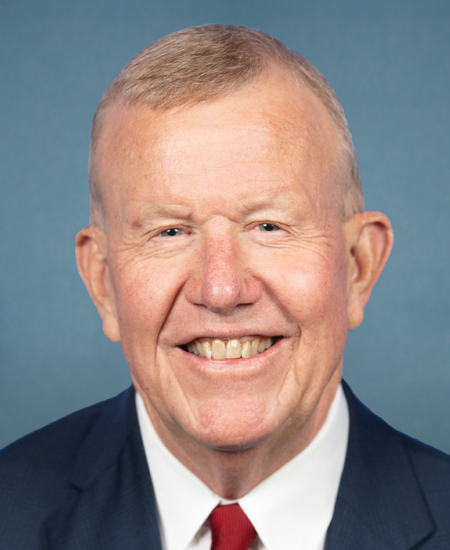
Rep. Mike Ezell
Sponsored bills
Maddy summaryThe LEDGER Act (HR 4091) requires the Treasury Department to create a system tracking every government payment within 180 days of enactment. It mandates that all federal departments, agencies, and branches (executive, legislative, judicial) must report disbursements from every funding source, including how long funds remain available for spending. This system will detail each payment's origin, recipient, and timing across all government accounts. The bill directly affects all federal spending entities by standardizing expenditure tracking previously handled inconsistently.
Maddy summaryThis bill requires the Secretary of Homeland Security to submit a report within 180 days of enactment, analyzing how Coast Guard personnel skills (like engineering and navigation) can transfer to the dredging industry. The report must include a plan to connect separating or retiring Coast Guard members with dredging jobs, evaluate certification programs for their skills, and detail coordination with agencies like the Army Corps of Engineers. It directly affects Coast Guard personnel seeking transition opportunities and the dredging industry, which maintains critical waterways for national security. The bill focuses on creating pathways for veteran employment through skill recognition and industry partnerships, without establishing new regulations.
Maddy summaryThe STOP CSAM Act of 2025 would strengthen protections for child victims and witnesses in federal court by creating a new definition of "covered person" to include minors under 18 who are victims or witnesses of abuse, exploitation, or kidnapping. The bill requires internet service providers to report apparent child sexual exploitation to the CyberTipline within 60 days, with civil penalties of $50,000-$250,000 per violation and criminal fines up to $1 million for non-compliance. It also creates new civil remedies allowing victims to sue platforms that host or promote child sexual exploitation, with minimum $300,000 in damages. Additionally, large platforms would be required to submit annual reports to the Attorney General and FTC detailing their safety measures and child exploitation on their platforms.
Maddy summaryHR 3331, the Mariner Exam Modernization Act, updates the process for reviewing and modernizing exams required for merchant mariners (ship crew members). It extends the Coast Guard's review timeline from 90 to 180 days, creates a new working group including at least two recent exam passers, and mandates the Coast Guard to develop a plan within 270 days to update exam content and testing methods. The plan must eliminate outdated topics, modernize testing procedures, and include data collection on pass/fail rates. This bill directly affects merchant mariners who take the exams and the Coast Guard, which administers the exams and implements the changes.
Maddy summaryThis bill amends U.S. Code to allow marine terminals to use Capital Construction Funds for purchasing or replacing U.S.-made cargo handling equipment (like cranes or loaders), or foreign-made equipment only if U.S. options are unavailable or unsuitable. It directly affects U.S. marine terminals operating at ports, enabling them to fund equipment upgrades with federal funds. Key provisions include banning purchases of Chinese-made cranes, prohibiting fully automated equipment that could cause job losses, and requiring the Secretary to annually publish U.S. equipment availability. The bill updates existing fund rules without creating new programs, focusing on domestic equipment use and job impact.
Maddy summaryHR 2035, the American Cargo for American Ships Act, requires the U.S. Department of Transportation to ensure that when procuring, contracting for, or financing cargo transportation with federal funds, 100% of the gross tonnage for dry bulk carriers, dry cargo liners, and tankers must be transported on U.S.-owned commercial vessels - provided those vessels are available at fair and reasonable rates. This directly affects government procurement of cargo transportation using federal funds, mandating U.S. vessel use where commercially available. The key mechanism is a new requirement for the Secretary of Transportation or recipients of federal financing to take "necessary and practicable steps" to meet this 100% U.S. vessel standard for eligible cargo. The bill does not apply to all government shipping but specifically targets federally financed or procured cargo transportation.
Maddy summaryHRES 481 is a symbolic resolution condemning recent antisemitic attacks in the U.S., specifically referencing the June 1, 2025, Boulder, Colorado, assault on a Jewish community gathering and other incidents like the May 2025 Washington, D.C., embassy shooting. It formally recognizes a pattern of violence targeting Jewish individuals and institutions, including attacks during religious events. The resolution calls on law enforcement to thoroughly investigate and prosecute such incidents and urges elected officials to publicly oppose antisemitism and politically motivated violence. As a non-binding resolution, it does not create new laws or allocate funding but serves to affirm congressional stance against antisemitism.
Maddy summaryThis bill adds a death penalty option for individuals convicted of distributing, manufacturing, or possessing fentanyl with intent to distribute when their actions cause a death. It directly affects fentanyl traffickers and dealers found guilty under specific drug trafficking laws (sections 401(a)(1) or 416 of the Controlled Substances Act) if their distribution results in a fatality. The key provision allows courts to impose the death penalty, life imprisonment, or any term of years, along with fines under federal law. This policy change specifically targets fentanyl-related offenses causing death, not other drugs or non-fatal cases.
Maddy summaryHRES 478 is a symbolic House resolution designating the month of July as "American Patriotism Month." It does not create new laws or policies but encourages voluntary observance through ceremonies, educational activities, and community events celebrating American history and values. The resolution highlights historical events like Independence Day, Pearl Harbor, and 9/11 as examples of patriotism, while urging schools, organizations, and communities to participate in commemorations. It has no binding effect on citizens or government operations and merely requests the President issue an annual proclamation. This is purely a ceremonial recognition with no direct impact on individuals or policy implementation.