

Maddy summaryThe SAVE Act (HR 8281) requires U.S. citizens to provide documentary proof of citizenship when registering to vote in federal elections. It defines acceptable proof as documents like passports, REAL ID-compliant IDs, military IDs, or birth certificates, and mandates that states verify citizenship using information from government agencies like DHS and Social Security. States must establish processes for voters without required documentation to provide an attestation under penalty of perjury. The law also requires states to remove noncitizens from voter rolls when verified evidence shows they're not citizens. This bill directly affects all applicants registering to vote in federal elections and state election officials who must implement these requirements.
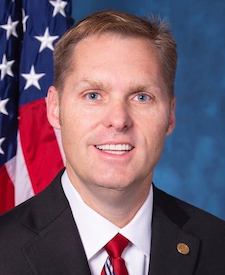
Rep. Michael Guest
Sponsored bills
Maddy summaryThis is a commemorative resolution (HRES 1369) honoring Corey Comperatore, a volunteer firefighter, U.S. Army Reserves veteran, and community leader from Sarver, Pennsylvania, who died on July 13, 2024. The resolution formally mourns his passing and celebrates his life, noting he left behind his wife, Helen, and two daughters, Allyson and Kaylee. It recognizes his service to the Buffalo Township Volunteer Fire Department, his military service, and his role as a devoted member of Cabot Methodist Church. As a ceremonial resolution, it has no policy impact or direct effect on legislation or constituents beyond this formal acknowledgment.
Maddy summaryThe Secret Service Readiness Act of 2024 requires the Secret Service to establish uniform fitness standards for Special Agents and Uniformed Division Officers that apply equally to all applicants, regardless of gender. These standards must be at least as rigorous as the current fitness requirements for male applicants and existing personnel. The Director of the Secret Service must implement these standards within 90 days of the bill’s enactment and submit a report on the process to Congress within 180 days. This bill directly affects Secret Service personnel by standardizing fitness requirements to ensure consistency and maintain current performance expectations.
Maddy summaryHJRES 164 is a congressional resolution seeking to block a rule issued by the Department of Commerce regarding firearms license requirements. It directly targets the rule published in the Federal Register (89 Fed. Reg. 34680), which would have revised licensing procedures for firearms dealers. If passed, the resolution would prevent this rule from taking effect by invoking the congressional disapproval process under federal law. The bill does not create new regulations but aims to halt an existing rule affecting gun license applicants and dealers.
Maddy summaryThis bill prevents U.S. funding for United Nations agencies if Palestine gains any status beyond its current observer status. It amends two existing laws (from 1990 and 1994) to replace the phrase "full membership" with "any status, rights, or privileges beyond observer status" in funding restrictions. The law directly affects U.S. financial contributions to UN bodies, ensuring funds are withheld if Palestine achieves full membership or equivalent standing. It explicitly excludes Taiwan from these provisions but does not alter Palestine’s existing observer status at the UN.
Maddy summaryHRES 1355 is a non-binding resolution supporting the designation of July 10 as Journeyman Lineworkers Recognition Day. It honors lineworkers who maintain electrical infrastructure under hazardous conditions, including during disasters, and commemorates Henry Miller, the first president of the International Brotherhood of Electrical Workers, who died on July 10, 1896, while troubleshooting an electrical outage. The resolution encourages public recognition of these workers' contributions but does not create new laws or policies.
Maddy summaryHR 8985, the Preventing Forced Abortions Act of 2024, prohibits federal courts from enforcing any surrogacy contract clause requiring a surrogate mother to have an abortion at the request of intended parents or their agents. The bill mandates courts to enforce payment to the surrogate for her services, regardless of any contract term tied to abortion, including clauses penalizing refusal (like reduced pay or liquidated damages). It directly affects surrogacy agreements between intended parents and surrogate mothers, ensuring surrogates cannot be forced to undergo abortions against their will while protecting their contractual compensation. The law defines "abortion" as intentionally terminating a pregnancy except in specific medical circumstances, such as after fetal viability or removing a non-viable fetus.
Maddy summaryThis bill amends the Higher Education Act to require colleges to disclose how they respond to campus "civil disturbances" (defined as protests, riots, or strikes disrupting safety or learning). It mandates that institutions include this disclosure in their security policies and that accrediting agencies monitor compliance with this new requirement. The bill directly affects public and private colleges receiving federal funding, as well as their accreditors. It does not cut funding for colleges or ban protests, but instead focuses on transparency about campus security responses to disruptive events.
Maddy summaryHJRES 170 is a resolution seeking congressional disapproval of a federal rule that would have required new housing projects financed by the Department of Housing and Urban Development (HUD) or the Department of Agriculture (USDA) to meet specific energy efficiency standards. The rule, published in April 2024, aimed to set these standards for new construction in federally subsidized housing. If passed, this resolution would block the rule under the Congressional Review Act, making it legally void. It directly affects developers and builders of HUD- and USDA-financed housing by removing the requirement to comply with these energy standards.
Maddy summaryThe Conscience Protection Act of 2024 would strengthen protections for health care providers, facilities, and organizations that refuse to participate in or provide coverage for abortions, assisted suicide, or other procedures conflicting with their religious or moral beliefs. It creates a private right of action allowing individuals or entities to sue when their conscience rights are violated, and requires the Department of Health and Human Services to enforce existing conscience protections through the Office for Civil Rights. The bill prohibits discrimination against health care entities that decline to provide or facilitate these services, while ensuring these protections don't interfere with emergency care requirements under existing law. It also establishes clearer enforcement mechanisms, including the ability to terminate federal funding for non-compliance with conscience protections.