

Maddy summaryHR 7763, the Living Wage for Musicians Act of 2024, establishes a new Artist Compensation Royalty Fund to provide payments to musicians based on streaming activity. Streaming platforms (service providers) must charge subscribers an additional $4-$10 fee per subscription (50% of the subscription fee, subject to min/max limits), with 10% of non-subscription revenue also contributed to the fund. Funds are distributed as follows: 90% to "featured artists" (e.g., lead singers) based on their share of qualifying streams, and 10% to "non-featured artists" (e.g., session musicians) via existing union funds. The bill directly affects streaming services (which collect the fee) and musicians (who receive payments based on verified streaming data).
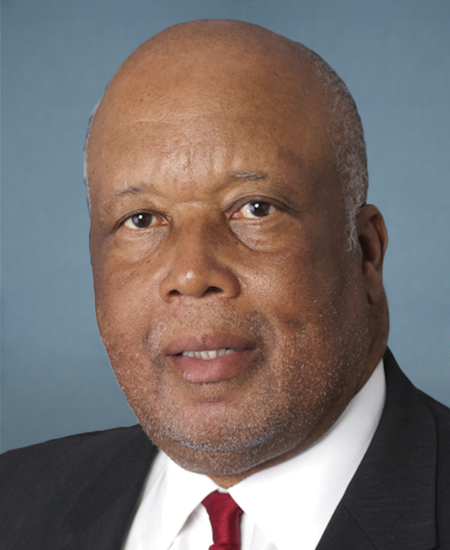
Rep. Bennie G. Thompson
Sponsored bills
Maddy summaryThis concurrent resolution (HCONRES 97) recognizes the gender wage gap, noting that women working full-time earn 84 cents for every dollar earned by men. It highlights racial disparities (e.g., Latinas earn 57 cents, Black women 69 cents) and the economic impact of the gap, including $965 billion in annual lost wages for women. As a symbolic resolution, it does not create new laws or policies but formally acknowledges the issue and reaffirms Congress’s commitment to addressing wage inequality.
Maddy summaryHRES 1042 is a ceremonial resolution recognizing the historical significance of the Freedom House Ambulance Service, founded in Pittsburgh's Hill District in 1967. It acknowledges the service as the first U.S. ambulance program staffed by trained paramedics (beyond basic first aid), which pioneered national standards for prehospital emergency care - including life-saving techniques like field intubation and advanced trauma treatment. The resolution highlights how the service, established to provide job training and medical care in an underserved Black community, revolutionized emergency medical services nationwide before ending in 1975 due to political pressures. It does not create new laws or affect any policies - it solely commends the service's legacy and contributions to emergency medical care.
Maddy summaryThis bill requires states to immediately stop Medicaid recovery claims against beneficiaries' estates. Specifically, it mandates that states withdraw all existing liens within 90 days of enactment and notify affected individuals or their estates about the withdrawal. The law also prohibits states from initiating, maintaining, or collecting any future Medicaid recovery claims for benefits correctly paid. It directly affects Medicaid recipients and their heirs who were previously subject to state recovery efforts. The key mechanism is the 90-day deadline for states to remove existing liens and cease all new recovery actions.
Maddy summaryThe Increasing Access to Mental Health in Schools Act creates a federal grant program to increase mental health staff in low-income schools. It provides funding for partnerships between low-income schools (where at least 20% of students are from families below the poverty line) and graduate programs in school counseling, psychology, and social work. Grant funds can cover training costs, salary support for new mental health providers, recruitment of underrepresented students, and student loan repayment for mental health staff working in qualifying schools. The bill sets target ratios for staff-to-student ratios (like 1 counselor per 250 students) and requires annual reporting on program outcomes. The program is authorized for $200 million annually to address mental health staffing shortages in schools serving high-poverty communities.
Maddy summaryHRES 1032 is a symbolic resolution designating the week of February 26-March 1, 2024, as "Public Schools Week" in the U.S. House of Representatives. It expresses congressional support for public education, highlighting its role in preparing students and communities. The resolution has no legal effect or funding provisions - it solely serves as a formal expression of backing for public schools. It directly affects no individuals or entities but aims to raise awareness about public education. This is a non-binding gesture, not a policy change.
Maddy summaryHR 7378, the Frederick Douglass Congressional Gold Medal Act, authorizes Congress to posthumously award a gold medal to honor Frederick Douglass's legacy as a pivotal abolitionist, writer, and advocate for civil rights. The medal, designed by the Treasury Secretary, will be presented to the National Museum of African American History and Culture for display, with bronze duplicates available for sale to cover costs. This ceremonial bill does not create new laws or affect current policies - it solely commemorates Douglass's historical contributions to ending slavery and advancing equality.
Maddy summaryHR 7329, the Election Day Holiday Act of 2024, would designate November 5, 2024 (and subsequent general elections) as a federal public holiday. This change would require federal offices to close and provide federal employees a paid day off on Election Day. The bill amends Title 5 of the U.S. Code to add "Election Day" to the list of designated federal holidays, following Columbus Day. This directly affects federal employees and operations, ensuring they have a day off during general elections.
Maddy summaryThe MRRRI Act establishes a federal initiative to restore the ecological health of the Mississippi River, focusing on water quality, flood resilience, wildlife habitat, and invasive species management across the 10 Mississippi River States. It creates a Mississippi River National Program Office within the EPA to coordinate restoration efforts, develop actionable goals and an action plan, and establish research centers to guide science-based restoration. The Act requires specific funding set-asides for projects addressing disproportionate impacts on rural, economically disadvantaged, and communities of color, while prioritizing projects that restore natural river functions like wetland rehabilitation and pollution reduction. It authorizes funding for projects that improve drinking water quality, reduce flood risks, and protect habitats supporting the river's $500 billion economy and 780+ species of fish and wildlife.
Maddy summaryHR 7272, the Shining a Spotlight on Safer Communities Act, requires the Attorney General to submit annual reports to Congress starting in 2024, detailing how the Bipartisan Safer Communities Act's provisions (specifically sections 932 and 933 of title 18) are being implemented. These reports must include data on investigations, prosecutions, demographic information of defendants, and seized firearms or assets related to gun trafficking and straw purchasing. The bill mandates these reports for fiscal years 2024 through 2027, with a funding limit of $2 million annually for this reporting. It is a procedural bill focused solely on transparency and accountability for existing gun safety measures, not creating new policies.