

Maddy summaryThis resolution expresses support for designating June 5, 2026, as National Gun Violence Awareness Day and June 2026 as National Gun Violence Awareness Month. The bill calls on the public to wear orange on the designated day to honor victims and promote awareness of gun safety. It highlights statistics on gun-related deaths and injuries to underscore the need for community discussions on making neighborhoods safer.
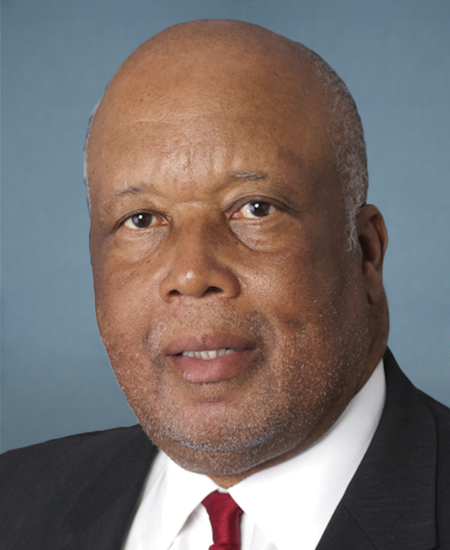
Rep. Bennie G. Thompson
Sponsored bills
Maddy summaryThis bill, known as the Critical Access Hospital RIP Act of 2026, aims to protect rural hospitals from losing their special status due to new road construction. It directly affects facilities designated as critical access hospitals that might otherwise fail to meet population requirements because a nearby highway or bridge was recently built or improved. The law mandates that if a facility qualifies for designation but fails the population test solely because of a completed roadway project, it will still be considered to meet the requirement. By ignoring the impact of these specific transportation upgrades, the legislation ensures these hospitals can continue operating without being forced to close due to infrastructure changes.
Maddy summaryThis bill prohibits the U.S. Patent and Trademark Office from issuing or enforcing patents for inventions created by individuals or companies identified as threats to national security. Specifically, it bars patents for entities listed on the Chinese Military-Industrial Complex Companies List, designated Chinese military companies, or those providing equipment on the FCC's untrusted networks list. While the law prevents these entities from receiving or enforcing patents, it does not stop them from submitting patent applications, and it includes a provision allowing the President to grant temporary waivers if national security interests do not require the prohibition.
Maddy summaryThe RESTORE Third Spaces Act of 2026 establishes a three-year federal pilot program to provide grants for renovating and developing community gathering places known as "third spaces," which are public areas distinct from home and work. Administered by the Department of Commerce, the program offers up to $200 million to local governments, nonprofits, and other eligible entities to support projects that strengthen local economies and reduce social isolation. A key requirement of the bill is that at least 60% of the funding must go to low-income and underserved communities, and the resulting spaces must remain free or low-cost for the public. To ensure accountability, recipients must engage the community in the design process and report on attendance, economic impact, and social benefits, with a final report submitted to Congress after the pilot period concludes.
Maddy summaryThe Worker Rights and Support Act amends the Fair Labor Standards Act to require employers to provide specific break times for employees, directly affecting workers covered under federal wage and hour laws. Under the new rules, employees must receive at least a 30-minute meal break for every six hours worked, along with a 10-minute break or time to use a restroom for every four hours, and up to 20-minute breaks for medical needs. While meal breaks can be unpaid if the employee is fully relieved of work, any break where the employee remains on duty or cannot leave the site must be paid at a rate of at least one and a half times their regular wage. The bill also allows employees to voluntarily waive meal breaks but prohibits employers from forcing them to do so, and it ensures that existing collective bargaining agreements or state laws offering better protections remain in effect.
Maddy summaryThe SCREEN for Type 1 Diabetes Act of 2026 directs the Centers for Disease Control and Prevention to launch a national public awareness campaign focused on type 1 diabetes detection, screening, and management. This initiative will provide written materials and public service announcements across various media platforms, including social media and television, while consulting with health organizations, schools, and community groups to ensure the content is culturally and linguistically appropriate. The bill authorizes $5 million annually from 2027 to 2031 to fund grants for nonprofit entities and state or local health departments to distribute these resources and increase screening access in communities with high incidence rates. Additionally, the law requires the Secretary of Health and Human Services to submit a report to Congress within one year detailing the campaign's activities and its impact on diabetes detection and management.
Maddy summaryThis bill extends the Rural Community Hospital Demonstration Program by an additional five years, allowing rural hospitals to continue receiving Medicare payment adjustments designed to help them compete with larger health systems. The legislation amends existing federal laws to change the program's timeline from a 15-year extension to a 20-year extension, ensuring these financial incentives remain in place for a longer period. It also includes specific rules for hospitals that joined the program later, ensuring they receive the same extended benefits during the final years of the new timeframe. The primary effect is to maintain current funding mechanisms for participating rural hospitals without altering the core rules of the demonstration.
Maddy summaryThis bill, the Provider Reimbursement Stability Act of 2026, aims to create more predictable payment adjustments for physicians and other healthcare providers under the Medicare program. It directly affects medical practices and providers who receive reimbursement for services through the physician fee schedule. The legislation increases a threshold for certain budget neutrality calculations from $20 million to $54.3 million in 2027, with automatic increases every five years thereafter. It also requires the government to correct payment estimates when actual service usage differs significantly from projections, mandates regular updates to cost calculations for practice expenses, and limits how much Medicare payment rates can change from year to year to a maximum of 2.5 percent.
Maddy summaryThis bill authorizes the U.S. Mint to produce commemorative $5 gold and $1 silver coins marking the 25th anniversary of the September 11, 2001, terrorist attacks. The coins must feature designs honoring victims and first responders (including the inscription "Never Forget") and will be sold only during 2027-2028. All surcharges ($35 per gold coin, $10 per silver coin) collected from sales will fund the National September 11 Memorial and Museum at the World Trade Center, with no net cost to the federal government. The coins are legal tender but primarily intended for collectors, not circulation.
Maddy summaryThe Closing the HPV Testing Gap Act directs the National Institutes of Health to conduct a comprehensive study on developing a standardized, noninvasive test for human papillomavirus in men. This research must be completed within 24 months and will involve coordination with federal agencies like the CDC and the FDA, as well as scientific experts and community stakeholders. The study aims to evaluate various testing methods, assess feasibility across diverse populations, and provide recommendations for future implementation and regulatory approval. Additionally, the bill requires an interagency working group to oversee the process and mandates a final report to Congress within 30 months outlining findings and strategies for improving cancer prevention and health equity.