

Maddy summaryThis bill requires call center employers (with 50+ full-time staff) to notify the Labor Secretary 120 days before moving operations overseas or contracting such work, adding them to a public list for 5 years. Employers on this list become ineligible for federal grants or loans during that period, and federal contracts must prioritize companies not relocating work overseas. It also mandates that all businesses handling customer service communications disclose agent locations at call start (with limited exceptions), allow transfers to U.S.-based agents upon request, and annually certify compliance to the FTC. These provisions directly affect large call center employers and all businesses providing customer service via phone, email, or chat in the U.S.
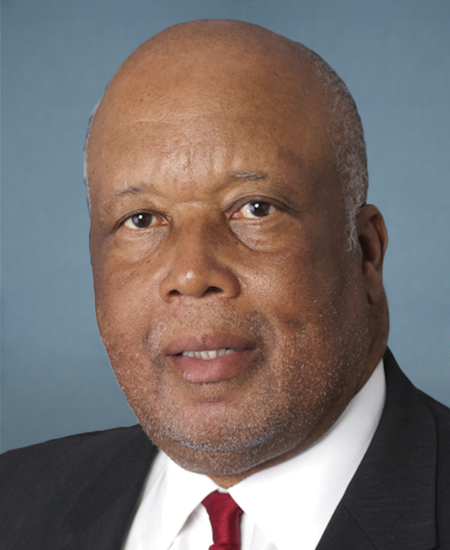
Rep. Bennie G. Thompson
Sponsored bills
Maddy summaryThe Public Service Freedom to Negotiate Act of 2024 establishes federal minimum standards for collective bargaining rights for public employees and supervisory employees. The Federal Labor Relations Authority will determine if each state's laws "substantially provide" for these rights, and if not, federal standards will apply to that state. These standards include the right to self-organization, collective bargaining, recognition of labor organizations, and procedures for resolving disputes. The bill preserves existing collective bargaining agreements and excludes certain employee categories like emergency services workers from some provisions.
Maddy summaryThe Rights for the TSA Workforce Act of 2024 would transition Transportation Security Administration (TSA) employees, particularly screening agents, from TSA-specific personnel rules to the standard federal government personnel system under Title 5 of the U.S. Code by December 31, 2024. The bill prohibits changes to current personnel policies for covered employees until the transition date and ensures no reduction in pay or benefits during the conversion process. It preserves certain benefits like law enforcement availability pay for Federal air marshals and maintains collective bargaining rights for screening agents. The bill also requires various reports to Congress on recruitment, implementation, diversity, and workplace safety to be submitted within specified timeframes.
Maddy summaryHRES 1206 is a symbolic House resolution supporting the designation of May 2024 as "Mental Health Awareness Month." It does not create new laws or funding but aims to raise public awareness about mental health challenges, emphasizing the need to reduce stigma and treat mental well-being as equally important as physical health. The resolution cites statistics on rising mental health crises - including increased anxiety, depression, and suicide rates among youth, LGBTQ+ individuals, veterans, and communities of color - to underscore the urgency of the issue. It encourages nationwide efforts to promote mental health awareness and access to care during this designated month.
Maddy summaryThis bill creates a permanent task force within CISA (Cybersecurity and Infrastructure Security Agency) to coordinate the agency's work on AI safety and security. The task force must ensure CISA's AI efforts align with federal initiatives, assess risks, leverage expertise to defend against cyber threats, address workforce gaps, and recommend updates to AI programs - all while meeting privacy and civil liberties standards. CISA must report to Congress every six months on the task force's activities. The task force will expire five years after the bill becomes law.
Maddy summaryHRES 1180 is a non-binding resolution recognizing the importance of diversity, equity, and inclusion (DEI) efforts in medical education. It affirms that a diverse medical workforce better serves the nation's diverse patient populations and supports medical schools in fostering inclusive environments to improve health equity. The resolution highlights existing disparities in health outcomes and representation, such as Black and Hispanic patients experiencing higher rates of chronic conditions compared to White patients, and notes that current medical school demographics (e.g., 10.8% Black or African American matriculants in 2023) do not reflect U.S. population diversity. It does not create new laws or funding but symbolically endorses DEI initiatives as essential for enhancing patient trust, clinical learning, and equitable care delivery.
Maddy summaryHR 8231, the James Earl Jones Congressional Gold Medal Act, authorizes a Congressional Gold Medal to be awarded to actor James Earl Jones in recognition of his distinguished career in theater and film, and his role in advancing inclusion and equal opportunities for people of all backgrounds in the entertainment industry. The Treasury will strike the medal with an image and inscription of Jones, and may produce and sell bronze duplicates to cover costs, with proceeds deposited into the U.S. Mint's public enterprise fund. This bill serves as a ceremonial honor with no new legal requirements or policy changes.
Maddy summaryThe CROWN Act of 2024 prohibits discrimination based on hair texture or style commonly associated with race or national origin, such as braids, locs, cornrows, twists, or afros. It directly affects individuals - particularly people of African descent - who face workplace, school, housing, or public accommodation discrimination due to natural or protective hairstyles. The bill expands existing federal civil rights laws (like Title VI, the Fair Housing Act, and Title VII) to explicitly include hair-based discrimination, requiring compliance in federally funded programs, housing, employment, and public spaces. It clarifies that grooming policies targeting these hairstyles violate anti-discrimination protections without creating new legal standards.
Maddy summaryThis resolution symbolically recognizes April 11-17, 2024, as the seventh annual "Black Maternal Health Week." It highlights the disproportionately high maternal mortality and morbidity rates faced by Black women in the U.S., citing data showing Black women are 2-3 times more likely to die from pregnancy-related causes than White women. The resolution emphasizes systemic racism, healthcare inequities, and barriers like limited access to care as key factors contributing to these disparities. It calls for policy action - including support for the Black Maternal Health Momnibus Act - but does not create new laws or allocate funding.
Maddy summaryHR 8103 establishes a new Office for Civil Rights and Civil Liberties within the Department of Homeland Security (DHS), creating a dedicated "Officer for Civil Rights and Civil Liberties" position that reports directly to the DHS Secretary. This office oversees compliance with civil rights and civil liberties standards across all DHS policies, programs, and activities, reviews complaints of abuses (like profiling), and integrates protections into decision-making. Key mechanisms include requiring DHS components to consult the Officer before policy changes, mandating investigations of complaints within 30 days, and requiring annual public reports to Congress on civil rights implementation. The bill directly affects DHS employees and the public impacted by DHS operations, ensuring accountability through structured oversight and transparency.