

Maddy summaryThe Black History Matters Act directs the National Museum of African American History and Culture to study how public elementary and secondary schools teach Black history across the U.S. The study will identify which schools require this education, assess teaching quality through classroom discussions and materials, and examine how schools measure student learning. It requires the Director to complete the study within three years of the bill’s passage and submit a report to Congress within 180 days of completion. The bill does not change school curricula but aims to gather data on existing practices to inform future education policies. This study directly affects all public schools covered under the Elementary and Secondary Education Act.
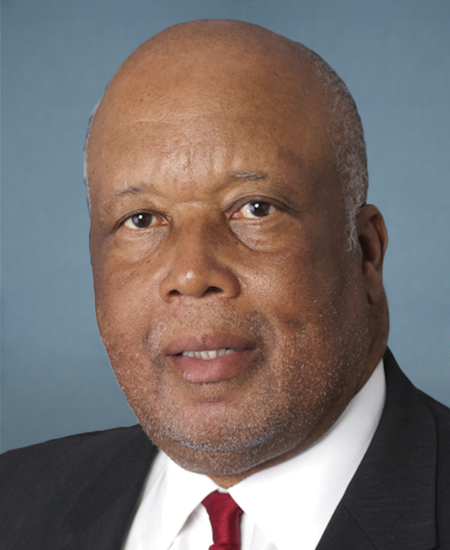
Rep. Bennie G. Thompson
Sponsored bills
Improving Care and Access to Nurses Act or the I CAN Act This bill allows other health care providers besides physicians (e.g., nurses) to provide certain services under Medicare and Medicaid. Among other changes, the bill (1) allows a nurse practitioner or physician assistant to fulfill documentation requirements for Medicare coverage of special shoes for diabetic individuals; (2) expedites the ability of physician assistants, nurse practitioners, and clinical nurse specialists to supervise Medicare cardiac, intensive cardiac, and pulmonary rehabilitation programs; and (3) allows nurse practitioners to certify the need for inpatient hospital services under Medicare and Medicaid.
Maddy summaryHR 1321, the "Ending DOGE Conflicts Act," requires special government employees (like officials overseeing federal contracts) who own, control, or lead companies doing business with the government to file financial disclosure reports with the Office of Government Ethics. These employees must now comply with the same financial disclosure rules as other government officials under Title 5 of the U.S. Code. Until their initial report is certified as compliant by the Office of Government Ethics, these employees are prohibited from performing any official duties related to federal contracting. The bill directly affects high-level government officials with direct financial ties to federal contractors.
Maddy summaryThe Office of Gun Violence Prevention Act of 2025 would create a new office within the Department of Justice to coordinate federal efforts on reducing gun violence. The office, led by a Director appointed by the Attorney General, would integrate existing DOJ programs, evaluate data gaps, and develop evidence-based recommendations for Congress and the President. It would also establish an advisory council including survivors of gun violence, public health officials, and community representatives to guide its work. The office would produce annual reports detailing gun violence trends and policy proposals, while collaborating with agencies like Health and Human Services and the FBI.
Maddy summaryHR 1251, the All Access Act of 2025, requires Members of Congress (House members and Senators) to present official identification to enter federal public buildings during regular business hours. For access outside these hours, Members must notify the building head at least 12 hours in advance. The bill establishes clear, procedural access rules for congressional members but does not create new policies or affect the public. It is a straightforward procedural measure governing Member access to federal facilities.
This resolution recognizes and celebrates the contributions of immigrants to the United States; condemns discrimination against immigrants; and supports comprehensive immigration reform that addresses the needs of the economy, strengthens communities, and reflects the values of compassion, fairness, and opportunity for all.
Maddy summaryHR 1269, the Honoring Our Fallen Heroes Act of 2025, expands benefits for public safety officers (like police and firefighters) who develop certain cancers linked to their work. It adds 22 specific cancers - including lung, mesothelioma, and breast cancer - to the list of conditions presumed to be "exposure-related" and sustained in the line of duty. This presumption applies if the officer served at least 5 years, was diagnosed with the cancer within 15 years after last active duty, and the cancer directly caused death or permanent disability. The bill also establishes a process for adding new cancers every 3 years based on medical evidence from agencies like NIOSH, and allows claims to be filed within 3 years of the law's enactment.
Maddy summaryThis bill restricts access to Treasury payment systems (including the Bureau of the Fiscal Service) to only Treasury employees with a "fully successful" performance rating and at least one year of civil service, or contractors/outsiders with security clearances, required privacy/cybersecurity training, ethics agreements, and no conflicts of interest. It treats non-government users accessing these systems as government employees for ethics rules and defines specific actions (like stopping payments) as "personal and substantial participation" in government matters. The Treasury Inspector General must investigate any unauthorized access within 30 days and report to Congress, detailing the breach, security risks, and any halted payments. The bill directly affects Treasury staff, contractors, and any external entities accessing federal payment systems.
Maddy summaryThis proposed bill (HR 220) would expand VA healthcare benefits to cover infertility treatments like in vitro fertilization (IVF) and fertility preservation services for veterans with infertility or at risk of infertility (e.g., due to medical treatments), and their partners. It limits VA coverage to three successful IVF cycles or ten attempts, requires consent from veterans, partners, and donors, and allows use of donated eggs or embryos. Partners would receive travel reimbursement as if they were veterans, and temporary rules during implementation will immediately allow partners to access care without marriage requirements. The bill clarifies VA isn’t required to cover maternity care beyond existing rules and defers full implementation until VA issues final regulations within one year of enactment.
Maddy summaryThis bill creates a new grant program to fund high-quality workforce development programs at community colleges. It directs the Secretary of Labor to award competitive grants to community colleges that partner with employers in high-skill, high-wage, or in-demand industries to develop programs leading to nationally or regionally portable postsecondary credentials. The grants require evidence-based program design, employer engagement, and tracking of outcomes like program completion rates and job advancement for participants. Funded at $65 million annually from 2026-2031, the program prioritizes serving individuals with employment barriers, incumbent workers, and new workforce entrants through community college partnerships.