

Maddy summaryHRES 410 is a non-binding House resolution requiring President Trump to comply with the Constitution’s Foreign Emoluments Clause regarding a $400 million Boeing 747-8 jet gift from Qatar’s royal family. It directs the President to immediately submit all plans for the aircraft to Congress and obtain explicit congressional consent before accepting it, as required by the Constitution. The resolution cites historical precedent where all prior presidents sought Congress’s approval for foreign gifts, including items like medals, horses, and the Statue of Liberty. It emphasizes that accepting the jet without consent would violate the Constitution and pose national security risks. The bill focuses solely on procedural compliance, not the merits of the gift itself.
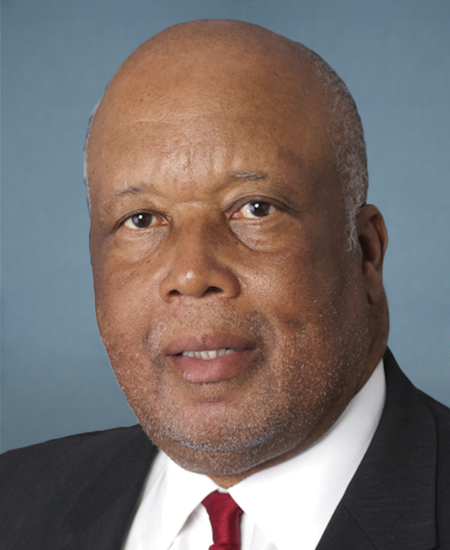
Rep. Bennie G. Thompson
Sponsored bills
Maddy summaryHR 3392, the STOP Screwworms Act, requires the U.S. Department of Agriculture to build modular facilities for rearing sterile New World screwworm flies within 180 days of enactment. These facilities will disperse sterile flies into at-risk agricultural areas - identified based on migratory patterns and suitability for dispersal - to prevent infestations that threaten livestock. The bill authorizes $300 million in funding for construction, operation, and annual reporting to Congress on threat assessments and effectiveness. It directly affects livestock producers and agricultural regions vulnerable to screwworm fly migration, using sterile insect technique as a preventive measure.
Maddy summaryThis bill establishes minimum nurse-to-patient ratios for hospital units across the country, requiring hospitals to maintain specific staffing levels (such as 1:1 in trauma units, 2:1 in critical care units, and 3:1 in emergency rooms) to improve patient safety and quality of care. Hospitals must develop transparent staffing plans that account for patient acuity, involve direct care nurses in planning, and document actual staffing levels for each shift. The bill includes strong whistleblower protections for nurses who object to unsafe staffing levels and prohibits hospitals from retaliating against nurses who report violations. It requires hospitals to comply with these standards as a condition for receiving Medicare and Medicaid payments, with enforcement through audits and civil penalties of up to $50,000 for repeated violations. The bill also includes provisions to support nurse recruitment and retention through workforce initiatives and training programs.
Maddy summaryHR 3398 (the Aaron Salter, Jr., Responsible Body Armor Possession Act) bans civilians from purchasing, owning, or possessing "enhanced body armor" (defined as bullet-resistant gear meeting National Institute of Justice RF1 standards) without exception. The law directly affects most private citizens who might seek such armor, while exempting law enforcement officers (including corrections officers), government agencies, tribes, and individuals who legally owned enhanced body armor before the law took effect. Key provisions include creating a new federal criminal offense punishable by up to five years in prison for violations, with clear definitions of "enhanced body armor" and "covered law enforcement officer" based on existing legal standards. The bill focuses on restricting access to high-level protective gear for non-official use, not on regulating standard body armor.
Maddy summaryHR 3368, the "Born in the USA Act of 2025," prohibits federal funding for Executive Order 14160 (which aimed to restrict birthright citizenship for children born in the U.S.). The bill directly affects federal agencies that might implement the executive order by blocking their use of funds for that purpose. Its key provision is a funding ban targeting the executive order and any similar future policies, without changing citizenship law. The bill does not alter birthright citizenship rights but prevents federal resources from being used to enforce the controversial executive order. It is a procedural measure focused on funding, not a substantive policy change to citizenship rules.
Maddy summaryHR 3376 creates the Water Affordability, Transparency, Equity, and Reliability Trust Fund, funded by increasing the corporate tax rate from 21% to 24.5% starting in 2025, with annual funding capped at $35 billion or 1/20th of 20-year infrastructure needs. The bill allocates funds to clean water programs (42%), safe drinking water programs (42.5%), household water well systems (1%), colonias assistance (0.5%), and Indian health services (3%), requiring specific prioritization of low-income and minority communities for many programs. It mandates an EPA study on water affordability, discriminatory practices, and civil rights violations in water service, including data collection on service disconnections affecting vulnerable populations. The bill also includes provisions for lead service line replacement, PFAS contamination response, and job training grants for water system operators with specific requirements to prioritize low-income communities.
Saving Our Veterans Lives Act of 2025 This bill requires the Department of Veterans Affairs (VA) to implement a program to provide, upon request, a firearm lockbox (or voucher for such item) to eligible individuals. Currently, there is a pilot program under which certain veterans may be prescribed a lockbox by a VA clinician. The VA must also provide information with respect to the benefits of and options for secure firearm storage. The VA must develop an informational video on the secure storage of firearms as a suicide prevention strategy and publish the video on its website. Additionally, the VA must publish information to inform individuals who participate in the lockbox program that such lockboxes are not for resale. The VA must also implement a public education campaign to educate eligible individuals about the availability of lockboxes under the program and that participation in the program does not affect the rights of an individual with respect to the lawful ownership of a firearm.
Maddy summaryThis bill prohibits federal officials from reducing, eliminating, or suspending funding for land-grant colleges and universities without specific authorization from Congress. It directly affects public institutions designated as land-grant colleges under the 1977 National Agricultural Research, Extension, and Teaching Policy Act. The key provision requires that any change to their funding must be explicitly approved by an Act of Congress, preventing unilateral federal action. This creates a clear legal barrier against unexpected funding cuts to these institutions. The bill focuses on preserving existing funding streams rather than creating new programs.
Maddy summaryHR 2623, the Innovative Therapies Centers of Excellence Act of 2025, directs the Department of Veterans Affairs to establish at least five specialized medical centers focused on treating veterans with specific conditions like PTSD, depression, chronic pain, and substance use disorders using innovative therapies. These centers must meet strict criteria, including academic partnerships with medical schools, research capabilities, veteran advisory committees, and data-sharing systems for evaluating treatment effectiveness. The bill authorizes $30 million annually for these centers' research and education activities and requires the VA to submit annual reports to Congress on their operations and findings. It directly affects veterans seeking advanced treatments for covered conditions through VA facilities and establishes a peer review process to select designated centers based on scientific merit.
Maddy summaryHR 3243, the Therapeutic Fraud Prevention Act of 2025, bans the provision of paid conversion therapy aimed at changing a person's sexual orientation or gender identity, and prohibits advertising such therapy as effective, safe, or without risk. It directly affects LGBTQ+ individuals and their families who might be targeted by these practices, as professionals have determined conversion therapy is ineffective and harmful. The law treats violations as deceptive acts under consumer protection laws, empowering the Federal Trade Commission and state attorneys general to enforce it through civil actions. It explicitly excludes legitimate gender transition support and non-discriminatory counseling from the ban.