

Maddy summaryHR 5476, the PARA Educators Act, provides federal grants to states to help recruit and retain school support staff (paraprofessionals) in public elementary, secondary, and preschool programs. It allocates funds based on previous Title I education funding, requiring states to prioritize schools serving high numbers of low-income students or those meeting specific poverty criteria. States can use the funds for proven programs like mentoring for paraprofessionals, professional development, helping staff earn credentials (e.g., special education or English learner certificates), and increasing wages or offering retention bonuses. The law mandates annual reporting on wage baselines, paraprofessional employment, and program outcomes. This bill directly affects paraprofessionals and the schools they support, particularly in high-poverty communities.
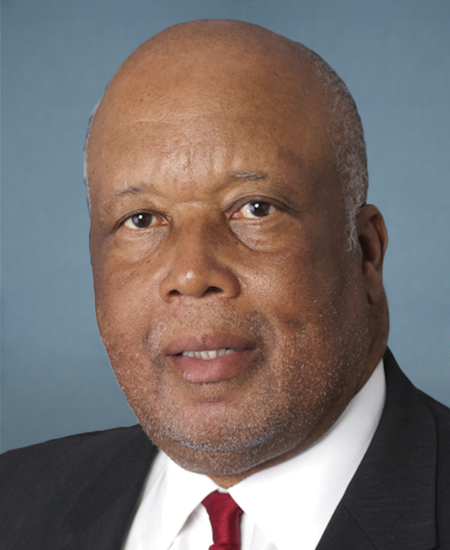
Rep. Bennie G. Thompson
Sponsored bills
Maddy summaryHJRES 123 is a congressional disapproval resolution targeting a specific rule by the Centers for Medicare & Medicaid Services (CMS). It seeks to nullify CMS's June 2025 rule titled "Patient Protection and Affordable Care Act; Marketplace Integrity and Affordability," which was published in the Federal Register (90 Fed. Reg. 27074). If passed, the resolution would block this rule from taking effect under procedures outlined in Title 5, U.S. Code. The bill directly affects the CMS regulation governing the Affordable Care Act's health insurance marketplace, not the broader law itself.
Maddy summaryHRES 729 is a symbolic resolution designating September 17, 2025, as "Constitution Day" to honor the 250th anniversary of the U.S. Constitution's signing (September 17, 1787). It does not create new laws or affect any specific group; instead, it urges the American public to observe the day with ceremonies and activities. The resolution emphasizes the Constitution's historical significance and its role in establishing American democracy. As a commemorative measure, it has no binding effect on policy or governance.
Maddy summaryHRES 724 is a symbolic House resolution commemorating the eighth anniversary of Hurricane Maria’s 2017 devastation of Puerto Rico and the U.S. Virgin Islands. It honors victims and survivors while urging the Federal Emergency Management Agency (FEMA) to expedite disbursement of recovery funds and calling for Congress to prioritize resilient infrastructure investments in these territories. The resolution highlights ongoing challenges like power grid fragility, healthcare access gaps, and bureaucratic delays in federal aid - despite $23.4 billion in FEMA assistance and $20 billion in HUD disaster funds already allocated. As a non-binding resolution, it does not create new laws or funding but serves as a formal recognition of the storm’s lasting impacts and a call for continued support.
Maddy summaryHR 5401, the Pay Our Troops Act of 2026, ensures military personnel, civilian Defense workers, and supporting contractors receive pay during government funding gaps in fiscal year 2026. It appropriates emergency funds for active-duty service members, reserves, and their supporting personnel (including Coast Guard staff under DHS) if regular appropriations aren't enacted by the end of the fiscal year. The bill provides necessary pay and allowances during any period when full-year funding is unavailable, covering both active service and support roles. Funding expires when regular appropriations are passed, a funding resolution is enacted, or January 1, 2027, whichever comes first. This is a procedural measure to prevent pay delays for military and support staff during fiscal year 2026 funding lapses.
Maddy summaryThe FAMILY Act would establish a national paid family and medical leave insurance program that provides wage replacement benefits for workers needing time off for caregiving or medical reasons. It defines "qualified caregiving" to include caring for a family member with a serious health condition, personal medical needs, or recovery from violence (including domestic violence, sexual assault, or stalking). Benefits would be calculated based on earnings, with a minimum monthly benefit of $580 and maximum of $4,000, administered by a new Office of Paid Family and Medical Leave within the Social Security Administration. Eligible individuals would need to have worked for at least 8 quarters in the previous year and file an application with required documentation, while existing state paid leave programs would continue to operate alongside this federal program.
Maddy summaryThe George Floyd Justice in Policing Act of 2025 would establish a National Police Misconduct Registry to track officer complaints, disciplinary actions, and misconduct records across all law enforcement agencies. It would require law enforcement agencies to implement body-worn camera programs with specific recording and retention policies, ban chokeholds and no-knock warrants in drug cases, and reform qualified immunity to make it easier to hold officers accountable for misconduct. The bill mandates comprehensive data collection on use of force incidents, requiring agencies to report detailed information about stops, searches, and force used, disaggregated by race, ethnicity, gender, and other demographics. These provisions would directly affect all Federal, State, and local law enforcement agencies that receive federal grant funding, with requirements for policy changes, training, and data reporting.
Maddy summaryThe National Infrastructure Bank Act of 2025 would establish a government-owned bank to finance infrastructure projects across the United States, aiming to address a $3.69 trillion financing gap identified by the American Society of Civil Engineers. The bank would provide loans up to $5 trillion for transportation, energy, environmental, and community development projects, with specific criteria focused on economic growth, environmental benefits, and serving disadvantaged communities. It would be governed by a 25-member Board of Directors with diverse regional and expertise qualifications, and would operate with tax exemptions and capital requirements to ensure financial stability. The bill also establishes regional economic accelerator planning groups to coordinate infrastructure development and create a pipeline of projects for the bank to finance.
Maddy summaryHR 5309, the Congressional Tribute to Constance Baker Motley Act of 2025, authorizes a posthumous Congressional gold medal for Constance Baker Motley, a pioneering civil rights attorney and judge. The bill directs the Treasury Secretary to strike the medal with her image and name, to be presented to her son, Joel W. Motley III, and her niece, Constance Royster. It also permits the sale of bronze duplicates at cost to cover expenses, with proceeds going to the U.S. Mint fund. This is a commemorative measure with no substantive policy changes, honoring Motley’s legacy as the first African-American woman appointed to a federal judgeship.
Maddy summaryHR 5340 prohibits the U.S. Department of Housing and Urban Development (HUD) and public housing agencies from sharing tenant records with immigration authorities for immigration enforcement purposes. It directly affects all HUD housing program participants (including renters and applicants, regardless of immigration status) by requiring HUD to obtain written consent or a language-proficient request from the individual before disclosing their records. Key provisions include banning disclosure without consent, preventing HUD from forcing public housing agencies to share records, and mandating a 90-day compliance report to Congress detailing record security and past sharing practices. The bill aims to protect housing privacy by ensuring immigration enforcement cannot access sensitive tenant information held by HUD without explicit individual authorization.