

Head Start Shutdown Protection Act of 2025 This bill requires the Department of Health and Human Services to reimburse a state, local government, or school district that uses its funds to maintain participation in the Head Start program or the Early Head Start program during a government shutdown in which there is a lapse in federal appropriations for the programs. The Head Start programs provide comprehensive early childhood education and development services to low-income children. The programs seek to promote school readiness through the provision of educational, health, nutritional, social, and other services.
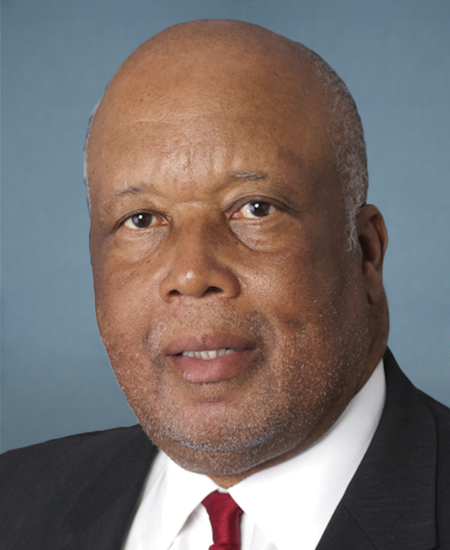
Rep. Bennie G. Thompson
Sponsored bills
Maddy summaryHRES 809 is a symbolic resolution expressing the House of Representatives' support for designating the second Monday in October 2025 as "Indigenous Peoples' Day." It does not create new law or directly affect any individuals or communities, but rather encourages the public to observe this day through ceremonies celebrating Indigenous history and culture. The resolution highlights existing local and state observances (over 200 municipalities and 17 states) and notes that Columbus Day currently does not honor Indigenous contributions. It urges Americans to recognize Indigenous Peoples' enduring legacy and cultural impact, while supporting the eventual designation of this day as a Federal holiday.
Maddy summaryThis bill makes federal funding for the WIC program mandatory by requiring Congress to appropriate necessary funds annually for fiscal year 2026 and each subsequent year. It removes discretionary language from WIC funding requirements and clarifies that eligible participants must be served without participation limits. The bill directly affects low-income pregnant women, new mothers, and young children who rely on WIC for nutrition assistance, ensuring continued access to critical food, health, and education services.
Maddy summaryHRES 792 is a symbolic resolution designating May 31, 2026, as "Youth Mental Health Day" and September 9 annually as "Youth Suicide Prevention Day." It calls for increased investments in youth mental health services and encourages state and local governments to adopt these observances while promoting community-based mental health initiatives. The resolution does not create new laws or allocate funding but aims to raise awareness about the youth mental health crisis, which disproportionately affects marginalized groups like LGBTQ+, Black, Indigenous, and low-income young people. It references CDC and NIH data showing rising rates of depression, suicidal ideation, and suicide among U.S. youth, particularly ages 10-34.
Maddy summaryHR 5708, the Federal Employees Civil Relief Act, provides temporary protections for federal workers and contractors during government shutdowns. It suspends civil proceedings like evictions, mortgage foreclosures, student loan collections, and tax payments if the worker is furloughed or working without pay. During a shutdown (and for 30 days after), courts can pause these obligations or adjust payments to prevent harm, and lenders/insurers cannot penalize workers for missed payments due to the shutdown. The law directly affects federal employees whose income is disrupted by a shutdown, ensuring housing, loan, and tax protections while maintaining their civil rights.
Maddy summaryHR 5705 requires the federal government to reimburse state agencies for funds they use to maintain participation in the WIC program during a government shutdown. It directly affects states that cover WIC costs using their own money when federal funding lapses. The bill establishes a process where states can seek reimbursement from the federal government after the shutdown ends. This ensures states aren’t burdened with costs for a federal funding gap that impacts nutrition assistance for women, infants, and children.
Maddy summaryThis bill creates a federal grant program to help communities develop non-police mental health crisis response teams. It provides funding for local governments, clinics, fire departments, and nonprofits to recruit behavioral health professionals, establish co-response teams (combining mental health clinicians with emergency responders), and integrate these teams into 911 or 988 dispatch systems. The grants specifically support replacing police as the primary responders for mental health crises with clinician-led mobile teams or emergency medical services, while respecting existing state laws on detention. Recipients must report on response outcomes, diversion rates (cases handled without police), and community feedback.
Maddy summaryHR 5725, the Mental Health Crisis Response Act of 2025, establishes a federal grant program to help state and local governments create health-centered alternatives for mental health emergencies. It provides $25 million annually (2027-2031) for jurisdictions to embed mental health professionals in 911 systems, develop direct routing to crisis hotlines like 988, and build partnerships between emergency services and dispatch centers. The bill specifically aims to reduce law enforcement involvement in behavioral health crises by creating streamlined pathways to crisis care, without requiring police removal or overriding state emergency authority laws. Jurisdictions receiving grants must report on response times, use of force, and diversion rates to health services.
Maddy summaryHR 5707, the Voter Purge Protection Act, sets strict standards for states removing voters from registration lists. It requires states to use only objective, reliable evidence (like proof of death or moved residence) to remove voters - not factors like not voting or not responding to notices - and mandates 48-hour written notice to affected voters with reinstatement instructions. States must also issue public notices about removal programs to help voters verify their status. This bill directly affects state election officials and voters whose registration might be challenged, aiming to prevent improper removals under the National Voter Registration Act. It amends existing federal voting laws to enforce these new verification and notice requirements.
Maddy summaryThis bill prohibits the removal of most federal civil service employees during government shutdowns caused by funding gaps. It prevents the President or agency heads from terminating these employees (including through layoffs) while discretionary funding is not in place. The protection specifically excludes political appointees, defined as those in leadership roles like cabinet positions, senior executive service roles, or "schedule C" policy positions. The law aims to stabilize the permanent workforce during funding disruptions.