

Maddy summaryThis bill establishes a new Intelligence Transparency and Oversight Program Office and an Ombuds within the Department of Homeland Security (DHS). The Ombuds, a senior career official with expertise in intelligence and civil rights, will advise DHS on safeguarding objectivity, preventing politicization of intelligence, and protecting civil rights during intelligence activities. Key duties include providing confidential forums for staff concerns about bias or civil liberties abuses, making recommendations to intelligence component leaders, and helping decide what intelligence information can be shared publicly without compromising security. The Ombuds must report annually to Congress on activities, findings, and recommendations.
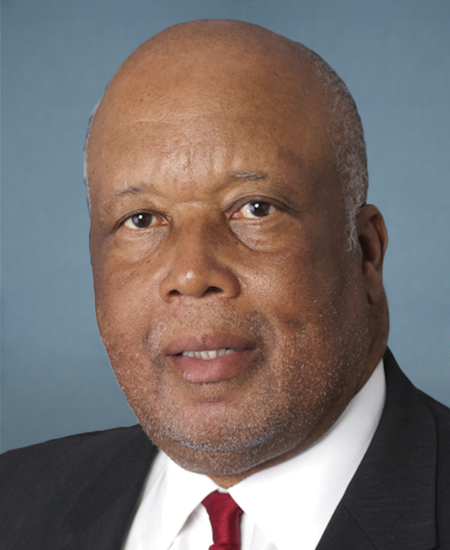
Rep. Bennie G. Thompson
Sponsored bills
Maddy summaryHRES 1040 is a symbolic resolution recognizing the Greensboro Four sit-in during Black History Month. It commemorates the 66th anniversary of the February 1, 1960, sit-in at a Greensboro Woolworth's lunch counter, where four Black students challenged racial segregation. The resolution encourages states to include the Greensboro Four's history and contributions in school curricula. As a non-binding resolution, it has no legal effect but formally honors this pivotal civil rights moment.
Maddy summaryThis bill requires the federal government to publicly disclose detailed information about grants awarded to nonprofit organizations for security improvements. It mandates two types of reports: (1) a pre-grant report 7 days before distributing funds, listing recipient names, addresses, grant amounts, and whether they're in high-risk urban areas; and (2) an annual report 90 days after each fiscal year, showing state-level application data, grant expenditures, and program operations. The reports are submitted to specific congressional committees and directly affect nonprofit organizations receiving these grants, as well as the federal administrators managing the program. The law focuses on making grant distribution more transparent by requiring specific, publicly available data points.
Maddy summaryHRES 1039 is a symbolic resolution supporting National Black HIV/AIDS Awareness Day observed annually on February 7. It highlights that Black Americans account for disproportionate HIV impacts (e.g., 39% of new diagnoses despite representing 12% of the U.S. population) and urges state/local health agencies to promote HIV testing, reduce stigma, and prioritize minority-led HIV services. The resolution encourages alignment with the National HIV/AIDS Strategy and emphasizes culturally competent care, but does not create new funding or enforceable requirements. It serves as a non-binding endorsement of existing efforts to address racial disparities in HIV prevention and treatment.
Maddy summaryHRES 1035 is a non-binding House resolution condemning recent and proposed workforce reductions at FEMA, which the resolution states endanger the agency's ability to prepare for, respond to, and recover from disasters. It specifically cites a 35% staffing shortage at FEMA (per GAO) and notes that over 2,000 permanent staff left FEMA in 2025, weakening disaster response during events like Hurricanes Helene and California wildfires. The resolution expresses concern that staffing cuts would delay aid, reduce assistance to vulnerable communities (including rural, coastal, and wildfire-prone areas), and undermine counterterrorism programs supporting first responders. It calls for a stable, adequately resourced FEMA workforce to ensure effective disaster management, without proposing new legislation or policy changes.
Maddy summaryHR 7385 establishes a federal grant program to expand access to HIV prevention through PrEP (pre-exposure prophylaxis) for uninsured individuals at high risk of HIV infection. The bill authorizes $400 million annually (2027-2031) to fund grants for eligible entities like clinics, community organizations, and tribal governments to cover PrEP-related costs - including medication, testing, counseling, and transportation - without requiring patient payment. Priority is given to programs serving rural areas, uninsured populations, or high-risk demographic groups, with grantees required to contribute 10% of program costs (except for certain health centers). The program also mandates a "PrEP Pass" card system to streamline access and requires annual reports tracking usage by race, gender, age, and location to measure impact on HIV prevention disparities.
Maddy summaryThe Rebuild America's Schools Act of 2026 authorizes $20 billion annually from 2027 to 2031 to improve public school facilities nationwide. The bill provides grants to states to fund school construction, renovation, and modernization projects that focus on safety, energy efficiency, and accessibility, with priority given to schools serving high percentages of students eligible for free or reduced-price lunch. Funds cannot be used for routine maintenance, athletic facilities, or vehicles, and must meet specific environmental, safety, and energy efficiency standards. The bill also includes specific provisions for repairing school foundations affected by pyrrhotite, a mineral that causes concrete deterioration, and requires use of American-made materials for construction projects.
Maddy summaryHR 5658, the Child Care for Every Community Act, establishes a federal framework to create universal, high-quality child care and early learning programs available to all young children not yet required to attend school. The bill requires that covered children (children below compulsory school age) be entitled to participate in these programs, with no fees for low-income families and sliding-scale fees for others based on family income. Key provisions include requiring full-working-day, full-calendar-year care; setting national quality standards for staff qualifications and facilities; mandating comprehensive services including health, nutrition, and family support; and requiring coordination with schools to support children's transitions to kindergarten. The bill directly affects families seeking child care, child care providers, and local communities that would administer these programs through designated "prime sponsors."
Maddy summaryHRES 973 is a House resolution stating that redesignating the John F. Kennedy Center for the Performing Arts as the "Donald J. Trump and the John F. Kennedy Memorial Center" violates the 1964 John F. Kennedy Center Act, which prohibits additional memorials at the site and designates it as the sole national memorial to President Kennedy. The resolution demands the restoration of the original signage and requires President Trump-appointed board members to resign, citing the lack of congressional authorization for the name change. It directly addresses the Kennedy Center's Board of Trustees and the Trump administration's actions, referencing the specific legal prohibition in Public Law 88-260. The resolution expresses the House's position but does not impose legal requirements.
Maddy summaryHR 6507, the DHS Grants Accountability Act, requires the Department of Homeland Security to set specific timelines for distributing security grants. It mandates that grant notices be published publicly at least 60 days after appropriations are enacted, gives applicants a minimum of 30 days to submit applications, and requires grant funds to remain available for use for at least 54 months. This bill directly affects state and local governments, transit agencies, port authorities, and other entities receiving DHS preparedness, transit, port security, and railroad safety grants. The key provisions standardize application deadlines and funding periods across multiple grant programs to improve transparency and planning.