This resolution expresses support for the designation of Journeyman Lineworkers Recognition Day. (A journeyman lineworker is a person who builds and maintains electrical power systems.)
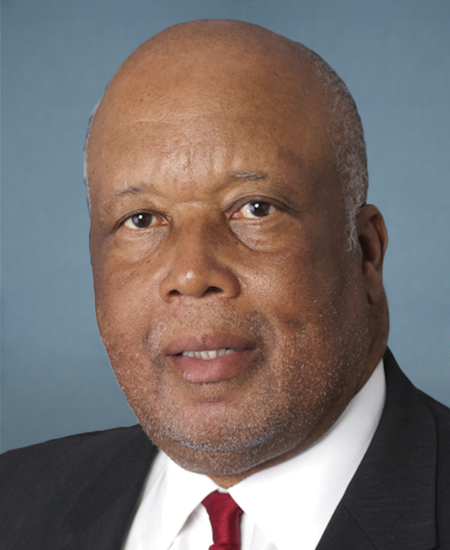
Rep. Bennie G. Thompson
Sponsored bills
Safe Schools Improvement Act of 2021 This bill requires states to direct their local educational agencies (LEAs) to establish policies that prevent and prohibit bullying and harassment of elementary and secondary school students. In particular, these policies must prohibit bullying and harassment based on race, color, national origin, sex, sexual orientation, gender identity, disability, or religion. Further, LEAs must provide (1) students, parents, and educational professionals with annual notice of the conduct prohibited in their disciplinary policies; (2) students and parents with grievance procedures that target such conduct; and (3) the public with annual data on the incidence and frequency of that conduct at the school and LEA level. The Department of Education must conduct and report on an independent biennial evaluation of programs and policies to combat bullying and harassment in elementary and secondary schools. The National Center for Education Statistics must collect state data to determine the incidence and frequency of the conduct prohibited by LEA disciplinary policies.
Anti-Hunger Pandemic Recovery Act of 2021 This bill authorizes the National Institute of Food and Agriculture to award grants to community-based nonprofit feeding and anti-hunger groups to partner with small and mid-sized restaurants or food contractors to expand meal access and food security to meet the needs of children, families, and vulnerable populations during a pandemic such as COVID-19. Grants awarded may not exceed $500,000.
Department of Homeland Security Reform Act of 2021 or the DHS Reform Act of 2021 This bill makes extensive changes to the structure of the Department of Homeland Security (DHS) and to the responsibilities of DHS components. Specifically, the bill, among other things creates a new Associate Secretary responsible for overseeing DHS's law enforcement functions; modifies the responsibilities of the Office for Civil Rights and Civil Liberties, including to require engagement with individuals and communities whose civil rights and liberties may be affected by DHS programs and activities; establishes within DHS's Office of Intelligence and Analysis an analytic unit to serve as a focal point for intelligence and analysis of domestic terrorism threats; directs DHS to establish an employee engagement steering committee to identify factors that have a negative impact on employee engagement, morale, and communications within DHS; establishes within DHS a school security coordinating council; directs DHS to develop and disseminate a strategy with respect to biometric technology and identity management enterprise pilot programs and programs; requires DHS to develop, disseminate, and implement a DHS-wide directive to update or replace the strategic framework relating to countering terrorism and targeted violence; requires that DHS's use-of-force policy be updated to emphasize de-escalation; and requires DHS to issue a DHS-wide strategy to enhance partnerships with historically Black colleges and universities and minority-serving institutes that includes yearly goals.
Better Opportunity and Outcomes for Socially Disadvantaged Talent Act of 2021 or the BOOST Act of 2021 This bill allows an exclusion from gross income, for income tax purposes, of 50% of any gain from the sale or exchange of a certified equity interest held for more than 3 years for corporations and partnerships in which a socially disadvantaged individual who is a U.S. citizen has an ownership interest.
Expanding Pathways to Employment Act This bill directs the Department of the Treasury to provide long-term grant funding for workforce development programs that have demonstrated a positive impact on worker earnings and for postsecondary education programs that have demonstrated a positive impact on student graduation.
Creation of Opportunities for Medical Manpower in Underserved Neighborhoods by Indemnifying Tuition and Incentivizing Exceptional Service Act or the COMMUNITIES Act This bill increases the amount of student loan repayment available to eligible health care providers who agree to complete a five-year period of obligated service in a health professional shortage area. Specifically, for each year of service, the Department of Health and Human Services shall pay one-fifth of the total amount owed on a participating provider's qualifying student loans. Current law caps the maximum amount of student loan repayment that a provider may receive in exchange for such service.
Children's Savings Accounts Offer Parents Plenty Of Reasons To Understand and Invest in Tuition Yearly Act or the CSA OPPORTUNITY Act This bill excludes the value of certain children's savings accounts, provided they meet specified requirements, when determining eligibility for particular means-tested federal programs. To be excluded, the savings account must be created as part of a program organized by a government, nonprofit, school district, or college or university and meet other administrative criteria. Furthermore, proceeds of the account may only be used for postsecondary educational expenses, the purchase of a first home, or costs associated with starting a business once the individual receives a secondary school diploma or equivalent.

Connecting Youth to Jobs Act This bill establishes and provides funding through FY2031 for grant programs to address barriers to youth employment. The bill also excludes certain youth employment income from Supplemental Nutrition Assistance Program (SNAP) eligibility determinations. Specifically, the bill requires the Department of Labor to provide formula grants to states and local areas, and competitive grants to community-based organizations and other eligible entities, to assist in carrying out subsidized public employment programs for youth with barriers to employment. Funding to states and local areas must be used for programs that lead eligible youth to unsubsidized full-time employment or to attainment of at least one recognized postsecondary credential. Grants to eligible entities must be used to match youth with employment barriers to subsidized employment programs funded by the bill and to provide hands-on work experience. The Government Accountability Office must evaluate and report on the activities funded by the bill. The bill also excludes from SNAP income eligibility determinations any income earned by a household member who is younger than 22 years old, is an elementary or secondary school student, and lives with a parent.
Making Essentials Available and Lawful (MEAL) Act of 2021 This bill repeals a lifetime ban that prohibits individuals convicted of certain offenses related to the possession, use, or distribution of a controlled substance from receiving Supplemental Nutrition Assistance Program (SNAP) benefits or assistance under programs funded by Temporary Assistance for Needy Families (TANF) block grants. Any state law that imposes conditions on eligibility for SNAP benefits or TANF assistance based on an individual's conviction of such an offense shall have no force or effect. In addition, individuals who are incarcerated and scheduled to be released within 30 days shall qualify as individual households for purposes of SNAP eligibility. Under current law, unless specifically excepted, individuals residing in institutions do not constitute a household.