Ghost Army Congressional Gold Medal Act This bill directs the Speaker of the House of Representatives and the President pro tempore of the Senate to award a Congressional Gold Medal to the 23rd Headquarters Special Troops and the 3133d Signal Service Company, known as the Ghost Army , collectively, in recognition of its service during World War II.
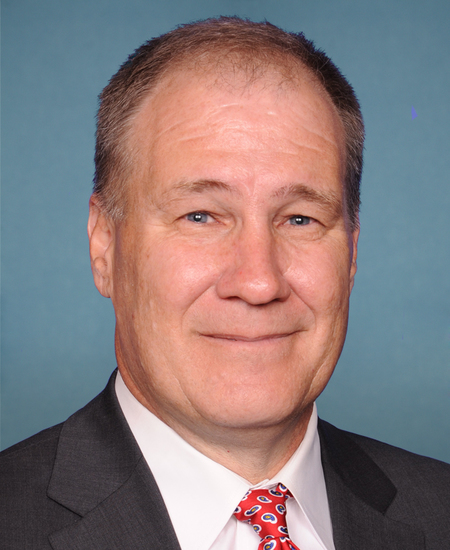
Rep. Trent Kelly
Sponsored bills
Institutional Grants for New Infrastructure, Technology, and Education for HBCU Excellence Act or the IGNITE HBCU Excellence Act This bill establishes a grant program to support long-term improvements of historically Black colleges and universities (HBCUs) and graduate programs at HBCUs. Specifically, the bill requires the Department of Education (ED) to award grants to HBCUs to improve campus facilities. A recipient must use grant funds for certain activities, such as constructing or renovating facilities, carrying out major repairs, and strengthening the safety and security of a campus. Any new construction, modernization, or renovation projects must meet building code and energy and water conservation requirements. Further, HBCUs must seek to procure contracts from certain small businesses, including those owned and controlled by veterans and service-disabled veterans. The bill prohibits the use of grant funds for specified activities, including for the payment of routine and predictable maintenance costs, minor repairs, and utility bills. The Government Accountability Office must study the implementation of the grant program. The bill also requires ED to repay the outstanding balance of principal, interest, fees, and costs and any related reimbursements for certain capital financing loans.
Recognizing the Protection of Motorsports Act of 2019 or the RPM Act of 2019 [ sic ] This bill authorizes the modification of a vehicle's air emission controls for vehicles that are not legal for operation on a street or highway and are used solely for competition.
End Taxpayer Funding of Gender Experimentation Act of 2021 This bill modifies provisions relating to federal funding for, and health insurance coverage of, gender reassignment medical interventions, which include surgical remedies and hormone therapy arising from a conflict between an individual's gender identity and the sex the individual has or was identified as having at birth. Specifically, the bill prohibits the use of federal funds for gender reassignment medical interventions or for health coverage that includes such interventions. Additionally, such interventions may not be provided in a federal health care facility or by a federal employee. Under current law, coverage of these interventions through Medicare and Medicaid is generally determined at the state level. The bill's restrictions regarding the use of federal funds do not apply to treatment of individuals with medically verifiable disorders of sex development, such as individuals born with atypical development of chromosomal, gonadal, or anatomical sex. The bill also prohibits qualified health plans from including coverage for gender reassignment medical interventions. Further, plans that include coverage for such interventions are not eligible for federal subsidies.
Protecting Children From Experimentation Act of 2021 This bill establishes a new criminal offense for performing gender reassignment medical interventions on minors. It also provides that a minor who receives such an intervention may bring a civil action against each person who performed that intervention. The bill defines these interventions as certain surgeries or the use of hormones to change the body of an individual to correspond to a sex that is discordant with the individual's biological sex. It excludes, however, interventions in cases where an individual has ambiguous external biological sex characteristics or where a physician has determined that an individual does not have normal sex chromosome structure, sex steroid hormone production, or sex steroid hormone action. An individual who performs these interventions on a minor is subject to criminal penalties—a fine, a prison term of up to five years, or both. A minor who receives these medical interventions may not be arrested or prosecuted for an offense under this bill.
Regulations from the Executive in Need of Scrutiny Act of 20 21 This bill revises provisions relating to congressional review of agency rulemaking. Specifically, the bill establishes a congressional approval process for a major rule. A major rule may only take effect if Congress approves of the rule. A major rule is a rule that results in (1) an annual effect on the economy of $100 million or more; (2) a major increase in costs or prices for consumers, individual industries, government agencies, or geographic regions; or (3) significant adverse effects on competition, employment, investment, productivity, innovation, or the ability of U.S.-based enterprises to compete with foreign-based enterprises. In addition, the bill establishes a congressional disapproval process for a nonmajor rule. A nonmajor rule may only take effect if Congress does not disapprove of the rule.
Lawful Interstate Transportation of Firearms Act This bill revises criminal provisions related to the interstate transportation of firearms and ammunition. An individual may transport a firearm between two places (e.g., states) where it is legal to possess, carry, or transport the firearm. During transport, the firearm must be unloaded and secured or securely stored. Additionally, an individual may transport ammunition, or a detachable magazine or feeding device, between two places where it is legal to possess, carry, or transport the ammunition, magazine, or feeding device. During transport, the ammunition, magazine, or feeding device must not be loaded into a firearm and must be securely stored. The term transport includes staying in temporary lodging; stopping for food, fuel, vehicle maintenance, an emergency, or medical treatment; or any other activity incidental to the transport. The bill prohibits the arrest or detention of an individual for a state or local firearm or ammunition violation unless there is probable cause to believe the individual failed to comply with the provisions of this bill, and there is probable cause to believe the individual committed another crime.

Save Local Business Act This bill provides that a person may be considered a joint employer in relation to an employee under federal labor law only if such person directly, actually, and immediately (and not in a limited and routine manner) exercises significant control over the essential terms and conditions of employment. Such control may by demonstrated by hiring and discharging employees, determining individual employee rates of pay and benefits, day-to-day supervision of employees, assigning individual work schedules, positions, and tasks, and administering employee discipline.
Homes for Every Local Protector, Educator, and Responder Act of 2021 or the HELPER Act of 2021 This bill establishes a program administered by the Department of Housing and Urban Development to provide mortgage assistance to law enforcement officers, elementary and secondary school teachers, firefighters, or other first responders. Specifically, these individuals may be eligible for a one-time mortgage on a primary family residence with no down payment and no monthly mortgage insurance premium.
Zero Foreign Influence in Education Act of 2021 This bill revises certain disclosure requirements for institutions of higher education (IHEs). Specifically, the bill requires an IHE to disclose to the Department of Education (ED) any gift from or contract with a foreign source, regardless of the amount of the gift or contract. Under current law, an IHE must disclose to ED a gift or contract from a foreign source that is valued at $250,000 or more, considered alone or in combination with all other gifts from or contracts with that foreign source within a calendar year. An IHE must also report the identity of each foreign source and the name of each foreign government. Further, an IHE must report additional information when it receives a restricted or conditional gift or contract from a foreign source. Such additional information includes (1) the identity of the foreign source; (2) the identity of the specific department, college, project, or other division of the IHE that is the recipient of the gift or contract, if applicable; and (3) the intended purpose of the gift or contract.