

State, Local, Tribal, and Territorial Fiscal Recovery, Infrastructure, and Disaster Relief Flexibility Act This bill allows states, tribes, territories, and localities to use certain COVID-19 relief funds for new categories of spending, including for natural disasters and infrastructure projects. It also makes changes to expenditure deadlines and other aspects of this funding. Specifically, recipients may use funds for emergency relief from natural disasters and associated negative economic impacts of natural disasters. In addition, recipients may use a portion of their COVID-19 relief funds for designated infrastructure projects, such as nationally significant freight and highway projects. Furthermore, the bill allows recipients to expend COVID-19 relief funds on these types of infrastructure projects until September 30, 2026. Under current law, recipients must expend the funds by December 31, 2024. Other changes in the bill include (1) modifying eligibility and allocation requirements for funding set aside for counties and Indian tribes that are near public lands, (2) allowing Indian tribes an additional year to expend their COVID-19 relief funds, and (3) establishing a process for government entities to decline COVID-19 relief funds and requiring any declined funds to be used to reduce the federal deficit.
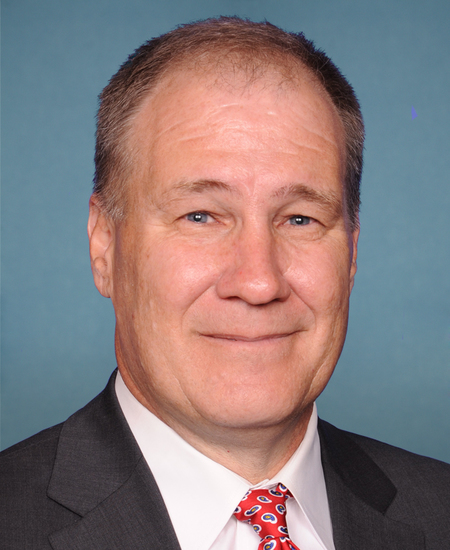
Rep. Trent Kelly
Sponsored bills
This resolution recognizes the ultimate sacrifice of the unknown soldiers interred at Arlington National Cemetery and expresses gratitude and appreciation of all the members of the Armed Forces who have served during wars and peacetime. Additionally, the resolution commends all members of the 3d Infantry Regiment, specifically those who guard the Tomb of the Unknown Solider.
Maximum Pressure Act This bill expands sanctions and economic penalties on Iran. It also restricts the President from unilaterally lifting or waiving the sanctions or penalties and increases congressional oversight of them. Specifically, the bill requires the President to impose visa- and asset-blocking sanctions. Additionally, it modifies existing sanctions, including by (1) providing statutory authority for executive orders imposing sanctions; (2) applying sanctions to additional sectors of Iran's economy; and (3) broadening sanctionable conduct to cover, for example, assisting Iran with the acquisition of ballistic missiles and the complicity of Iranian officials in human rights violations in specified countries. The bill also requires reporting on licenses that authorize activities subject to sanctions. The bill prohibits U.S. representatives at the International Monetary Fund from voting to allow Iran's access to special drawing rights (a currency support tool) and places restrictions on financial transactions with Iran. The restrictions include requiring domestic financial institutions to implement special measures with respect to foreign financial institutions that conduct significant transactions connected to the Instrument in Support of Trade Exchanges (a European mechanism that bypasses U.S. sanctions when carrying out trade with Iran). The Department of State must maintain the Islamic Revolutionary Guard Corps' designation as a terrorist organization and must designate Ansharallah (or Houthis), which operates in Syria, as a foreign terrorist organization. The bill also requires reports on U.S. sanctions concerning Iran, the status of Iran's nuclear weapons program, and other matters.
Camp Lejeune Justice Act of 2021 This bill allows certain individuals to sue and recover damages for harm from exposure to contaminated water at Camp Lejeune in North Carolina between August 1, 1953, and December 31, 1987. This action is available only to individuals who were exposed to contaminated water for at least 30 days. The bill prohibits the U.S. government from asserting specified immunity from litigation in response to such a lawsuit. The bill also prohibits an individual who brings such an action from bringing a separate tort action against the United States based on the same harm.
Child Interstate Abortion Notification Act This bill creates new federal crimes related to transporting a minor across state lines for an abortion. Specifically, the bill makes it a crime to knowingly transport a minor across a state line to obtain an abortion without satisfying the requirements of a parental involvement law in the minor's resident state. A parental involvement law requires parental consent or notification, or judicial authorization, for a minor to obtain an abortion. The bill prohibits an individual who has committed incest with a minor from knowingly transporting the minor across a state line to receive an abortion. Finally, the bill makes it a crime for a physician to knowingly perform or induce an abortion on an out-of-state minor without first notifying the minor's parent.
Agricultural Guest Worker Reform Initiative Act of 2021 or the AGRI Act of 2021 This bill revises provisions related to H-2A (temporary agricultural worker) visas, including to eliminate certain requirements to hire U.S. workers, expand the program to include dairy and ranch workers, and shift administrative responsibilities from the Department of Labor to the Department of Agriculture (USDA). The bill establishes a trust fund to be used to (1) administer and enforce the program, (2) collect a portion of guest worker wages to be paid upon a worker's return to the worker's country of origin, and (3) provide emergency medical services for guest workers. The bill eliminates a requirement that, during the first half of the time period of a guest worker contract, certain employers must hire any qualified U.S. employee who applies to perform the job the guest worker was hired to perform. Furthermore, an employer shall not be required to pay a guest worker a wage higher than the highest of federal, state, or local minimum wage rates. The bill places limitations on when guest workers may receive civil legal assistance for low-income individuals. Employer-provided housing shall be governed generally by USDA regulations, where currently such housing must meet applicable federal, state, or local standards. Employers shall not have to provide housing to workers who can reasonably return to their permanent residence within the same day. An employer may file a civil action to recover transportation costs from a guest worker who absconds from a contract.
COVID-19 Border Protection (CBP) Act This bill requires the Department of Homeland Security (DHS) to devise and implement a strategy to ensure that no alien with COVID-19 (i.e., coronavirus disease 2019) in DHS or Department of Health and Human Services custody may be released into the community during a public health emergency related to COVID-19. Funds previously provided to the Department of State for supporting international efforts to help migrants and refugees respond to COVID-19 shall be transferred to DHS to implement this strategy.
Stabilizing Medicare Access to Rehabilitation and Therapy Act or the SMART Act This bill modifies the application of a certain Medicare payment methodology for outpatient physical therapy services and outpatient occupational therapy services that are furnished by a therapy assistant. Under current law, effective January 1, 2022, payment for such services is 85% of the otherwise applicable rate. The bill delays this effective date by one year and excludes services that are furnished in rural or medically underserved areas from this payment methodology. The bill also specifies that supervision requirements for outpatient physical therapy services that are furnished through private practice may not be more stringent for purposes of Medicare coverage than under state law.
Protecting Financial Privacy Act of 2021 This bill prohibits a federal agency from creating, implementing, or administering a program that requires financial institutions or individuals to report on the balances of, transactions involving, or transfers into and out of financial accounts. This prohibition does not apply to laws or regulations in effect on September 1, 2021, or to the Bank Secrecy Act (laws that require financial institutions and other entities to report on certain financial transactions to prevent money laundering, the financing of terrorism, and other criminal activity). This prohibition does apply, however, to regulations issued under the Bank Secrecy Act after September 1, 2021.
Israel Relations Normalization Act of 2021 This bill requires the Department of State to take certain actions promoting the normalization of relations between Israel, Arab states, and other relevant countries and regions. Specifically, the State Department must develop a strategy on expanding and strengthening the Abraham Accords (the term used to refer collectively to agreements between Israel and the United Arab Emirates and between Israel and Bahrain marking the public normalization of relations between the two Arab countries and Israel). The strategy must include a description of how the U.S. government will encourage further normalization of relations with Israel. In addition, the State Department must report on options for U.S. international efforts to promote the strengthening of ties between Israel, Arab states, and other relevant countries and regions. The State Department must also report on the status of the normalization of relations with Israel, including information on (1) laws that punish individuals for people-to-people relations with Israelis (i.e., anti-normalization laws), and (2) evidence of steps taken by Arab governments toward permitting or encouraging normalized relations between their citizens or residents and Israeli citizens.