

Give Kids a Chance Act of 2025 This bill expands the Food and Drug Administration’s (FDA’s) authority with respect to research on rare pediatric diseases, including by permitting the FDA to take enforcement action against drug sponsors that fail to satisfy pediatric study requirements and by reauthorizing programs that support pediatric research. Specifically, the bill modifies requirements relating to molecularly targeted pediatric cancer investigations to permit research on new drugs in combination with active ingredients that have already been approved, provided certain conditions are met; permits the FDA to take enforcement action against drug sponsors that fail to comply with pediatric study requirements, if such sponsors demonstrated a lack of due diligence in satisfying the requirement; renews the FDA’s authority to award priority review vouchers to sponsors of new products intended to treat rare pediatric diseases through September 30, 2029; and reauthorizes through FY2027 certain funding for the National Institutes of Health to support priority pediatric research. The bill also provides statutory authority for the FDA’s interpretation of the orphan drug exclusivity period. The bill specifies, consistent with FDA regulations, that the seven-year market exclusivity period for drugs for rare diseases or conditions (i.e., orphan drugs) prohibits the approval of the same drug for the same approved use or indication with respect to the disease or condition. (In Catalyst Pharmaceuticals, Inc. v. Becerra , a court rejected the FDA’s interpretation and held that orphan drug exclusivity extends to all uses or indications for the disease or condition.)
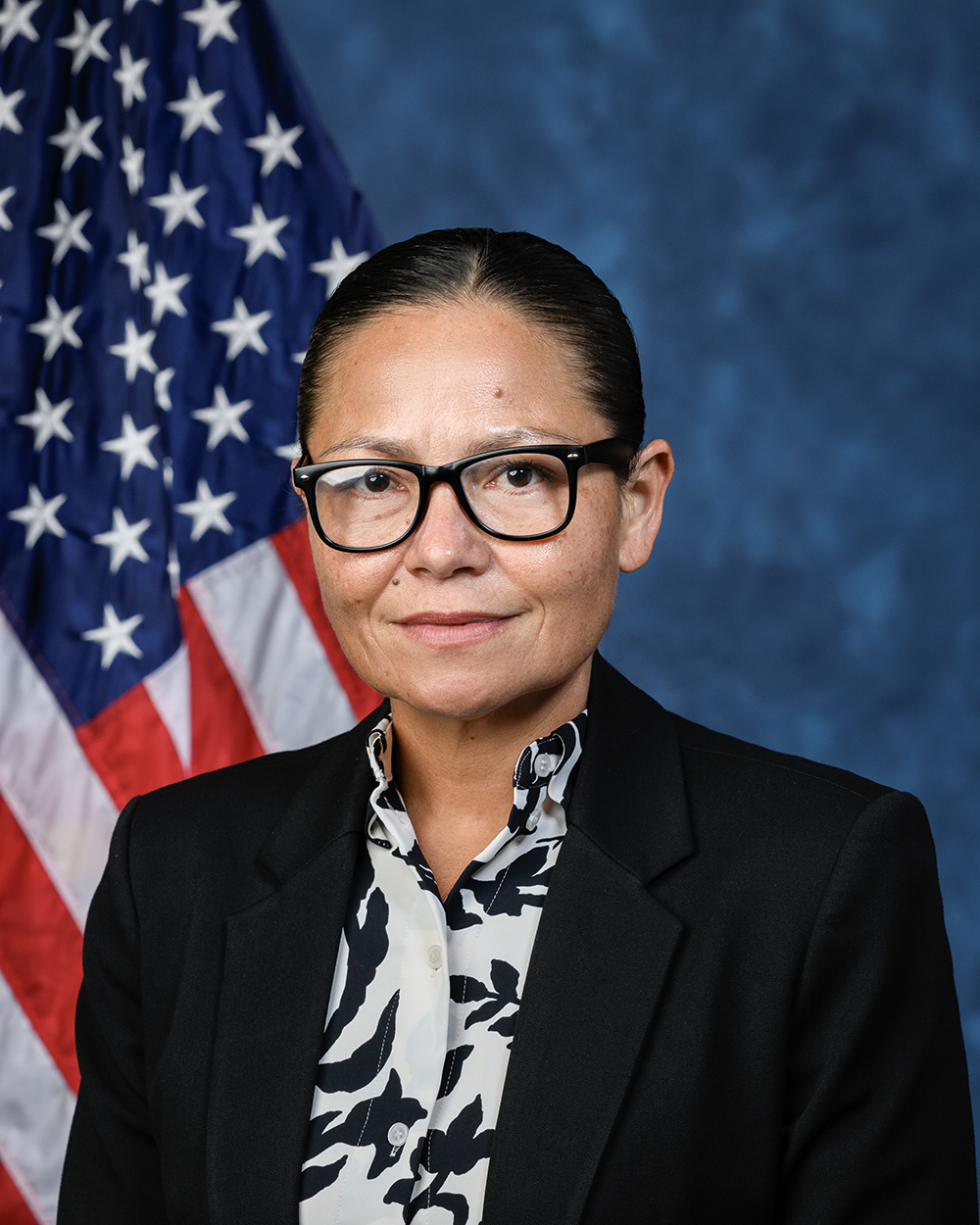
Rep. Kimberlyn King-Hinds
Sponsored bills
Maddy summaryThe CHARGE Act of 2025 establishes a $50 million annual grant program (2026-2030) to fund solar energy systems and energy storage technologies at Federally Qualified Health Centers (FQHCs). Eligible recipients - including FQHCs, state/local governments, or nonprofits representing FQHCs - can use grants to install renewable energy systems or receive technical assistance for their design and operation. The program, administered by the Department of Energy, directly supports community health centers in improving energy resilience and reducing operating costs. It specifically targets FQHCs serving underserved populations, as defined under the Social Security Act.
Maddy summaryThis bill expands eligibility for federal TIFIA loans to include most airport infrastructure projects, such as new terminals, security systems, or surface transportation links, regardless of revenue generation or public access. It raises the maximum loan amount from $75 million to $100 million and removes certain eligibility barriers for airport projects seeking loan waivers. The changes directly affect airport authorities and developers seeking federal financing for aviation facility construction or upgrades. Key provisions clarify that projects enhancing air transportation safety, passenger movement, or airport operations qualify under TIFIA. The bill modifies existing transportation law to simplify access to federal credit for airport infrastructure.
Maddy summaryHR 6211, the Medical Professional Access Act, allows health care professionals working under federal contracts to provide services across state lines during federally declared emergencies without needing separate state licenses. It directly affects doctors, nurses, and other licensed health care workers who serve under federal agreements in response to crises like natural disasters or pandemics. The key provision overrides state licensing laws when services are provided during emergencies certified by the President, HHS Secretary, or other federal authorities, as long as the care stays within the scope of the federal contract. This streamlines access to medical help in urgent situations without requiring professionals to navigate varying state licensing rules. The bill does not change routine practice or apply outside of federally declared emergency contexts.
Maddy summaryThis bill exempts active and reserve uniformed service members' military compensation from federal income tax. It directly affects service members by excluding their active-duty pay from taxable income under a new Section 139J in the tax code, while explicitly excluding retirement pensions from this benefit. The key mechanism is a tax exclusion for current service pay, effective for taxable years after enactment. The bill does not alter retirement pay taxation or apply to civilian employees.
Maddy summaryHR 6190, the Tax Cuts for Veterans Act of 2025, makes military retirement pay and disability-related benefits tax-free for veterans and active-duty service members. The bill amends the tax code to exclude all retirement pay (under Titles 10 and 14 U.S. Code) and disability compensation (under Titles 10, 14, 37, or 38 U.S. Code) from taxable income. This directly affects veterans receiving retirement or disability benefits, including those with combat-related injuries, by eliminating federal income tax on these payments. The policy change applies to taxable years beginning after the bill's enactment.
Rural Hospital Closure Relief Act of 2025 This bill temporarily allows additional hospitals to qualify as critical access hospitals (CAHs) that receive special payment under Medicare. Currently, in order to qualify as a CAH under Medicare, a hospital must either (1) be located more than 35 miles (or 15 miles in mountainous regions or areas with only secondary roads) from another hospital, or (2) have been certified prior to January 1, 2006, by the state as a necessary provider of services in the area. The bill allows a hospital to also qualify if the hospital is a small, rural hospital that (1) serves a health professional shortage area, or a high number of low-income individuals or Medicare beneficiaries; (2) has experienced financial losses for two consecutive years; and (3) attests to having a strategic plan to address financial solvency and to committing to provide a service that is in high demand in the hospital's service area. This authority expires nine years after the bill's enactment. The Government Accountability Office must study the effects of the bill's implementation. In addition, the Medicare Payment Advisory Commission must study and recommend payment systems for rural hospitals under Medicare. The Centers for Medicare & Medicaid Services must subsequently establish a mechanism and issue guidance on how newly designated CAHs may transition to different payment models under Medicare, including any new payment models recommended by the commission.
Maddy summaryHR 6123, the "Promoting Diplomacy with Australia Act," requires the U.S. Assistant Secretary of State for East Asia and Pacific Affairs to submit a report within 30 days of enactment on the capacity of the U.S. diplomatic mission in Australia. The report must detail current staffing and operations, planned growth for 2025-2030, interagency expansion, necessary support systems, resource gaps affecting U.S. objectives (including the Australia-U.S. alliance and AUKUS partnership), and recommendations for additional facilities, staffing, and funding. This procedural bill mandates a comprehensive analysis to address potential shortfalls but does not enact new policy or funding.
Maddy summaryThe Water Infrastructure Modernization Act of 2025 amends federal water law to define and support "intelligent water infrastructure technology," including real-time monitoring systems, AI-driven wastewater optimization tools, leak detection sensors, and advanced metering for conservation. It directly affects municipal water systems and utilities by expanding eligible uses for federal grants - allowing funds for implementing these technologies (like predictive aquifer recharge systems) while prohibiting grants for planning or maintenance. The bill increases annual grant funding from $25 million to $50 million (starting in 2028) and requires annual reports to Congress on funded projects and their resiliency improvements. This creates a clear pathway for communities, especially disadvantaged ones, to access federal support for modernizing aging water infrastructure through data-driven solutions.
Maddy summaryHR 5992, the "Stuck On Hold Act," requires the Department of Veterans Affairs (VA) to improve wait times for veterans calling its standard customer service phone lines. Within one year of enactment, the VA must implement an automated system that tells callers their expected wait time and offers a callback if the wait exceeds 10 minutes. The bill also directs the VA Secretary to issue guidance aimed at reducing the average call wait time to 10 minutes or less. This directly affects veterans calling VA service lines (excluding the 38 U.S.C. §1720F(h) hotline and emergency department lines).