

Maddy summaryThe Kids Online Safety Act (HR 7891) would require major online platforms (with high revenue or user numbers) to implement safety features for children and teens, including default protective settings, parental controls, and age verification. It would mandate platforms to report annually on risks to minors and their safety measures, and prohibit advertising harmful products (like tobacco, alcohol, or gambling) to minors. The bill directly affects social media platforms, online video games, and video streaming services that are used by minors, with the goal of preventing mental health harms, compulsive usage, and cyberbullying.
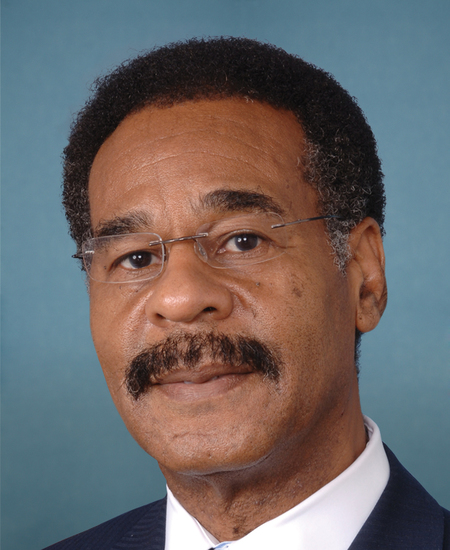
Rep. Emanuel Cleaver
Sponsored bills
Maddy summaryThis bill directs the Joint Committee on the Library to procure a statue of Benjamin Franklin and place it in the U.S. Capitol. The committee must secure the statue within two years of the bill's enactment and install it in a public-accessible location by January 1, 2026, for viewing during Capitol Visitor Center guided tours. It is a procedural measure with no policy changes or direct impact on constituents or legislation.
Maddy summaryThis bill modifies Medicaid and CHIP rules to let eligible out-of-state healthcare providers enroll without extra state screening. It applies to providers already in Medicare or their home state program, with low fraud risk, serving children under 21 with complex medical conditions. Providers would receive 5 years of enrollment under this streamlined process, eliminating state-level barriers. The change directly affects children seeking specialized care across state lines and the providers who serve them.
Maddy summaryHRES 1461 is a symbolic resolution designating September 2024 as "National Voting Rights Month" to raise awareness about voting access. It encourages all U.S. citizens to uphold voting rights, supports existing voting rights legislation like the Freedom to Vote Act, and recommends schools teach about voting history and current restrictions. The resolution specifically aims to highlight efforts to address historical and ongoing barriers affecting historically marginalized groups, including Black, Latino, and disabled voters. It does not create new laws but promotes educational initiatives and media campaigns about registration deadlines and election access.
Maddy summaryHRES 1456 is a symbolic resolution designating September 17, 2024, as "Constitution Day" to honor the signing of the U.S. Constitution on September 17, 1787. It calls for the people of the United States to observe the day with ceremonies and activities, recognizing the Constitution's historical significance and foundational role in American governance. This resolution does not create new laws or affect any individuals or policies; it is purely a non-binding expression of support by the House of Representatives.
Maddy summaryThe TIPS Act repeals the lower minimum wage for tipped workers, requiring employers to pay the standard federal minimum wage (instead of a reduced rate that relied on tip credits) and mandating that all tips go directly to employees - except for allowed tip pooling among staff who regularly receive tips. It also creates a new tax deduction for qualified tips received in traditional tipped occupations (like food service, hospitality, and custodial work), limited to individuals with adjusted gross income under $112,500. This deduction applies to both itemizing and non-itemizing taxpayers, with reporting requirements for tips via employer statements. The bill modifies tax forms to accommodate this change, effective for tax years starting after December 2024.
Maddy summaryThe Workforce of the Future Act of 2024 requires federal agencies to create reports analyzing how artificial intelligence impacts the workforce, identify affected industries and demographic groups, and recommend workforce development strategies. It authorizes $160 million for Department of Education grants to expand emerging technology education from pre-K through high school, with a focus on serving underrepresented groups like minorities, girls, and low-income students. The bill also allocates $90 million for Department of Labor grants to upskill workers in industries most affected by AI, particularly those with high school diplomas employed in AI-impacted sectors. Both grant programs require detailed reporting on demographics served and must address structural barriers faced by vulnerable populations. The legislation aims to prepare the workforce for AI-driven changes through education expansion and targeted workforce development.
Maddy summaryThe American Housing and Economic Mobility Act of 2024 provides down payment assistance to first-time homebuyers, expands Fair Housing Act protections to include gender identity, sexual orientation, marital status, source of income, and veteran status, and makes significant reforms to the Community Reinvestment Act to improve access to credit in underserved communities. The bill also provides housing loan benefits for direct descendants of veterans who served between 1944 and 1968, increases accessibility requirements for housing constructed with federal funds, and includes estate tax changes for high-value estates. It aims to address housing affordability, reduce discrimination in housing, and improve access to credit in underserved communities.
Maddy summaryHRES 1437 is a ceremonial resolution designating the week beginning September 9, 2024, as "National Hispanic-Serving Institutions Week." It recognizes Hispanic-serving institutions (HSIs) - colleges and universities with at least 25% Hispanic enrollment - and their role in educating low-income students, advancing economic mobility, and serving 31.7% of all undergraduate students. The resolution calls for the public and organizations to observe this week with ceremonies and activities during Hispanic Heritage Month. It does not create new laws, allocate funding, or change existing policies - it is purely a symbolic gesture of recognition.
Maddy summaryHRES 1432 designates September 10, 2024, as "National Firearm Suicide Prevention Day" to raise public awareness about firearm suicides and promote safe storage practices. The resolution encourages healthcare professionals to discuss safe firearm storage with patients and supports the day's goals of reducing firearm suicides through education. It directly affects the general public and healthcare providers by highlighting evidence that safe storage lowers suicide risk, referencing statistics like 54.6% of U.S. suicides in 2022 involving firearms. The bill is symbolic, with no new legal requirements, and aligns with existing awareness efforts like Firearm Suicide Prevention Day.