

Maddy summaryThis bill creates federal funding for community-based violence intervention programs in high-violence areas, targeting communities with 35+ homicides annually or 20+ homicides with rates double the national average. It establishes grants for community organizations to implement trauma-informed violence interruption strategies, hospital-based programs for injured patients, and job training for "opportunity youth" (16-25 year olds not in school or work). The legislation authorizes $300 million in 2026, increasing to $700 million annually through 2033, with requirements for evidence-based approaches that reduce violence without contributing to mass incarceration. It creates a National Community Violence Response Center to coordinate data collection, research, and best practices for these programs. The focus is on prevention through economic opportunity, trauma care, and community-driven interventions rather than traditional law enforcement approaches.
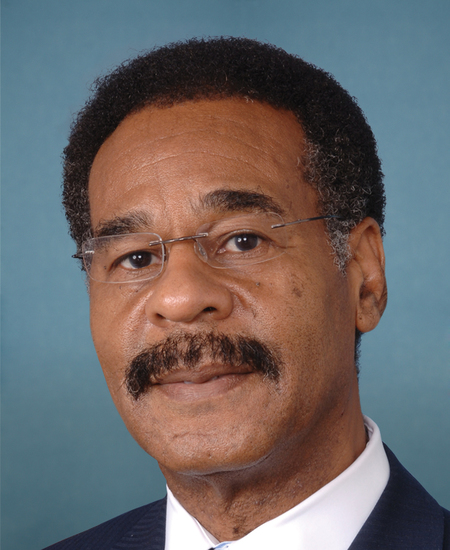
Rep. Emanuel Cleaver
Sponsored bills
Maddy summaryHR 2225, the Access to Small Business Investor Capital Act, modifies how investment companies report fees related to business development companies (BDCs). It allows registered investment companies to exclude fees paid indirectly to BDCs (which primarily invest in small businesses) from their "Acquired Fund Fees and Expenses" calculation on SEC registration statements. This change simplifies reporting for investment companies holding BDC shares by removing those specific fees from expense calculations. The bill directly affects investment companies filing SEC forms (N-1A, N-2, N-3) that hold BDC investments, potentially reducing their reported expense ratios. It does not create new funding for small businesses but aims to streamline investment in BDCs by easing reporting burdens.
Maddy summaryThe Caring for Survivors Act of 2025 increases monthly dependency and indemnity compensation for surviving spouses of veterans. It changes the calculation method from a fixed $1,154 to 55% of a specific veteran compensation rate, effective six months after enactment. The bill also reduces the required continuous disability rating period for survivors from 10 years to 5 years, and provides a proportional payment for cases where the rating period is shorter than 10 years. Surviving spouses of veterans who died before January 1, 1993, receive the greater of their current benefit or the new calculation. This directly affects surviving spouses eligible for benefits under Title 38, U.S. Code, particularly those with veterans who died prior to 1993.
Maddy summaryHR 1713, the Agricultural Risk Review Act of 2025, requires the Secretary of Agriculture to join the Committee on Foreign Investment in the U.S. (CFIUS) when reviewing transactions involving U.S. agricultural land, biotechnology, or agriculture-related infrastructure (like transportation or processing). It specifically targets acquisitions of agricultural land by foreign entities from China, North Korea, Russia, or Iran, mandating that the Secretary of Agriculture first assesses these transactions before CFIUS decides whether to proceed with a full review. The law includes a sunset provision, ending these requirements for a specific country once it is removed from the federal list of foreign adversaries.
Maddy summaryThe Downpayment Toward Equity Act of 2025 creates a federal program to provide financial assistance to first-generation homebuyers for down payments, closing costs, and other home purchase expenses. It authorizes $100 billion in funding to be distributed through states and eligible entities, with grants that can cover up to $20,000 or 10% of a home's purchase price (whichever is greater). To qualify, homebuyers must meet income limits (up to 120-140% of median area income), be first-time homebuyers with no prior home ownership by their parents, and complete homebuyer counseling. The program requires recipients to occupy homes as primary residences for at least five years, with repayment required if they sell sooner, and states must report on program demographics to ensure equitable outcomes.
Maddy summaryThis bill requires major internet companies (including social media, streaming services, and app stores) and broadband providers to contribute to the Universal Service Fund, which subsidizes affordable broadband in rural and high-cost areas. It exempts smaller companies that transmit less than 3% of U.S. broadband data or earn under $5 billion annually. The Federal Communications Commission must create a new support mechanism to help rural broadband providers cover costs, while ensuring contributions remain fair and predictable. The bill explicitly states it does not grant the FCC new authority over these companies.
Maddy summaryHR 4011, the Community Paramedicine Act of 2025, creates a federal grant program to fund community paramedicine programs in rural areas. It provides grants to eligible entities - such as emergency medical services agencies, local governments, or Tribal organizations - to hire personnel, purchase equipment, cover training costs, and conduct outreach. The bill specifically reserves 15% of annual funding for programs serving Tribal communities and limits grants to $750,000 per entity (or $1.5 million for joint applications) over a maximum 5-year period. These programs aim to reduce unnecessary emergency room visits by using specially trained paramedics to address health issues and improve access to primary care for underserved populations.
Maddy summaryThe Choice Neighborhoods Initiative Act of 2025 authorizes $1 billion in federal grants to transform neighborhoods with extreme poverty and severely distressed housing. It provides funding for eligible entities like local governments, public housing agencies, and nonprofits to implement transformation plans that include rehabilitating or replacing distressed housing, ensuring one-for-one replacement of public and assisted housing units, and providing supportive services for residents. The legislation requires grantees to develop long-term affordability plans, maintain resident involvement throughout the process, and provide relocation assistance to displaced residents while complying with fair housing and accessibility requirements. The bill also mandates regular reporting on program implementation and outcomes to ensure accountability for how funds are used to revitalize neighborhoods.
Maddy summaryThe Domestic Workers Bill of Rights Act (HR 3971) would establish key labor protections for domestic workers, including nannies, housekeepers, and caregivers who work in private homes. The bill requires written agreements for workers employed 8+ hours per week, provides earned sick days (1 hour for every 30 hours worked), mandates fair scheduling practices with 72-hour notice for schedule changes, and extends overtime protections to live-in domestic employees. It also prohibits unfair wage deductions, guarantees meal and rest breaks, and ensures privacy protections including no monitoring in private living spaces. The bill directly affects approximately 2.2 million domestic workers across the U.S., who are disproportionately women of color and immigrants. Enforcement would be handled by the Department of Labor through new complaint resolution mechanisms and oversight.
Maddy summaryThis resolution (HRES 501) amends House rules to allow two members - one from the majority party and one from the minority party - to jointly sponsor public bills or resolutions. It directly affects House members by changing the sponsorship process for legislative proposals. The key provision adds a new paragraph to Rule XII, permitting this cross-party sponsorship structure while updating related procedures for naming cosponsors and submitting constitutional statements. The change aims to facilitate bipartisan collaboration on legislative proposals within the House rules framework.