

Maddy summaryHRES 702 is a symbolic resolution condemning the September 10, 2025, assassination of Charlie Kirk, founder of Turning Point USA and a conservative political activist. It expresses condolences to his family, praises first responders, and reaffirms the right to peaceful assembly. As a non-binding resolution, it does not create new laws or policies but serves as a formal statement of condemnation. The resolution directly addresses the House of Representatives' stance on this event, with no direct impact on constituents or legislation.
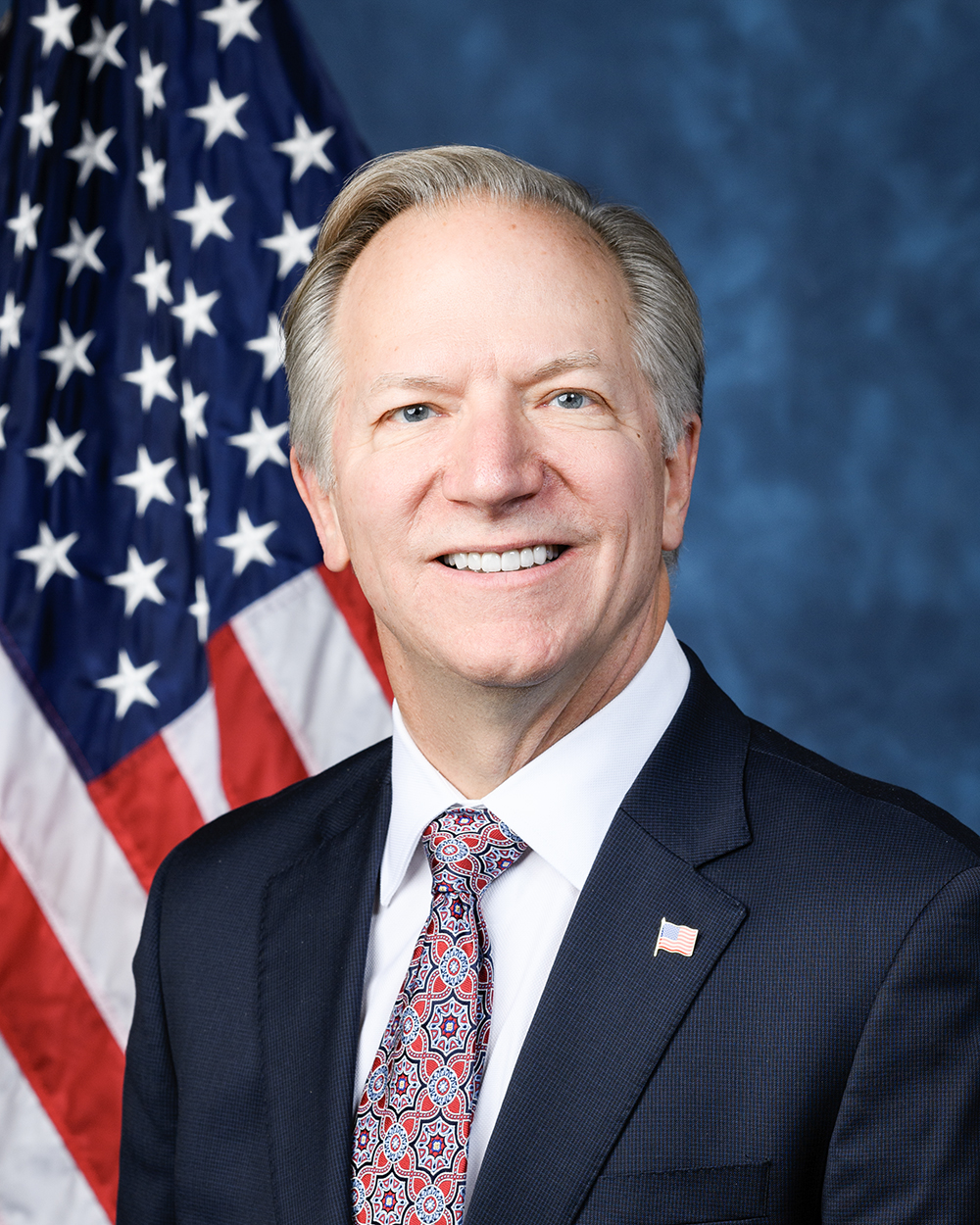
Rep. Robert F. Onder, Jr.
Sponsored bills
Maddy summaryThis bill ensures U.S. Border Patrol Agents and Customs and Border Protection officers who continue working during a government shutdown receive their salaries. It authorizes funding from the Treasury for fiscal year 2026 to cover their salaries and expenses during any lapse in discretionary appropriations. The measure specifically applies to employees "excepted from furlough," meaning those required to work during shutdowns. It does not change eligibility for pay but guarantees funding for these personnel during funding gaps.
Maddy summaryThe SPACE Act of 2025 requires the General Services Administration (GSA) to work directly with federal agencies that lease office space to improve shared work arrangements. Specifically, the GSA must develop criteria for expanding shared spaces, identify how special-use areas could support this, and establish measurable goals for success with tenant agencies. This bill affects all federal agencies leasing space through GSA, aiming to make office space use more efficient. The GSA must report to Congress on these efforts within six months of the bill's enactment.
Maddy summaryHR 5032, the Nitazene Control Act, permanently classifies all nitazenes and their chemical analogs as Schedule I controlled substances under the Controlled Substances Act. This means these synthetic opioids, which are significantly more potent than fentanyl and linked to overdose deaths, are now federally banned for all non-medical use. The bill creates a broad chemical definition covering substances with specific structural features (a benzimidazole core and mu-opioid receptor activity), preventing new analogs from evading regulation. It includes a temporary 18-month exemption for researchers already studying these substances under active FDA-approved protocols, requiring them to notify the DEA and apply for proper registration within that period. The law directly affects the illicit drug market and ongoing research involving nitazenes, aiming to streamline enforcement and prevent new analogs from entering the supply chain.
Maddy summaryHR 4964, the Child Interstate Abortion Notification Act, requires physicians performing abortions on minors traveling across state lines to provide 24 hours of actual or constructive notice to the minor's parent before the procedure. It directly affects minors (under 18) seeking abortions in a state different from their residence, their parents, and healthcare providers. Key provisions mandate parental notification unless exceptions apply - such as medical emergencies, court waivers, verified abuse disclosures, or the minor being accompanied by a documented parent. The law aims to ensure compliance with parental involvement requirements in the minor’s home state, with penalties for noncompliance including fines or imprisonment for physicians.
Maddy summaryHR 4924, the Rails to Trails Landowner Rights Act, requires states and trail groups to notify landowners and local governments before converting abandoned railroad corridors into trails. It mandates that trail sponsors obtain written landowner approval, pay fair market value compensation for property impacts (including lost development and infrastructure costs), and maintain the right-of-way in perpetuity. The bill also requires a 90-day public comment period, a cost-benefit analysis of safety, economic, and environmental impacts, and creates an online portal for transparency. These changes directly affect landowners adjacent to former rail corridors and trail sponsors seeking interim trail use.
Maddy summaryThis resolution (HRES 611) clarifies that treating life-threatening conditions like ectopic pregnancy is medically and legally distinct from elective abortion. It aims to prevent confusion among medical professionals by emphasizing that emergency care for ectopic pregnancy (which requires specific treatments like methotrexate or surgery) does not constitute abortion. The resolution calls on medical organizations and healthcare educators to accurately inform providers and the public about this distinction, ensuring timely treatment without unnecessary delays. As a non-binding resolution, it does not change laws but seeks to address post-*Dobbs* confusion in emergency care.
Maddy summaryHR 4715, the MEGA Act of 2025, would rename the John F. Kennedy Center for the Performing Arts to the "Donald J. Trump Center for the Performing Arts" effective upon enactment. The bill requires all federal references in laws, regulations, maps, and documents to update to the new name. This is a purely procedural renaming bill affecting only the Kennedy Center's official designation, with no changes to its operations, funding, or programs. The bill does not alter any existing policies or directly impact any other entities or individuals.
Maddy summaryHR 4706 prohibits Chinese government-linked entities (including Chinese corporations, CCP-affiliated organizations, and entities controlled by China) from acquiring, leasing, or owning U.S. agricultural land or residential real estate. The bill requires such entities to sell all existing U.S. agricultural land holdings within one year (with a 180-day letter of intent deadline) and residential real estate holdings within one year, imposing daily fines of $100 per acre for agricultural land violations and $1,000 per residential unit. It also voids noncompete agreements between these entities and their employees. The law applies to all 50 states and territories, with enforcement by the Agriculture and Commerce Departments, and includes a 2-year temporary residential purchase ban ending in 2026 (extendable by the President).
Maddy summaryHR 4710, the No Surprises Act Enforcement Act, increases penalties for health insurance plans and issuers that violate balance billing protections, which prevent surprise medical bills. The bill raises fines from $100 to $10,000 per violation for specific balance billing rule violations and adds a new penalty of three times the difference between initial payment and out-of-network rates for late payments after Independent Dispute Resolution decisions. It requires health plans and nonparticipating providers to make timely payments within 30 days of a payment determination, with interest accruing on late payments. The bill also establishes new transparency reporting requirements for the Secretary to submit regular reports to Congress about audits, enforcement actions, and penalties. These provisions directly affect health insurance issuers, group health plans, and nonparticipating healthcare providers.