

Maddy summaryHR 1379, titled the *Access to Small Business Investor Capital Act*, simplifies reporting requirements for investment companies that hold shares in business development companies (BDCs). The bill allows registered investment companies (like mutual funds) to exclude BDC-related fees and expenses from their standard "Acquired Fund Fees and Expenses" calculations in registration statements, instead disclosing these costs in a footnote. This change directly affects investment companies managing portfolios with BDC investments and the BDCs themselves, reducing administrative complexity. The provision modifies existing SEC disclosure rules under the Investment Company Act of 1940 without creating new capital access for small businesses.
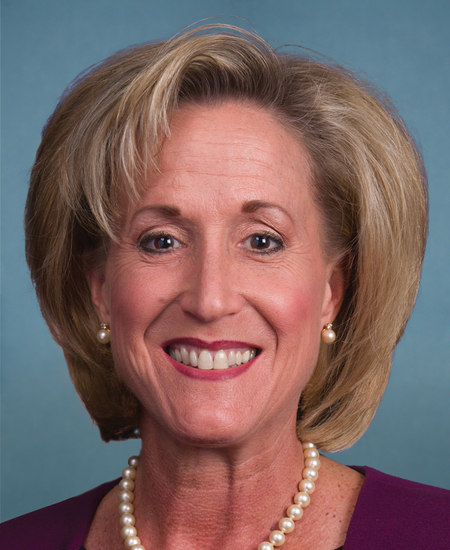
Rep. Ann Wagner
Sponsored bills
Maddy summaryHR 1405, the IMPACTT Human Trafficking Act, establishes two programs within U.S. Immigration and Customs Enforcement's Homeland Security Investigations (HSI). The IMPACTT Program provides trauma support training for HSI staff working with trafficking victims, focusing on recognizing burnout and stress, self-care resources, and supervisor training. The Victim Assistance Program mandates specific staffing (including forensic interview specialists and victim assistance specialists) at HSI offices and task forces to deliver victim-centered, trauma-informed support, including emergency aid like food, shelter, and transportation. The bill requires annual reports to Congress on training participation and victims assisted, aiming to improve both staff well-being and victim support services.
Maddy summaryThe TABS Act of 2023 would rename the Consumer Financial Protection Bureau (CFPB) to the Consumer Financial Empowerment Agency (CFEA) throughout U.S. federal law. This bill would change the agency's name in the Consumer Financial Protection Act of 2010 and over 25 other federal statutes, including the Dodd-Frank Act and Truth in Lending Act. The bill does not alter the agency's responsibilities, authority, or budget structure - only its name. This is a procedural change affecting all federal documents, regulations, and references to the agency.
Congressional Oversight of Russian Sanctions Act This bill requires the President to determine, within 60 days of receiving a request from Congress, whether a person (individual or entity) described in the request meets the criteria to be subject to sanctions imposed in two specified executive orders relating to Russia. The executive orders, dated April 15, 2021, and August 20, 2021, impose sanctions for certain activities including (1) efforts by Russia's government to undermine U.S. elections and democratic institutions, and (2) the construction of specified Russian energy pipelines. The President must also submit a report to Congress stating whether the President imposed or intends to impose sanctions on any person described in such a request from Congress.
Maddy summaryThe SECURE Notarization Act of 2023 establishes federal standards for electronic and remote notarizations in interstate commerce, allowing notaries to verify identities and perform notarizations remotely using video communication. Key requirements include creating audio-visual recordings of remote notarizations, verifying identities through two distinct methods (or a credible witness), and retaining recordings for at least 5 years. The bill ensures federal courts and all states must recognize valid notarizations performed under these standards, regardless of whether the notarization was done electronically, remotely, or with a physical signature. It does not require notaries to use electronic methods and preserves state authority to enforce stricter rules, as long as they meet the minimum federal baseline.
Maddy summaryHR 976, the TCJA Permanency Act, makes permanent many tax provisions from the 2017 Tax Cuts and Jobs Act (TCJA) that were scheduled to expire after 2025. The bill affects individual taxpayers by keeping lower tax rates, higher standard deductions, increased child tax credits, and other key changes permanently. Key provisions include permanent modifications to income tax brackets, repeal of personal exemptions, limits on state and local tax deductions, and increased estate and gift tax exemptions. These changes would prevent the tax code from reverting to pre-TCJA rates and rules for millions of taxpayers.
Maddy summaryHCONRES 13 is a concurrent resolution expressing Congress's support for maintaining the current policy that prohibits imposing new fees on local radio stations for playing music. It states that Congress should not impose any performance fee, tax, royalty, or charge on local radio stations for broadcasting sound recordings over the air, or on businesses like bars and restaurants that play music publicly. The resolution argues that such fees would harm local radio stations - critical sources for emergency information and community programming - and jeopardize the economic model that has supported both radio and the music industry for decades. This resolution does not create new law but formally opposes potential legislative changes to the existing fee structure.
Maddy summaryThis bill creates a new federal crime for assaulting law enforcement officers causing serious injury or death, with penalties up to 10 years in prison for serious injury and up to life for aggravated cases involving death, kidnapping, or attempted killing. It applies when offenses involve interstate travel, commerce, or target officers engaged in law enforcement duties. Federal prosecution requires Attorney General certification that state authorities cannot or will not handle the case, or that federal action is necessary for public safety. The law covers all law enforcement officers (state, local, and federal) who enforce criminal laws or detain individuals.
Maddy summaryThis bill helps new car dealers affected by pandemic-era supply chain disruptions by changing tax rules for inventory sales. It allows dealers using LIFO accounting to treat certain sales of unsold vehicles (liquidations) between March 2020 and December 2021 as "qualified" for tax purposes. Dealers can defer recognizing income from these sales and have until 2026 to replace the sold vehicles before potential tax adjustments apply. The provision specifically targets dealers who couldn't replenish inventory during the supply chain crisis.
Maddy summaryThe Financial Exploitation Prevention Act of 2023 requires investment companies and transfer agents to implement safeguards for "specified adults" (individuals aged 65+ or those with a mental/physical impairment that limits their ability to protect their own financial interests) who hold direct-at-fund accounts. It mandates collecting contact information for a trusted person to help verify account activity, and allows delaying redemption payments (for up to 25 business days total) if financial exploitation is suspected, after notifying the trusted contact and conducting an internal review. The law also requires detailed record-keeping, internal procedures for handling delays, and directs the SEC to submit a report to Congress within one year on further regulatory needs.