

Maddy summaryHR 5110, the Protecting Hunting Heritage and Education Act, amends the Elementary and Secondary Education Act of 1965 to clarify that federal education funds cannot be used for certain weapons - but this restriction does not apply to archery, hunting, or other shooting sports training programs. The bill directly affects schools and educational programs seeking to use federal funds for these specific activities, such as archery clubs or hunting safety education. It adds an explicit exception to the existing prohibition, allowing funds to support "educational instruction or enrichment activities" in these sports under authorized programs. This change removes ambiguity about funding eligibility for such educational initiatives in K-12 schools.
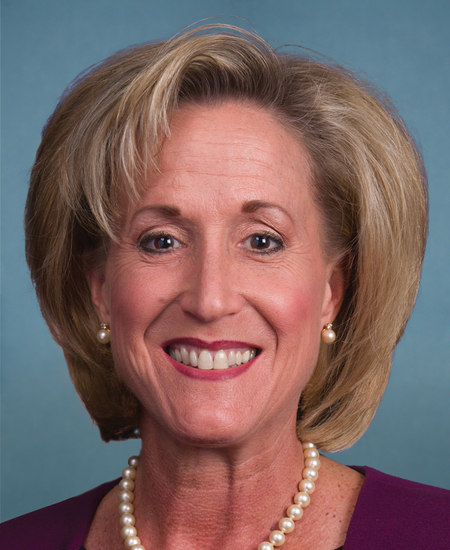
Rep. Ann Wagner
Sponsored bills
Maddy summaryHJRES 11 proposes a constitutional amendment that would limit Members of Congress to serving a maximum of three terms in the House of Representatives and two terms in the Senate. If passed and ratified, it would prevent any member who has already served the maximum terms from running for re-election, including time spent filling vacancies (for more than one year in the House or three years in the Senate). This amendment directly affects current and future members of Congress by changing eligibility rules for re-election. The proposal is currently a joint resolution in the House, requiring ratification by three-fourths of state legislatures to become part of the Constitution.
Maddy summaryThis bill raises the mandatory minimum prison sentence for trafficking minors under 18 from the previous term to **not less than 25 years or life imprisonment** under federal law (18 U.S.C. § 1591). It directly affects individuals convicted of trafficking children, increasing penalties for this specific offense. The key mechanism is amending the existing sentencing provision to eliminate lower minimums and mandate these severe penalties. The bill focuses solely on strengthening criminal penalties for child trafficking, with no new funding or program requirements.
Maddy summaryThis House resolution (HRES 701) symbolically supports expanding the Abraham Accords on their third anniversary by urging the U.S. government to encourage more countries to normalize relations with Israel and deepen economic cooperation among existing signatories. It recommends promoting regional collaboration in areas like clean energy, security, and trade, while linking expanded ties to progress on Israeli-Palestinian peace efforts. The resolution has no legal effect - it expresses congressional support but does not create new laws or obligations. It directly affects U.S. diplomatic strategy toward Middle East relations, emphasizing symbolic endorsement over concrete policy changes.
Maddy summaryThis bill requires parties in civil lawsuits to disclose any foreign entities funding their case - including names, addresses, and countries of origin - within 30 days of filing or signing funding agreements. It specifically prohibits foreign governments and sovereign wealth funds from funding litigation where payment depends on the case outcome, banning such agreements entirely. Parties must also certify if foreign money is used and submit annual reports to Congress detailing foreign funders, judicial districts involved, and case types. The law applies to all civil cases filed after enactment, aiming to increase transparency about foreign influence in U.S. courts.
Maddy summaryHR 3152, the "Fight CRIME Act," aims to maintain international restrictions on Iran's missile-related activities by requiring diplomatic efforts to extend these restrictions before they expire in October 2023. The bill mandates annual reports detailing U.S. diplomatic strategies, potential impacts of expiration, and measures to deter missile technology transfers to Iran. It establishes sanctions against foreign individuals or entities that knowingly support Iran's missile or drone programs, including asset freezes and visa restrictions. These sanctions apply regardless of whether UN restrictions remain in effect after their expiration, directly affecting foreign entities involved in these activities.
Maddy summaryThis bill requires the Bureau of Prisons to develop and implement a strategy for scanning all incoming mail at federal prisons to stop fentanyl and other synthetic drugs from entering facilities. It directs the Bureau to evaluate existing scanning technology within 180 days and submit a detailed plan to Congress within 90 days, including how to provide digital copies of mail to inmates within 24 hours and physical copies within 30 days (if safe). The strategy must achieve 100% mail scanning capacity at all federal prisons, prioritize high-security facilities, and include a budget proposal for fiscal years 2024-2026. This directly affects federal prisons, inmates, and Bureau employees by changing mail processing procedures to enhance safety and reduce staffing burdens from manual mail checks.
Maddy summaryThe Child Online Safety Modernization Act of 2023 updates federal law to replace "child pornography" with "child sexual abuse material" across numerous statutes and legal definitions. It modernizes the CyberTipline reporting system to better identify and locate minors involved in cases of child sexual abuse material. The bill makes technical amendments to ensure consistent terminology in legal proceedings related to online child exploitation. These changes aim to improve law enforcement effectiveness in addressing online child sexual exploitation while maintaining legal clarity.
Maddy summaryThis bill amends federal funding rules for Title X family planning services. It prohibits the Secretary of Health and Human Services from requiring any State, clinic, or organization receiving Title X funds to provide abortion counseling or referrals as a condition of receiving that funding. The law directly affects all Title X grantees - clinics and providers that receive federal funds for preventive reproductive health services. The key provision ensures that funding eligibility cannot be tied to abortion-related services or referrals.
This bill requires the Department of State to make certain information regarding the 2021 withdrawal of U.S. personnel from Afghanistan available to Congress and to the public. Specifically, the State Department must provide Congress with the July 13, 2021, dissent channel cable regarding the likely consequences of a U.S. withdrawal from Afghanistan and the official State Department response to the cable. (The dissent channel is a tool that foreign service officers may use to communicate alternative or dissenting views about foreign policy matters with senior State Department officials. ) The unredacted cable and official response must be provided to Congress within five days of the bill's enactment, except that the names of the cable signatories may be redacted. The bill also requires the State Department to complete a declassification review of (1) the dissent channel cable and official response, and (2) the after-action review developed with respect to the Afghanistan withdrawal. After determining what information may be declassified, the State Department must publish such information online within 60 days of the bill's enactment.