

Maddy summaryHR 3367, the "Improving Training for School Food Service Workers Act of 2025," requires school food service workers in public schools to receive mandatory training during paid working hours. The bill mandates that training must be offered in-person when appropriate, include hands-on practice, and cost workers nothing. If training occurs outside regular hours, workers must be paid at their regular rate (including overtime), consulted about scheduling, and protected from penalties for not attending. This law amends the Child Nutrition Act of 1966 and does not override existing state or local labor laws governing employer-employee relationships.
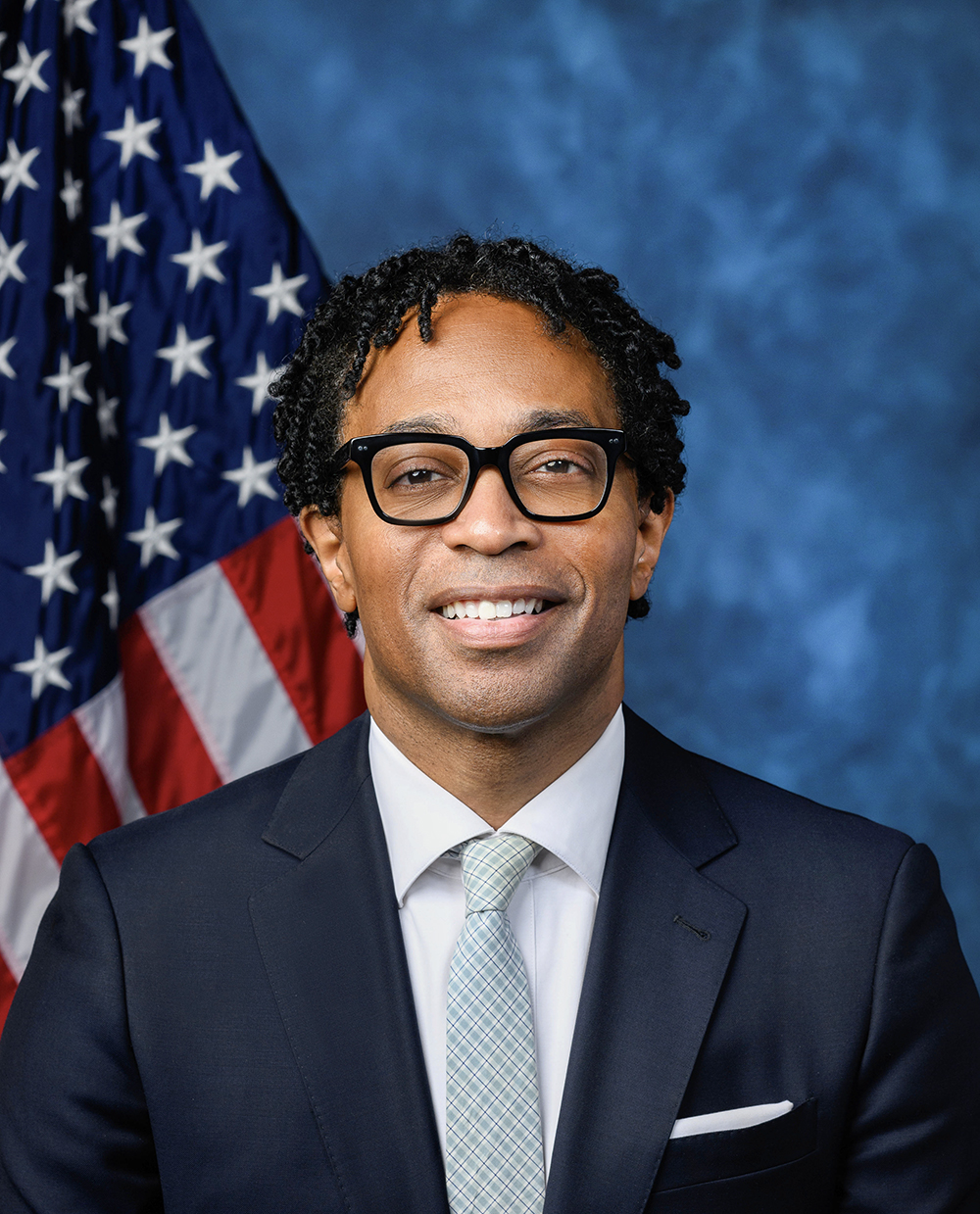
Rep. Wesley Bell
Sponsored bills
Maddy summaryHR 3373, the GHOST Act of 2025, requires entities shipping certain firearm parts (barrels, slides, or bolts) across state lines to register shipments with the Attorney General within 5 business days. This includes providing sender/recipient details, shipping method, and proof of delivery via certified mail or recipient signature. The bill creates a confidential database for law enforcement access but prohibits public disclosure under the Freedom of Information Act. Violations carry fines or up to 1 year in prison for single shipments, and up to 10 years for shipping 50+ parts in one transaction.
Maddy summaryThis bill amends the Fair Labor Standards Act to prohibit children under 18 from having direct contact with tobacco plants or dried tobacco leaves on farms. It directly affects minors who might work on tobacco farms and tobacco farm employers who currently allow such employment. The key change adds tobacco farming to the list of occupations where children under 18 cannot work, closing a loophole that previously permitted this activity. This update explicitly excludes tobacco-related agriculture from exceptions allowing minors in certain farm jobs under federal law.
Maddy summaryHR 3376 creates the Water Affordability, Transparency, Equity, and Reliability Trust Fund, funded by increasing the corporate tax rate from 21% to 24.5% starting in 2025, with annual funding capped at $35 billion or 1/20th of 20-year infrastructure needs. The bill allocates funds to clean water programs (42%), safe drinking water programs (42.5%), household water well systems (1%), colonias assistance (0.5%), and Indian health services (3%), requiring specific prioritization of low-income and minority communities for many programs. It mandates an EPA study on water affordability, discriminatory practices, and civil rights violations in water service, including data collection on service disconnections affecting vulnerable populations. The bill also includes provisions for lead service line replacement, PFAS contamination response, and job training grants for water system operators with specific requirements to prioritize low-income communities.
Maddy summaryHR 3332, the Pacific Partnership Act, requires the U.S. President to develop a formal strategy for engagement with Pacific Island nations by 2026 and again by 2030. The strategy must outline U.S. diplomatic, defense, and economic goals; assess regional threats like natural disasters and foreign military activity; and detail resource plans for addressing these challenges. It mandates consultation with Pacific Island governments, regional organizations like the Pacific Islands Forum, and U.S. allies such as Australia and Japan. The bill does not create new programs but establishes a structured framework for U.S. policy coordination in the region, directly affecting U.S. government agencies and indirectly shaping U.S. relations with Pacific Island nations.
Maddy summaryHRES 400 is a ceremonial resolution recognizing May as Asian American, Native Hawaiian, and Pacific Islander Heritage Month. It formally celebrates the historical contributions of these communities to U.S. history and society, as documented in the resolution’s preamble. The resolution does not create new laws, allocate funding, or change policies - it serves solely as a symbolic acknowledgment by the House of Representatives. It highlights the diversity of these communities and their ongoing impact, referencing their growth, cultural milestones, and historical challenges. This recognition aligns with the existing statutory designation of May for Heritage Month under U.S. Code.
Maddy summaryHR 3277, the Ensuring Lasting Smiles Act, requires group health plans and health insurance issuers to cover medically necessary outpatient and inpatient treatments for congenital anomalies or birth defects primarily affecting the eyes, ears, teeth, mouth, or jaw. This includes reconstructive procedures, dental/orthodontic support during treatment, and follow-up care, but excludes purely cosmetic surgery not tied to a medical diagnosis. Cost-sharing (like copays) for these services must not be stricter than for other medical benefits. The law takes effect for plan years beginning January 1, 2026, and mandates insurers to provide notice about this coverage to beneficiaries.
Maddy summaryThis bill prohibits federal officials from reducing, eliminating, or suspending funding for land-grant colleges and universities without specific authorization from Congress. It directly affects public institutions designated as land-grant colleges under the 1977 National Agricultural Research, Extension, and Teaching Policy Act. The key provision requires that any change to their funding must be explicitly approved by an Act of Congress, preventing unilateral federal action. This creates a clear legal barrier against unexpected funding cuts to these institutions. The bill focuses on preserving existing funding streams rather than creating new programs.
Maddy summaryThis bill amends the Higher Education Act to clarify eligibility for Public Service Loan Forgiveness (PSLF). It corrects a technical wording error in the law that previously required borrowers to be *currently employed* in public service at the time of application. The change specifies that borrowers only need to have *completed* 10 years (120 payments) of qualifying public service employment to qualify. This directly affects federal student loan borrowers working in government or nonprofit roles who were previously disqualified due to the outdated wording. The amendment removes a barrier preventing eligible borrowers from receiving loan forgiveness they earned.
Maddy summaryHR 3304, the Providing Child Care for Police Officers Act of 2025, establishes a federal grant program to help law enforcement agencies provide child care for officers' minor children during nonstandard shifts. The program awards competitive 3-year grants to state or local "lead agencies" (like state child care offices) to fund child care services through eligible law enforcement agencies or consortia, with 20% of funds reserved for small agencies (under 200 officers). Grants cover startup costs, provider training, sick child care, facility construction, and other needs, requiring local matching funds (10% to 33% over three years). The program is authorized for $24 million annually from 2026-2030 and includes studies to evaluate its impact on child care access for officers and other first responders.