Stop Forced Organ Harvesting Act of 2021 This bill establishes specified measures to combat forced organ harvesting and the international trafficking in persons for the purpose of removing their organs. These measures include (1) establishing property-blocking and visa-blocking sanctions, (2) prohibiting exports of certain surgery devices to entities that are identified as being responsible for forced organ harvesting or related human trafficking, and (3) requiring the Department of State to report on these practices.
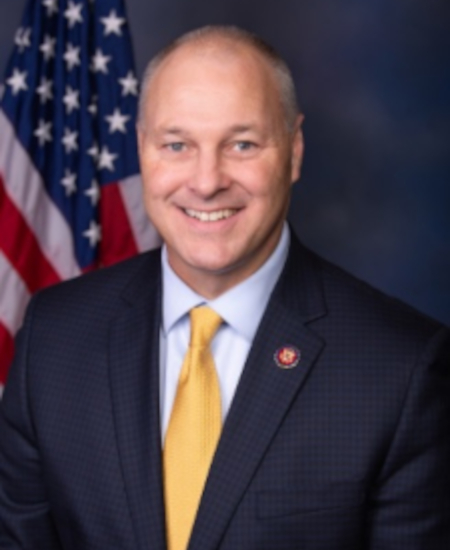
Rep. Pete Stauber
Sponsored bills
21st Century NICS Act This bill modifies procedures for conducting firearms-related background checks through the national instant criminal background check system (NICS). Specifically, it permits the NICS to query an additional database—the National Data Exchange—as part of a firearm-related background check.
This concurrent resolution expresses the sense of Congress that a carbon tax would be detrimental to American families and businesses and is not in the best interest of the United States.
Non-Opioids Prevent Addiction In the Nation Act or the NOPAIN Act This bill temporarily establishes separate payments for certain non-opioid treatments under the Medicare prospective payment system for hospital outpatient department services and the payment system for ambulatory surgical center services. The bill applies to pain management treatments that are able to replace or reduce opioid consumption, as shown through clinical trials or data.
Providing Resources for Emergency Preparedness And Resilient Enterprises Act or the PREPARE Act This bill reauthorizes through FY2026 a pre-disaster mitigation program, administered by the Small Business Administration, for disbursing economic injury disaster loans to small businesses for protection of real estate, equipment, inventory, supplies, and materials. The bill also increases the amount for loans to take mitigating actions to protect damaged or destroyed property from possible future disasters.
Metastatic Breast Cancer Access to Care Act This bill expedites payment of Social Security Disability Insurance (SSDI) benefits and eligibility for Medicare coverage for those with metastatic breast cancer (i.e., breast cancer that has spread to other sites in the body). Specifically, the bill eliminates the 5-month waiting period for SSDI benefits and the subsequent 24-month waiting period for Medicare coverage for individuals with metastatic breast cancer. Under current law, individuals generally must wait five months after the onset of disability to begin receiving SSDI benefits and an additional 24 months to become eligible for Medicare.
EIDL Oversight Act of 2021 This bill establishes oversight requirements for economic injury disaster loans and advances made on those loans. Such requirements include directing the Small Business Administration (SBA) to (1) ensure that loan and advance proceeds are deposited in a legitimate account of a borrower, (2) ensure that any modification of a request for a loan or an advance is reviewed by an SBA employee, and (3) verify the legitimacy of loan or advance applicants through tax returns or other documentation.
Assistance Needed for Great Losses Experienced in Isolated Northern Lakes Economic Territory Act or the ANGLE Act This bill requires the Small Business Administration (SBA) to establish a program to make forgivable loans to certain remote recreational businesses that are impacted by border closures due to COVID-19 (i.e., coronavirus disease 2019). Eligible remote recreational businesses must (1) have experienced a loss in revenue that is greater than 50% between March 1, 2020, and December 31, 2020, as compared with the same period in the previous year; and (2) show that the closure of the U.S.-Canada border restricted the ability of American customers to access the location of such businesses. The maximum loan amount shall be equal to 75% of the business's FY2019 revenue, and the SBA shall forgive 100% of the value of such loan, less the amount the borrower received from (1) any other loan forgiveness program, or (2) any emergency advance under the economic impact disaster loan program.
Public Safety Employer-Employee Cooperation Act This bill requires the Federal Labor Relations Authority to determine whether a state substantially provides public safety officers or employees the right to form and join a labor organization; recognition by public safety employers of the employees' labor organization, agreement to bargain with the organization, and reduction of any agreements to writing in a contract or memorandum of understanding; the right to bargain over hours, wages, and terms and conditions of employment; and binding interest arbitration to resolve an impasse in collective bargaining negotiations. The bill makes the authority responsible for (1) determining the appropriateness of units for labor representation; (2) supervising elections; (3) conducting hearings and resolving complaints of unfair labor practices; and (4) protecting the right of employees to form, join, or assist any labor organization, or to refrain from doing so. An employer, public safety officer, or labor organization may not engage in a lockout, sickout, work slowdown, strike, or any other organized job action that will measurably disrupt the delivery of emergency services and is designed to compel an employer, public safety officer, or labor organization to agree to the terms of a proposed contract.

Small Business Child Care Investment Act This bill deems certain nonprofit child care providers to be small business concerns so that they may participate in loan programs administered by the Small Business Administration.