

Maddy summaryHR 150, the Protecting American Energy Production Act, gives states primary authority to regulate hydraulic fracturing (fracking) for oil and gas on state and private lands, directly affecting state governments and energy producers. The bill requires states to maintain this regulatory role and blocks the President from imposing a fracking moratorium without explicit congressional approval. Key provisions include a Congressional "sense" statement affirming state primacy and a direct prohibition on presidential moratoriums unless authorized by a new law. This bill focuses on shifting regulatory power to states and limiting federal executive action on fracking, without specifying financial impacts or environmental standards.
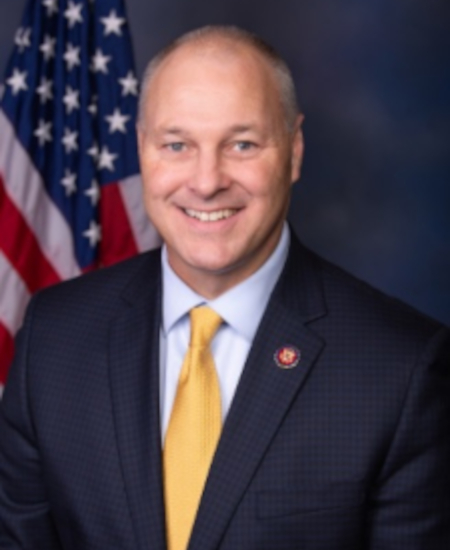
Rep. Pete Stauber
Sponsored bills
Maddy summaryThis bill authorizes a single Congressional Gold Medal to honor all U.S. Army Dustoff crews who served during the Vietnam War (1962-1973). It recognizes their critical role in evacuating nearly 900,000 wounded personnel, including U.S., South Vietnamese, and allied forces, under extreme combat conditions. The medal, designed with input from the Secretary of Defense, will be presented to the U.S. Army Medical Department Museum for permanent display. Duplicate bronze medals may be sold to cover costs, but the primary action is the commemorative recognition of these crews' service.
Maddy summaryHR 987 authorizes the U.S. Mint to produce commemorative coins honoring Golda Meir, Israel's first female Prime Minister, and the 75th anniversary of U.S.-Israel relations. It specifies three coin types: $5 gold coins (max 50,000), $1 silver coins (max 400,000), and half-dollar clad coins (max 750,000), with detailed weight and composition requirements. All coins will include Golda Meir's image, her name, and commemorative inscriptions, and will be sold during 2026. A surcharge ($35 for $5 coins, $10 for $1 coins, $5 for half-dollars) will be paid to the American Friends of Kiryat Sanz Laniado Hospital Inc. to support its hospital operations.
Maddy summaryHR 914, the Simplifying Grants Act of 2023, requires federal agencies to simplify grant application processes for small local governments (defined as those in areas with fewer than 50,000 people, per Census standards). Within 180 days of enactment, agencies must review and simplify complex grant requirements for existing programs and ensure new programs are designed with simplicity from the start. Agencies must also publish public checklists for each grant step and report annually to Congress on implementation progress, including how much technical assistance was provided and how many grants were awarded to small communities versus larger ones. This bill directly affects counties, towns, and other small local governments that receive federal grants but face bureaucratic hurdles.
Maddy summaryHRES 110 is a non-binding resolution supporting the designation of "Career and Technical Education (CTE) Month" to recognize CTE's role in preparing students for high-demand careers. It encourages educators, school counselors, and parents to promote CTE as a respected pathway for students seeking credentials in fields like healthcare, technology, and skilled trades. The resolution highlights CTE's benefits, including reducing high school dropout rates and aligning education with workforce needs, without creating new funding or policy changes. It directly affects schools, educators, and students by affirming CTE's value in workforce development.
Maddy summaryHRES 107 is a symbolic resolution recognizing Tribal colleges and universities (TCUs) and proposing the week beginning February 5, 2023, as "National Tribal Colleges and Universities Week." It highlights that TCUs - 35 accredited institutions serving over 230 federally recognized tribes - provide culturally grounded education, access to higher learning in underserved communities, and workforce preparation for American Indian, Alaska Native, and other students. The resolution calls on the House to support the designation and urges the public to observe the week with activities demonstrating support for TCUs. As a non-binding resolution, it does not create new laws but aims to raise awareness of TCUs' national importance.
Maddy summaryHR 29, the Border Safety and Security Act of 2023, grants the Secretary of Homeland Security authority to restrict entry at U.S. land or maritime borders for certain immigrants deemed "covered aliens" (those inadmissible under immigration law due to lack of proper documentation). The bill requires the Secretary to suspend entry if they cannot detain or process these individuals as required by existing immigration law. It also allows state attorneys general to sue the Secretary in federal court if they believe border policies harm their state's residents. The law defines "operational control" using terms from the Secure Fence Act of 2006. This bill directly affects immigrants seeking entry who fall under the specified inadmissibility category.
This resolution condemns Iranian state-sponsored terrorist attacks against U.S. citizens and officials and Iranian dissidents. The resolution also expresses support for the people of Iran who are legitimately defending their rights for freedom against repression and condemns the killing of Iranian protesters by the Iranian regime.
Maddy summaryHCONRES 13 is a concurrent resolution expressing Congress's support for maintaining the current policy that prohibits imposing new fees on local radio stations for playing music. It states that Congress should not impose any performance fee, tax, royalty, or charge on local radio stations for broadcasting sound recordings over the air, or on businesses like bars and restaurants that play music publicly. The resolution argues that such fees would harm local radio stations - critical sources for emergency information and community programming - and jeopardize the economic model that has supported both radio and the music industry for decades. This resolution does not create new law but formally opposes potential legislative changes to the existing fee structure.
Maddy summaryHR 855 establishes an independent Office of the Special Inspector General to oversee U.S. military, economic, and humanitarian aid to Ukraine. This office will conduct audits, investigate waste or fraud, and issue quarterly public reports detailing every dollar spent on projects, including contract costs, project-by-project spending, and how funds were allocated. The oversight office reports directly to Congress and has authority to investigate aid programs without interference from agencies like Defense or State, while requiring transparency in spending details. The bill authorizes $20 million in funding for this oversight from existing aid budgets.