

Maddy summaryHR 1465, "Violet’s Law," requires federal research facilities to establish standards for placing eligible animals (dogs, cats, primates, guinea pigs, hamsters, rabbits) no longer needed for research with animal rescue organizations, sanctuaries, shelters, or individuals. Federal departments and agencies operating such facilities must create these placement standards within one year of the law's enactment. The law mandates that animals must be vet-certified as healthy (free of infectious disease or physical issues) before placement and prohibits facilities from using animals for commercial trade, breeding, or public exhibitions. This policy directly affects federal research facilities and aims to provide permanent homes for research animals through defined, safe pathways.
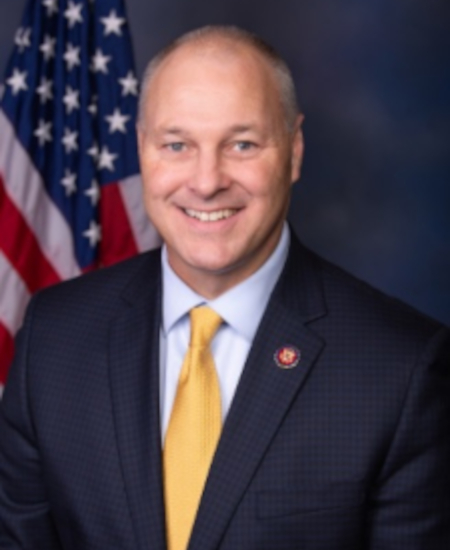
Rep. Pete Stauber
Sponsored bills
Maddy summaryHR 1290 amends the Food, Conservation, and Energy Act of 2008 to explicitly allow agricultural producers to use storage facility loan program funds for constructing or upgrading propane storage facilities. This change directly affects farmers and agricultural businesses that use propane primarily for farming operations, as defined by federal regulations. The bill adds a specific eligibility category to the existing loan program, clarifying that propane storage for agricultural production qualifies under the same terms as other eligible uses. This policy change updates the program’s scope without altering funding levels or creating new requirements.
Maddy summaryHR 1740 amends the Water Infrastructure Finance and Innovation Act (WIFIA) to require payment and performance security for projects receiving WIFIA assistance. It directly affects water infrastructure projects funded through WIFIA loans or grants by mandating that construction must have security covering at least 50% of the contract value, or accept equivalent state/local requirements. The bill specifies that if state or local law already requires such security, it may be used instead, but the amount must still meet the 50% minimum. This adds a new financial safeguard to ensure project completion without requiring new funding or changing WIFIA’s core structure.
Maddy summaryHR 1139, the GUARD VA Benefits Act, amends federal law to strengthen penalties for individuals or organizations charging veterans unauthorized fees when helping with VA benefit claims. It directly affects veterans seeking assistance with VA claims and the representatives (like advocates or attorneys) who might charge them fees. The bill adds a new provision making it a violation to solicit, charge, or receive any fee for preparing, presenting, or prosecuting VA claims, punishable by fines under Title 18. This change specifically targets unauthorized fee-charging while excluding fees covered under existing exceptions in sections 5904 or 1984 of the law.
Maddy summaryHR 1818, the Aviation Workforce Development Act, expands tax-advantaged savings plans (529 plans) to cover costs for specific aviation training programs. It allows funds from these plans to pay for tuition, fees, and required materials at FAA-certified aviation maintenance technician schools (Part 147) or commercial pilot training programs (Part 61 or 141). This directly affects students pursuing careers as aircraft maintenance technicians or commercial pilots by making these training costs more affordable through existing tax-advantaged savings. The bill amends the tax code to include these programs under "qualified higher education expenses" for 529 plan distributions.
Maddy summaryHR 5, the Parents Bill of Rights Act, would require public schools receiving federal funding to provide parents with greater access to educational information. The bill mandates that schools post curricula online or widely distribute it to parents, include school budgets in report cards, and provide specific information about school activities including violent incidents and plans to eliminate gifted programs. It also guarantees parents the right to meet with teachers twice a year, review library materials, and address school boards. These requirements would apply to all local educational agencies and schools covered by the Elementary and Secondary Education Act. The bill amends existing education laws to strengthen parental transparency and involvement in their children's education.
Historic Tax Credit Growth and Opportunity Act of 2023 This bill increases the rehabilitation tax credit and modifies certain requirements for the credit. The bill increases the rate of the credit for qualified rehabilitation expenditures in taxable years beginning after December 31, 2020, and before January 1, 2028, after which the rate reverts to 20%. The bill increases the rate of the credit to 30% for certain small projects whose qualified rehabilitation expenditures do not exceed $2.5 million. The bill also expands the types of buildings eligible for rehabilitation by decreasing the rehabilitation threshold from 100% to 50% of project expenses. It also eliminates the basis adjustment requirement for the credit and modifies rules relating to tax-exempt use property eligible for the credit.
Maddy summaryThis bill creates a new visa category for temporary workers in mobile entertainment, such as carnival and circus staff who travel across the U.S. It directly affects carnival operators, seasonal workers, and food/concession vendors at fairs and festivals. The key provision requires Department of Labor certification to ensure U.S. workers are not displaced and that hiring foreign workers won’t lower wages or working conditions. It defines "mobile entertainment provider" to include traveling carnivals, circuses, and affiliated seasonal services like food concessions at local events.
Maddy summaryHR 1623 amends the Homeland Security Act to exclude specific propane storage facilities from certain Department of Homeland Security chemical security standards. It directly affects facilities storing propane for residential use (as defined in the Fair Housing Act), agricultural production (per CFR), or small rural businesses (per the Small Business Act). The bill adds a new exclusion criterion for these facilities and requires the DHS Secretary to report to Congress and notify owners if a facility doesn't qualify for the exclusion. This changes the current security requirements for these specific propane storage locations without altering broader DHS chemical security rules.
Maddy summaryHCONRES 28 is a symbolic resolution expressing Congress's view that tax-exempt fraternal benefit societies - organizations providing life, health, and accident benefits to members - have long delivered critical community support. It states these societies, with about 7 million members nationwide, generate significant annual value through charitable work and volunteer activities (estimated at over $3.8 billion yearly). The resolution affirms that their tax-exempt status under Section 501(c)(8) of the tax code is essential for sustaining their volunteer-driven model and relieving pressure on government safety programs. As a non-binding expression of congressional sentiment, it does not alter existing laws or create new obligations.