

Maddy summaryThe Mining Schools Act of 2024 establishes a federal grant program to strengthen domestic mining education by funding eligible schools. It defines eligible "mining schools" as accredited mining/engineering programs at higher education institutions or specific geology/engineering departments at 4-year public universities in states with significant mining-related economic activity. The Department of Energy will award up to 10 competitive annual grants for recruiting students and enhancing programs focused on critical minerals, environmental reclamation, sustainable extraction, and domestic mineral production. An advisory board of industry and academic experts will help select grantees and ensure funds are used as intended. The program is authorized to receive $10 million yearly from 2024 through 2031.
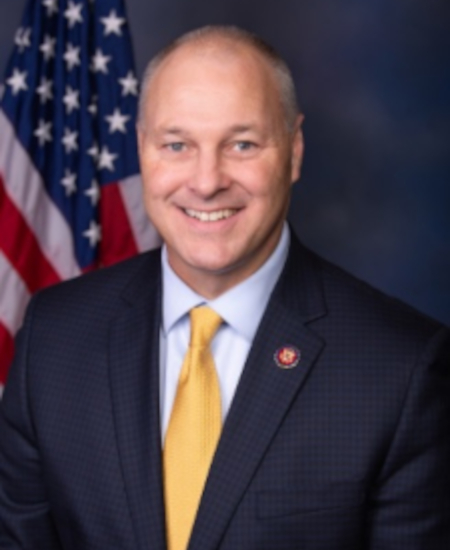
Rep. Pete Stauber
Sponsored bills
Maddy summaryThe Good Samaritan Remediation of Abandoned Hardrock Mines Act of 2024 establishes a limited pilot program allowing non-responsible parties (called "Good Samaritans") to remediate pollution at abandoned hardrock mine sites. The bill creates a permit process requiring applicants to demonstrate they're not liable for the pollution, can safely complete the remediation, and will protect the environment. The Environmental Protection Agency would issue up to 15 permits for these projects, providing liability protection for permitted activities while requiring public notice and environmental review. The pilot program would expire after 7 years, with the EPA required to report on its effectiveness to Congress.
Maddy summaryHR 7438 directs the U.S. Treasury to mint commemorative coins for the 2026 FIFA World Cup, including 100,000 $5 gold coins, 500,000 $1 silver coins, and 750,000 half-dollar coins. The coins will be sold to the public at face value plus surcharges ($35, $10, and $5 per coin, respectively), with all surcharge revenue paid to FWC2026 US, Inc. for U.S. soccer programs. These funds must support soccer initiatives, particularly in underserved communities and youth development, as specified in the bill. The coins are legal tender but will only be issued during 2026, with no net cost to the U.S. government.
Maddy summaryThis bill requires federal agencies to submit reports to Congress within 90 days of enactment, detailing how they apply the Regulatory Flexibility Act (RFA) to small businesses. Specifically, agencies must describe their definitions for "significant economic impact" and "substantial number of small entities," along with all factors they consider when assessing regulatory impacts on small businesses. The report aims to increase transparency about how agencies evaluate the effects of rules on small businesses. This affects all federal agencies that issue regulations, as they must now document their RFA application process. The bill does not change existing regulations but mandates clearer reporting on current practices.
Maddy summaryThe FEMA Loan Interest Payment Relief Act requires FEMA to reimburse local governments and electric cooperatives for interest paid on qualifying disaster recovery loans. A qualifying loan must be used for FEMA-covered activities with at least 90% of proceeds dedicated to those purposes. Reimbursement covers the lesser of actual interest paid or what would have been paid at the prime interest rate, as defined by the Federal Reserve. This relief applies to interest accrued in the seven years preceding the bill's enactment.
Maddy summaryThis bill amends the Regulatory Flexibility Act to require federal agencies to more thoroughly assess how proposed regulations impact small businesses, including indirect costs on businesses that aren't directly regulated but are affected by the rules (e.g., suppliers or partners). It creates a new process allowing small businesses or their representatives to petition the Small Business Administration's Chief Counsel to review an agency's claim that a rule won't significantly affect small entities, with strict timelines for agency responses. If an agency fails to cooperate with this review, the final rule cannot apply to small businesses. Agencies must also publish regulatory guidance online for small businesses to comment on, ensuring greater transparency in rulemaking.
Maddy summaryHR 915 requires businesses that contract with motor carriers (like shippers, brokers, or freight forwarders) to verify three safety and compliance details before shipping goods: 1) the carrier's valid registration, 2) minimum required insurance coverage, and 3) that the carrier is not disqualified for safety reasons by the Federal Motor Carrier Safety Administration (FMCSA) or a state. This verification must occur 45 days before shipment. The bill creates a temporary standard that expires when new FMCSA regulations are issued within 18 months of enactment. It does not change carrier safety rules but sets a new requirement for businesses selecting carriers.
Maddy summaryThe Working Dog Commemorative Coin Act (HR 807) directs the U.S. Treasury to mint three types of commemorative coins honoring working dogs' service: $5 gold coins, $1 silver coins, and half-dollar coins with specific weight and composition requirements. Each coin will carry a surcharge ($35 for $5 coins, $10 for $1 coins, $5 for half-dollars) that will be paid directly to America's VetDogs to support their programs providing service dogs for veterans, the disabled, and others. The coins will be issued in 2027 with designs reflecting working dogs' roles in military, detection, therapy, and assistance work. The legislation specifies that all surcharge revenue must fund America's VetDogs' operations without creating new government programs. This is a commemorative measure focused on honoring working dogs' contributions through coin sales, with all surcharge funds going to a specific nonprofit organization.
Maddy summaryThis bill establishes a Truth and Healing Commission to investigate the history and impacts of U.S. Indian Boarding School policies on Native American communities, including cultural, emotional, and physical effects on survivors, descendants, and tribal communities. The Commission will document these impacts through research, public meetings, and testimony, working with two advisory committees focused on Native American perspectives and Federal agency coordination. The Commission will operate for six years, with annual reports to Congress and a final report containing recommendations for Federal action. The bill also includes provisions for managing burial sites related to boarding schools and ensures the Native American Graves Protection and Repatriation Act applies to remains found on Federal lands related to these schools.
Maddy summaryThis bill reauthorizes federal funding for graduate medical education (GME) programs at children's hospitals through fiscal year 2028. It prohibits payments to any children's hospital that provided gender-affirming care to minors during the previous fiscal year (with a special rule for 2024 payments covering July-September 2023). The bill defines "gender-affirming care" as specific medical treatments like surgeries or puberty-blocking medications for gender transition, but excludes care for certain medical conditions or gender dysphoria treatment not classified as such. This directly affects hospitals receiving GME funding that serve minors, potentially impacting their federal support if they provided the specified care. The policy change modifies existing funding rules without altering broader healthcare access for minors.