

Maddy summaryThis bill requires the U.S. government to treat any World Health Organization (WHO) pandemic prevention or response agreement as a treaty needing Senate approval with a two-thirds vote. It directly affects U.S. foreign policy decisions regarding WHO agreements, ensuring the Senate must consent before such treaties take effect. The bill mandates that any WHO pandemic agreement - like the one adopted at the 2025 World Health Assembly - must follow the constitutional treaty process, not be implemented as a less formal executive agreement. This policy change aims to address concerns about WHO's pandemic management and independence, as highlighted by congressional findings.
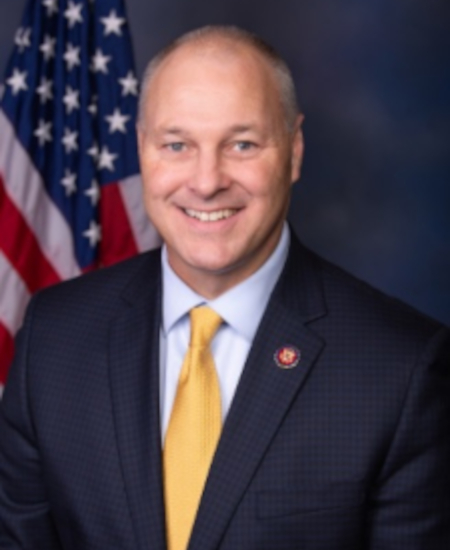
Rep. Pete Stauber
Sponsored bills
Maddy summaryHRES 519 is a symbolic House resolution condemning the June 14, 2025, attacks in Brooklyn Park and Champlin, Minnesota, where a gunman critically injured State Senator John Hoffman and his wife, and killed State House Speaker Emerita Melissa Hortman and her husband. It honors the victims, commends law enforcement for preventing further harm, and calls on elected officials and the public to reject political violence. The resolution explicitly urges community leaders to publicly denounce such violence and reaffirms commitment to peaceful democratic engagement. As a non-binding statement, it does not create new laws or policies but formally expresses the House’s stance against political violence.
Maddy summaryThis bill makes technical corrections to the Camp Lejeune Justice Act of 2022 to streamline claims for individuals harmed by water contamination at Camp Lejeune. It clarifies the evidence required (30+ days at the base plus a link between contaminants and health harm), specifies that cases must be handled in North Carolina courts (with limited transfer options), and sets attorney fee caps (20% before suit, 25% after). These changes directly affect veterans and civilians who lived at Camp Lejeune and filed claims under the 2022 law. The bill does not create new eligibility but aims to improve the legal process for existing cases.
Maddy summaryHR 4092, the Protect RAIL Act, amends U.S. immigration law to make certain crimes involving stolen goods transported by carriers (like trains, trucks, or ships) grounds for denying entry or deporting non-citizens. It adds new inadmissibility and deportability provisions for anyone convicted of theft from interstate or foreign shipments under Title 18, Section 659 of the U.S. Code. The bill directly affects non-citizens who commit these specific theft offenses, making them ineligible to enter the U.S. or subject to removal. This changes immigration consequences for existing criminal offenses, not the crimes themselves.
Maddy summaryThis bill prohibits transplant centers and healthcare providers from denying organ transplants or related services solely based on a patient's disability. It requires covered entities to make reasonable modifications to policies (like considering a patient's support network or using communication aids) and to avoid denying care due to lack of auxiliary aids. The law applies to all transplant stages - including evaluation, listing, and post-transplant care - and explicitly states it complements, rather than replaces, existing disability rights laws like the ADA. It allows medical considerations only if a physician determines a disability is medically significant to the transplant, after individual evaluation.
Maddy summaryThis bill proposes a constitutional amendment that would grant Congress the power to pass laws banning the physical desecration of the U.S. flag (such as burning, trampling, or defacing it). If ratified, it would directly affect individuals who engage in such acts by making them subject to federal criminal penalties under new laws Congress could create. The amendment would add a specific clause to the Constitution stating: "Congress shall have power to prohibit the physical desecration of the flag of the United States." Ratification would require approval by 3/4 of state legislatures within seven years of submission.
Maddy summaryHR 3935, the "Reducing Permitting Uncertainty Act," amends a key provision of the Clean Water Act to create clear timelines for federal permits involving disposal sites in U.S. waters. It requires the Environmental Protection Agency (EPA) to stop blocking or restricting disposal site applications during a defined period: from the date an applicant submits all required information to the date the permit is issued. This directly affects developers, construction firms, and other applicants seeking permits under Section 404 of the Clean Water Act. The bill’s main mechanism sets specific start and end dates for EPA review, reducing potential delays from indefinite administrative holds.
Maddy summaryThis bill changes how federal Bureau of Prisons employees in the "Rest of U.S." pay locality receive compensation. It directs that employees whose official worksite is in "Rest of U.S." be treated as working in the nearest other pay locality (within 200 miles) with the highest comparability payment, rather than the default "Rest of U.S." rate. This adjustment applies to all Bureau of Prisons employees, including prevailing rate staff, and takes effect 180 days after enactment. The change directly affects federal correctional officers and staff working in remote locations currently covered by the "Rest of U.S." pay rate.
Maddy summaryThis bill requires U.S. Customs and Border Protection (CBP) to update its Northern Border Security Threat Analysis every five years, including specific new elements. It mandates assessments of current staffing levels versus projected needs, future retirement surges (noting a 400% increase expected by 2028), housing challenges, and local recruitment plans for northern border ports. The bill also requires CBP to develop and update a plan addressing retirement surges, staffing shortages, and the feasibility of recruitment tools like bonuses or student loan repayment. These provisions directly affect CBP staffing at northern border ports, which face unique challenges like harsh weather and housing shortages that hinder officer retention.
Maddy summaryHR 2096, the "Protecting Our Nation’s Capital Emergency Act," aims to address rising crime in Washington, D.C., by reversing specific District of Columbia police policies. It directly affects Metropolitan Police Department officers and civilian employees by restoring two key provisions: (1) the right for officers to negotiate discipline matters through collective bargaining, and (2) the statute of limitations for claims against police personnel. The bill repeals related sections of the 2022 D.C. Comprehensive Policing and Justice Reform Act, which had previously limited these rights. These changes are intended to improve police recruitment and retention amid staffing shortages and rising crime rates.