

Born-Alive Abortion Survivors Protection Act This bill establishes requirements for the degree of care a health care practitioner must provide in the case of a child born alive following an abortion or attempted abortion. Specifically, a health care practitioner who is present must (1) exercise the same degree of care as would reasonably be provided to any other child born alive at the same gestational age, and (2) ensure the child is immediately admitted to a hospital. Additionally, a health care practitioner or other employee who has knowledge of a failure to comply with the degree-of-care requirements must immediately report such failure to law enforcement. A health care practitioner who fails to provide the required degree of care, or a health care practitioner or other employee who fails to report such failure, is subject to criminal penalties—a fine, up to five years in prison, or both. An individual who intentionally kills or attempts to kill a child born alive is subject to prosecution for murder. The bill bars the criminal prosecution of a mother of a child born alive under this bill and allows her to bring a civil action against a health care practitioner or other employee for violations.
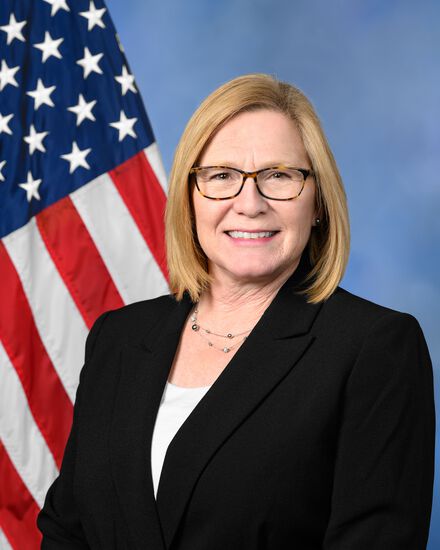
Rep. Michelle Fischbach
Sponsored bills
Whole Milk for Healthy Kids Act of 2021 This bill revises requirements for milk provided by the National School Lunch Program of the Department of Agriculture (USDA). Currently, schools participating in the program must provide milk that is consistent with the most recent Dietary Guidelines for Americans; USDA regulations require milk to be fat-free or low-fat and allow only fat-free milk to be flavored. The bill removes these restrictions and instead permits schools to offer students whole, reduced-fat, low-fat, and fat-free flavored and unflavored milk.
Child Care Choices Act of 2021 This bill requires states to prioritize the availability of child care certificates over grants or contracts when providing federally supported child care assistance to families. A child care certificate is a voucher provided directly to a parent who may use the voucher only as payment for child care services. The bill also prohibits states from setting differential payment rates based solely on the type of child care or type of provider.
Developing Responsible Individuals for a Vibrant Economy Act or the DRIVE-SAFE Act This bill directs the Department of Transportation to promulgate regulations to implement an apprenticeship program for licensed commercial motor vehicle drivers under the age of 21. Under the program, an apprentice must complete two probationary periods that total 400 hours of on-duty time, of which at least 240 hours must be driving time in a commercial motor vehicle. Additionally, the apprentice must be accompanied in the cab of the commercial motor vehicle by an experienced driver. Further, the bill requires all commercial motor vehicles used in the program for training to be equipped with safety technology such as active braking collision mitigation systems and video event capturing systems. An employer shall not knowingly allow, require, permit, or authorize a driver under the age of 21 to operate a commercial motor vehicle unless the driver is participating in, or has completed, an apprenticeship program that meets the requirements set forth in this bill.
Carbon Capture Modernization Act This bill modifies sequestration and other requirements for the qualifying advanced coal project tax credit.
This resolution supports the designation of a National FFA Week. It also (1) recognizes the important role of the National FFA Organization (Future Farmers of America) in developing the next generation of leaders who will change the world, and (2) celebrates 50 years of National FFA alumni and supporters.
Death Tax Repeal Act This bill repeals the estate and generation-skipping transfer taxes. It also makes conforming amendments related to the gift tax.
This bill expedites the approval process for renewable fuels under the renewable fuel standard (RFS) program. The existing RFS program requires transportation fuel to contain a minimum volume of renewable fuel. Producers must register renewable fuels under the program. The bill considers an application to register a renewable fuel under the RFS program to be approved by the Environmental Protection Agency (EPA) if the fuel has been approved under any state renewable fuel program. It also establishes a deadline for the EPA to make a decision on any pending application for a renewable fuel that has not yet been approved under any state program. In addition, the bill establishes deadlines for the EPA to make decisions on pending pathway petitions by producers to register biofuels. If the EPA does not make decisions on the petitions by the deadlines, then petitions are automatically approved.
Agricultural Intelligence Measures Act or the AIM Act This bill establishes the Office of Intelligence in the Department of Agriculture (USDA) under the National Intelligence Program. The office must leverage the capabilities of the intelligence community and the intelligence-related research of the National Laboratories to ensure that USDA is fully informed of threats by foreign actors to U.S. agriculture; focus on understanding foreign efforts to steal U.S. agriculture knowledge and technology, and develop or implement biological warfare attacks, cyber or clandestine operations, or other means of sabotaging and disrupting U.S. agriculture; prepare, conduct, and facilitate intelligence briefings for USDA; operate as the liaison between USDA and the intelligence community, with the authority to request intelligence collection and analysis on matters related to U.S. agriculture; collaborate with the intelligence community to downgrade intelligence assessments for broader dissemination within USDA; and facilitate the sharing of information on foreign activities related to agriculture with the intelligence community.
Protecting Individuals with Down Syndrome Act This bill creates new federal crimes related to the performance of an abortion on an unborn child who has Down syndrome. It subjects a violator to criminal penalties—a fine, a prison term of up to five years, or both. It also authorizes civil remedies, including damages and injunctive relief. A woman who undergoes such an abortion may not be prosecuted or held civilly liable.