

This bill requires the Department of Homeland Security (DHS) to negotiate with the Canadian government to establish travel corridors at land-based ports of entry along the U.S.-Canada border. If DHS and the Canadian government reach an agreement, DHS must establish such travel corridors. Specifically, DHS must seek to enter into negotiations with the Canadian government to establish (1) travel corridors based on guidance from the Centers for Disease Control and Prevention and the Public Health Agency of Canada, and (2) documentation requirements for travelers using such travel corridors.
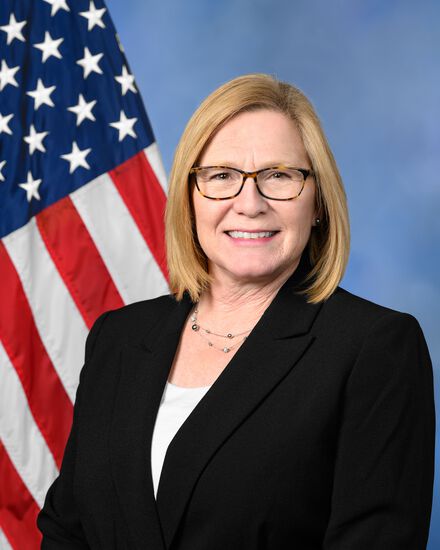
Rep. Michelle Fischbach
Sponsored bills
Protect and Serve Act of 2021 This bill establishes a new criminal offense for knowingly assaulting a law enforcement officer and causing serious bodily injury (or attempting to do so) in circumstances that affect interstate commerce. It imposes criminal penalties—a prison term, a fine, or both—on a violator.
This bill provides statutory authority for the rule published on August 27, 2019, by the Department of the Interior entitled Endangered and Threatened Wildlife and Plants; Regulations for Listing Species and Designating Critical Habitat . The rule addressed procedures and criteria used for (1) listing or removing species from the lists of endangered and threatened wildlife and plants, and (2) designating critical habitat.
State, Local, Tribal, and Territorial Fiscal Recovery, Infrastructure, and Disaster Relief Flexibility Act This bill allows states, tribes, territories, and localities to use certain COVID-19 relief funds for new categories of spending, including for natural disasters and infrastructure projects. It also makes changes to expenditure deadlines and other aspects of this funding. Specifically, recipients may use funds for emergency relief from natural disasters and associated negative economic impacts of natural disasters. In addition, recipients may use a portion of their COVID-19 relief funds for designated infrastructure projects, such as nationally significant freight and highway projects. Furthermore, the bill allows recipients to expend COVID-19 relief funds on these types of infrastructure projects until September 30, 2026. Under current law, recipients must expend the funds by December 31, 2024. Other changes in the bill include (1) modifying eligibility and allocation requirements for funding set aside for counties and Indian tribes that are near public lands, (2) allowing Indian tribes an additional year to expend their COVID-19 relief funds, and (3) establishing a process for government entities to decline COVID-19 relief funds and requiring any declined funds to be used to reduce the federal deficit.
Prince Congressional Gold Medal Act This bill provides for the award, posthumously, of a Congressional Gold Medal to Prince Rogers Nelson, better known as Prince, in recognition of his achievements as a musician and contributions to American culture.
Bring Entrepreneurial Advancements To Consumers Here In North America Act This bill provides tax incentives for relocating manufacturing facilities in the United States. Specifically, it allows accelerated depreciation (20-year recovery period) for nonresidential real property acquired in connection with the relocation of manufacturing facilities in the United States. It also excludes from gross income, for income tax purposes, gain on the sale or exchange of such relocated facilities. Finally, the bill allows permanent 100% expensing of manufacturing property relocated in the United States.
This resolution recognizes and appreciates the dedication and devotion demonstrated by the men and women of law enforcement. It also condemns calls to defund, disband, dismantle, or abolish the police.
Maximum Pressure Act This bill expands sanctions and economic penalties on Iran. It also restricts the President from unilaterally lifting or waiving the sanctions or penalties and increases congressional oversight of them. Specifically, the bill requires the President to impose visa- and asset-blocking sanctions. Additionally, it modifies existing sanctions, including by (1) providing statutory authority for executive orders imposing sanctions; (2) applying sanctions to additional sectors of Iran's economy; and (3) broadening sanctionable conduct to cover, for example, assisting Iran with the acquisition of ballistic missiles and the complicity of Iranian officials in human rights violations in specified countries. The bill also requires reporting on licenses that authorize activities subject to sanctions. The bill prohibits U.S. representatives at the International Monetary Fund from voting to allow Iran's access to special drawing rights (a currency support tool) and places restrictions on financial transactions with Iran. The restrictions include requiring domestic financial institutions to implement special measures with respect to foreign financial institutions that conduct significant transactions connected to the Instrument in Support of Trade Exchanges (a European mechanism that bypasses U.S. sanctions when carrying out trade with Iran). The Department of State must maintain the Islamic Revolutionary Guard Corps' designation as a terrorist organization and must designate Ansharallah (or Houthis), which operates in Syria, as a foreign terrorist organization. The bill also requires reports on U.S. sanctions concerning Iran, the status of Iran's nuclear weapons program, and other matters.
Prohibiting IRS Financial Surveillance Act This bill prohibits the Department of the Treasury from requiring a financial institution to report the transfers into and out of a financial account. This prohibition does not apply to laws or regulations in effect on October 1, 2021.
This resolution requests the President and directs the Department of State to transmit to the House of Representatives, not later than 14 days after the adoption of this resolution, copies of both classified and unclassified documents that refer or relate to certain information on the withdrawal of the United States from Afghanistan, including reactions, concerns, or objections expressed by certain allies and partners; any agreement reached with the Taliban related to the evacuation of specified individuals; and numbers of specified individuals in contact with the State Department to request evacuation assistance from Afghanistan, from July 30, 2021, to the present.