

Producing Responsible Energy and Conservation Incentives and Solutions for the Environment Act or the PRECISE Act This bill incorporates support for precision agriculture into various programs of the Department of Agriculture (USDA). Precision agriculture refers to an information- and technology-based management system used to identify, analyze, and manage variability in agricultural production for optimum profitability, sustainability, and environmental protection. Specifically, the bill makes changes to eligibility criteria, administrative procedures, and other aspects of the Conservation Loan Program, the Environmental Quality Incentives Program, and the Conservation Stewardship Program. These changes include allowing the programs to support the adoption of precision agriculture practices and acquisition of precision agriculture technologies. In addition, the bill expands a program through which USDA makes and insures loans to for-profit and nonprofit organizations that invest in rural areas by allowing the loans to be used for precision agriculture practices. The bill also requires USDA to emphasize the use of third-party providers with respect to technical assistance on matters related to soil health for participants in certain USDA conservation programs.
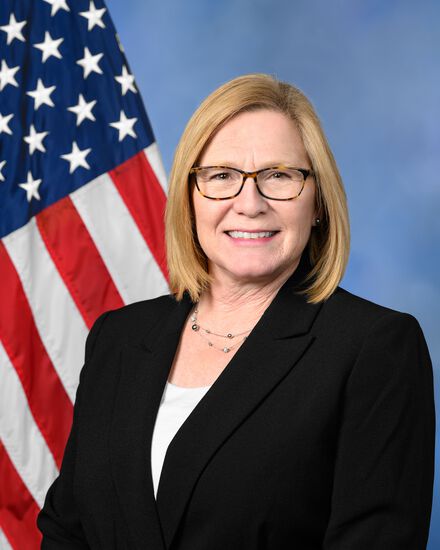
Rep. Michelle Fischbach
Sponsored bills
This concurrent resolution declares that a state of emergency exists due to the Russian invasion of Ukraine. It also states that such emergency justifies a waiver of the minimum tonnage requirements for the transport of equipment, materials, or commodities related to humanitarian operations resulting from the invasion. Such requirements apply to cargoes that are transported on ocean vessels and that are procured, furnished, or financed by the United States.
Babies Need More Formula Now Act of 2022 This bill addresses the regulation of infant formula, including by authorizing the Food and Drug Administration (FDA) to waive certain requirements related to importation. The FDA may waive labeling requirements related to the importation (or distribution or sale) of infant formula from a country with requirements that provide a similar assurance of safety as U.S. requirements. The FDA must, when appropriate, enter into arrangements to harmonize U.S. regulatory requirements pertaining to infant formula with the requirements of other nations. The bill imposes time lines for the FDA to respond to submissions for market approval for new infant formula. The FDA must also issue guidance as to what types of changes in the ingredients of infant formula, if any, may not require a new growth study to meet FDA requirements. The bill also authorizes a person to import, without prior notice to the FDA, up to a three-month supply of infant formula for personal use from a country with formula safety standards similar to U.S. standards, such as Canada. Before recommending or requiring a recall of infant formula due exclusively to a labeling deficiency, the FDA must ensure that the recall will not negatively affect the supply of formula in the United States. The bill also requires the FDA to (1) notify Congress no later than 24 hours after initiating a formula recall, and (2) provide certain information to formula manufacturers about restarting production after an inspection of a manufacturing facility impacted by a recall.
Trust the Science Act This bill directs the Department of the Interior to remove protections for the gray wolf under the Endangered Species Act of 1973 (ESA). Specifically, the bill requires Interior to reissue the final rule titled Endangered and Threatened Wildlife and Plants; Removing the Gray Wolf (Canis lupus) From the List of Endangered and Threatened Wildlife and published on November 3, 2020. The rule removed the gray wolf in the lower 48 United States, except for the Mexican wolf ( C. l. baileyi ) subspecies, from the endangered and threatened species list. However, the U.S. District Court for the Northern District of California vacated the rule on February 10, 2022. As a result, the gray wolf reattained the protection status it had prior to the rule's promulgation. The bill also prohibits the reissuance of the rule from being subject to judicial review.
This resolution expresses the sense of the House of Representatives that the United States should support the development of hydrocarbons via drilling, including by repealing administrative precedent that limits the exploration, drilling, and production of domestic natural resources on federal lands.
Benjamin Berell Ferencz Congressional Gold Medal Act This bill provides for the award of a Congressional Gold Medal to Benjamin Berell Ferencz in recognition of his service to the United States and the international community during the post-World War II Nuremberg trials and his lifelong advocacy for international criminal justice and the rule of law.
Veterans First Act of 2022 This bill prohibits the Department of Veterans Affairs from obligating or expending any amounts to provide emergency assistance in response to an emergency at the southern border directly resulting from the repeal of certain public health orders from the Centers for Disease Control and Prevention. Specifically, the bill prohibits such emergency assistance in response to the repeal of the order issued on August 2, 2021, titled Public Health Reassessment and Order Suspending the Right To Introduce Certain Persons From Countries Where a Quarantinable Communicable Disease Exists ; the order issued on April 1, 2022, titled Public Health Determination and Order Regarding Suspending the Right To Introduce Certain Persons From Countries Where a Quarantinable Communicable Disease Exists ; and an order relating to the same public health concerns as the listed orders.
Maddy summaryHRES 1091 is a non-binding House resolution calling for Secretary of Homeland Security Alejandro Mayorkas to resign immediately. It criticizes the Biden administration's border management policies, citing unapprehended migrants, opioid-related deaths, and opposition to border enforcement measures like Title 42. The resolution lists specific grievances, including halting border wall construction and rescinding the "Remain in Mexico" program, but does not create new laws or policies. As a symbolic resolution, it has no legal effect and does not directly affect any individuals or communities beyond expressing the House's disapproval.
Maddy summaryThis bill prohibits the use of federal funds to establish or operate a Disinformation Governance Board under the Department of Homeland Security. It directly affects the Department of Homeland Security by blocking funding for this specific board, preventing its creation or activities. The measure restricts how existing federal appropriations can be applied, without altering other funding mechanisms.
Protecting Free Speech Act This bill terminates the Disinformation Governance Board of the Department of Homeland Security (DHS) and prohibits using DHS funding for the activities of any other entity that is substantially similar to the board.