Maddy summaryThe DAIRY PRIDE Act would require food products using dairy-related terms (like "milk," "yogurt," or "cheese") to meet the FDA's definition of dairy - derived from animal milk - to prevent misleading labeling of plant-based alternatives. It directly affects producers of plant-based products currently marketed with dairy terms, such as almond or oat milk, which often lack comparable nutrition. The bill mandates the FDA issue enforcement guidance within 180 days and report to Congress on actions taken after two years. This policy change aims to align product names with the FDA's existing definition of dairy products under federal law.
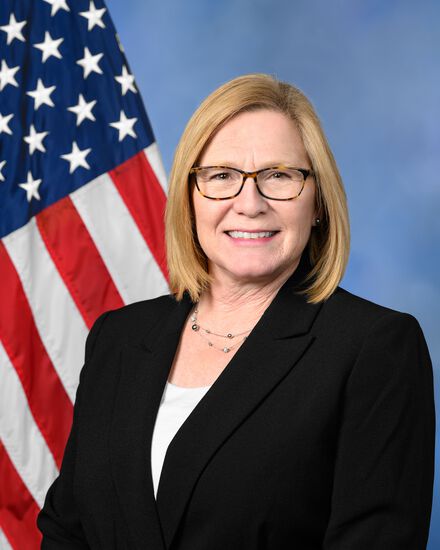
Rep. Michelle Fischbach
Sponsored bills
Stopping Overdoses of Fentanyl Analogues Act This bill permanently adds fentanyl-related substances to schedule I of the Controlled Substances Act. (A schedule I controlled substance is a drug, substance, or chemical that has a high potential for abuse; has no currently accepted medical value; and is subject to regulatory controls and administrative, civil, and criminal penalties under the Controlled Substances Act.) Fentanyl-related substances are currently regulated under schedule I through a temporary order issued by the Drug Enforcement Administration. The temporary order expires December 31, 2024.
Health, Opportunity, Protecting life, Education Act or the HOPE Act This bill provides funding for grants and other activities related to maternal care. It also establishes informed consent and parental notification requirements for abortion providers. The Department of Health and Human Services (HHS) must award grants to (1) entities that provide maternal care in rural and medically underserved areas and on tribal lands for purchasing equipment to conduct at-home telehealth visits; and (2) nonprofits (excluding those that provide abortions) for providing, at no cost, information about and referrals for medical care, nutritional services, and other social supports to encourage pregnant women to continue their pregnancies and care for the infants. Additionally, HHS must also disseminate, through a public website, pregnancy-related resources that are available through federal, state, and local governments and private entities. Further, abortion providers must obtain informed consent 24 hours before performing an abortion through a form that must be signed by the woman seeking the abortion, and the bill specifies information that must be contained in the form, such as medical risks. Abortion providers must also notify parents at least 24 hours prior to performing an abortion on an individual who is under 18. The bill outlines specified exceptions to, enforcement mechanisms for, and civil penalties for violations of the informed consent and parental notification requirements. The bill also prohibits federal funding of Planned Parenthood of America, Inc. or its affiliates, subject to certain exceptions, for one year following the enactment of the bill.

Maddy summaryThe Permitting for Mining Needs Act of 2023 streamlines federal permitting for mining projects on public lands by establishing specific time limits for environmental reviews (12 months for assessments, 24 months for impact statements) and allowing lead agencies to adopt applicant-prepared environmental documents that meet National Environmental Policy Act requirements. It enables mineral exploration with limited surface disturbance (up to 5 acres) to proceed without full environmental review, and creates mechanisms for coordination between agencies and project applicants through memorandums of agreement. The bill applies to all minerals, not just "critical" minerals, and ensures uranium is treated as a critical mineral for certain purposes. The legislation aims to expedite domestic mineral development while maintaining environmental review standards.
Prohibiting IRS Financial Surveillance Act This bill prohibits the Department of the Treasury from requiring a financial institution to report the transfers into and out of a financial account. This prohibition does not apply to laws or regulations in effect on January 1, 2023.
Maddy summaryThis concurrent resolution expresses Congress's view that all government support for sugar production and exports by major global producers (like Brazil, India, the EU, and Mexico) should be eliminated. It directs the President to work toward ending these subsidies and report to Congress on progress, followed by proposals for U.S. sugar policy reforms. The resolution does not create new laws but urges diplomatic action to address what Congress describes as market-distorting subsidies affecting the global sugar market. It directly concerns international sugar trade policies and U.S. agricultural competitiveness.
Butcher Block Act This bill authorizes the Department of Agriculture (USDA) to make (or guarantee) loans and award grants for establishing, expanding, and otherwise supporting livestock and poultry processing and related activities. In awarding grants and making or guaranteeing loans, USDA shall prioritize applicants that have experience in livestock and poultry processing and can quickly scale-up to increase overall processing capacity in the region involved.
Maddy summaryHR 987 authorizes the U.S. Mint to produce commemorative coins honoring Golda Meir, Israel's first female Prime Minister, and the 75th anniversary of U.S.-Israel relations. It specifies three coin types: $5 gold coins (max 50,000), $1 silver coins (max 400,000), and half-dollar clad coins (max 750,000), with detailed weight and composition requirements. All coins will include Golda Meir's image, her name, and commemorative inscriptions, and will be sold during 2026. A surcharge ($35 for $5 coins, $10 for $1 coins, $5 for half-dollars) will be paid to the American Friends of Kiryat Sanz Laniado Hospital Inc. to support its hospital operations.
Maddy summaryHR 976, the TCJA Permanency Act, makes permanent many tax provisions from the 2017 Tax Cuts and Jobs Act (TCJA) that were scheduled to expire after 2025. The bill affects individual taxpayers by keeping lower tax rates, higher standard deductions, increased child tax credits, and other key changes permanently. Key provisions include permanent modifications to income tax brackets, repeal of personal exemptions, limits on state and local tax deductions, and increased estate and gift tax exemptions. These changes would prevent the tax code from reverting to pre-TCJA rates and rules for millions of taxpayers.
Maddy summaryHR 914, the Simplifying Grants Act of 2023, requires federal agencies to simplify grant application processes for small local governments (defined as those in areas with fewer than 50,000 people, per Census standards). Within 180 days of enactment, agencies must review and simplify complex grant requirements for existing programs and ensure new programs are designed with simplicity from the start. Agencies must also publish public checklists for each grant step and report annually to Congress on implementation progress, including how much technical assistance was provided and how many grants were awarded to small communities versus larger ones. This bill directly affects counties, towns, and other small local governments that receive federal grants but face bureaucratic hurdles.