

Protecting American Energy Jobs Act This bill limits the President's authority to prohibit or withdraw federal land or waters from energy production activities. Specifically, the bill requires the President and federal agencies to obtain the approval of Congress before prohibiting or substantially delaying certain new energy or mineral leases or permits on federal lands, including oil and gas leases, coal leases, hard rock leases, or critical minerals leases. In addition, the President and agencies must obtain the approval of Congress before withdrawing certain federal lands from mineral and geothermal leasing activities. Further, the bill repeals the President's authority to withdraw unleased lands on the outer Continental Shelf from oil and gas leasing. The bill nullifies Executive Order 13990 titled Protecting Public Health and the Environment and Restoring Science To Tackle the Climate Crisis; Executive Order 14008 titled Tackling the Climate Crisis at Home and Abroad; and the Department of the Interior's Secretarial Order 3395 concerning a temporary suspension of delegated authority to all of Interior's Bureaus and Offices, including the authority to approve leases.
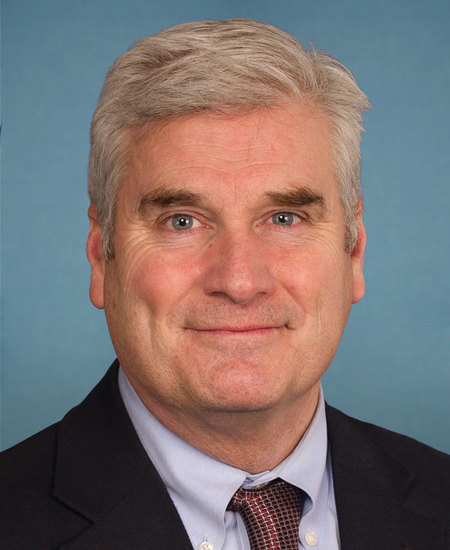
Rep. Tom Emmer
Sponsored bills
This bill raises the borrowing limit of the Commodity Credit Corporation from $30 billion to $68 billion.
Protecting American Energy Production Act This bill prohibits the President from declaring a moratorium on the use of hydraulic fracturing unless Congress authorizes the moratorium. The bill also expresses the sense of Congress that states should maintain primacy for the regulation of hydraulic fracturing for oil and natural gas production on state and private lands.
Hearing Protection Act This bill removes silencers from the definition of firearms for purposes of the National Firearms Act. It also treats persons acquiring or possessing a firearm silencer as meeting any registration and licensing requirements of such Act. The Department of Justice must destroy certain records relating to the registration, transfer, or making of a silencer. The bill also revises the definitions of firearm silencer and firearm muffler under the federal criminal code and includes such items in the 10% excise tax category.
Concealed Carry Reciprocity Act This bill establishes a federal statutory framework to regulate the carry or possession of concealed firearms across state lines. Specifically, an individual who is eligible to carry a concealed firearm in one state may carry or possess a concealed handgun (other than a machine gun or destructive device) in another state that allows its residents to carry concealed firearms. It sets forth requirements for the lawful concealed carry across state lines. The bill preempts most state and local laws related to concealed carry and establishes a private right of action for a person adversely affected by interference with a concealed-carry right established by this bill.
This concurrent resolution expresses the sense of Congress that school administrators should safely reopen schools for in-person instruction as soon as possible.
PPP Flexibility for Farmers and Ranchers Act This bill expands eligibility for agricultural producers under the Paycheck Protection Program, established to support small businesses in response to COVID-19 (i.e., coronavirus disease 2019), to include certain agricultural producers organized as partnerships. Currently, only certain agricultural producers that are sole proprietorships, independent contractors, or self-employed individuals may receive support under the program.
Enhancing Entrepreneurship for the 21st Century Act This bill requires the Department of Commerce to conduct an assessment and analysis of the reasons underlying the decreasing rate of formation of new businesses (i.e., startups) in the United States.
Behavioral Health Coordination and Communication Act of 2021 This bill establishes, within the Executive Office of the President, the position of Interagency Coordinator for Behavioral Health to coordinate federal programs and activities concerning mental health and substance use disorders. Federal departments and agencies must notify the coordinator when developing or implementing policies related to behavioral health. The Government Accountability Office must report on the impact of the coordinator on relevant programs and must study issues related to behavioral health services in school settings and in the juvenile justice system.
Telehealth Modernization Act This bill modifies requirements relating to coverage of telehealth services under Medicare. Specifically, the bill extends certain flexibilities that were initially authorized during the public health emergency relating to COVID-19 (i.e., coronavirus disease 2019). Among other things, the bill allows (1) rural health clinics and federally qualified health centers to serve as the distant site (i.e., the location of the health care practitioner); (2) the home of a beneficiary to serve as the originating site (i.e., the location of the beneficiary) for all services (rather than for only certain services); and (3) all types of practitioners to furnish telehealth services, as determined by the Centers for Medicare & Medicaid Services.