Supply Chain Disruptions Relief Act This bill modifies the treatment of liquidations of new motor vehicle inventory as qualified LIFO (last in first out accounting method) inventory. It allows new motor vehicle dealers to elect to wait until the end of 2025 to replace their inventory for purposes of determining income attributable to the sale of such inventory during 2020 and 2021.
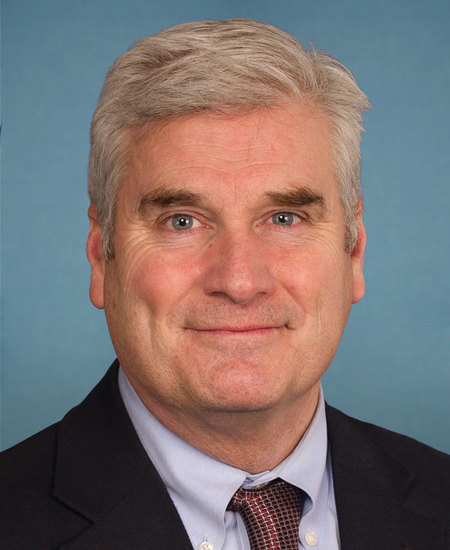
Rep. Tom Emmer
Sponsored bills
Keeping Israel Safe from Iranian Proxies Act This bill prohibits the Department of Defense from making federal funds available to specified entities that are backed by Iran.
This resolution supports the preservation of the stepped-up basis tax rule that allows recipients of inherited assets such as land, equipment, or buildings to adjust the cost basis of the assets to reflect their fair market value. The resolution opposes any efforts to impose new taxes on family farms or small businesses and recognizes the importance of generational transfers of farm and family-owned businesses.
Securing a Strong Retirement Act of 2022 This bill makes various changes with respect to employer-sponsored retirement plans, including providing for the automatic enrollment of employees in certain plans and increasing the age at which participants are required to begin receiving mandatory distributions.
This resolution honors the life and legacy of the late Representative Don Young and directs the Sergeant at Arms to designate a Don Young Reserved Seat on the floor of the chamber of the House of Representatives.
Equitable Community Access to Pharmacist Services Act This bill expands Medicare coverage to permanently include services provided by a pharmacist, including incidental services and supplies, related to testing, drug regimens, and vaccines for COVID-19, influenza, and certain other illnesses. Specifically, the bill provides for continued coverage of pharmacist services relating to testing and vaccines for COVID-19 and influenza, as well as coverage of testing for respiratory syncytial virus and streptococcal pharyngitis (i.e., strep throat) and the initiation of drug regimens that are used to treat COVID-19, influenza, or strep throat. It also generally provides for coverage of pharmacist services during a public health emergency or to address health equity. A pharmacist, or the facility with which the pharmacist is contracted or employed, may present a claim for reimbursement of 85% (or 100% during a declared emergency) of the applicable amount. A pharmacist may not bill an individual for such a service other than for the applicable deductible or coinsurance amounts.

COI Elimination Act This bill limits U.S. contributions to the United Nations pertaining to the U.N. Independent International Commission of Inquiry on the Occupied Palestinian Territory, including East Jerusalem, and Israel. Current law imposes a cap on the annual U.S. contribution to the U.N. budget. The bill lowers that cap by 25% of the amount budgeted for the commission. The bill also states that it shall be U.S. policy to seek the abolition of the commission and combat systemic anti-Israel bias in international bodies.
Dr. Lorna Breen Health Care Provider Protection Act This bill establishes grants and requires other activities to improve mental and behavioral health among health care providers. Specifically, the Department of Health and Human Services (HHS) must award grants to hospitals, medical professional associations, and other health care entities for programs to promote mental health and resiliency among health care providers. In addition, HHS may award grants for relevant mental and behavioral health training for health care students, residents, or professionals. Additionally, HHS must conduct a campaign to (1) encourage health care providers to seek support and treatment for mental and behavioral health concerns, and (2) disseminate best practices to prevent suicide and improve mental health and resiliency among health care providers. HHS must also study and develop policy recommendations on improving mental and behavioral health among health care providers, removing barriers to accessing care and treatment, and identifying strategies to promote resiliency. Furthermore, the Government Accountability Office must report on the extent to which relevant federal grant programs address the prevalence and severity of mental health conditions and substance use disorders among health care providers.
Access to Prescription Digital Therapeutics Act of 2022 This bill provides for Medicare and Medicaid coverage of prescription digital therapeutics (i.e., software applications that are used to prevent, manage, or treat medical conditions). The Centers for Medicare & Medicaid Services must establish a Medicare payment methodology for payments to manufacturers that takes into account certain factors (e.g., ongoing use); manufacturers must report specified information about private payors, subject to civil penalties.
Hospital Inpatient Services Modernization Act This bill extends the Acute Hospital Care at Home Program under Medicare until two years after the end of the COVID-19 public health emergency (the program allows hospitals to treat certain patients from emergency departments or inpatient hospital beds at home during the emergency period). It also requires an evaluation of this program and the Hospital Without Walls program (the program allowed hospitals to transfer patients to outside facilities, such as hotels, to continue treatment during the emergency period).