

Separation of Powers Restoration Act of 202 1 This bill modifies the scope of judicial review of agency actions to authorize courts reviewing agency actions to decide de novo (i.e., without giving deference to the agency's interpretation) all relevant questions of law, including the interpretation of (1) constitutional and statutory provisions, and (2) rules made by agencies. No law may exempt a civil action from the standard of review required by this bill except by specific reference to such provision.
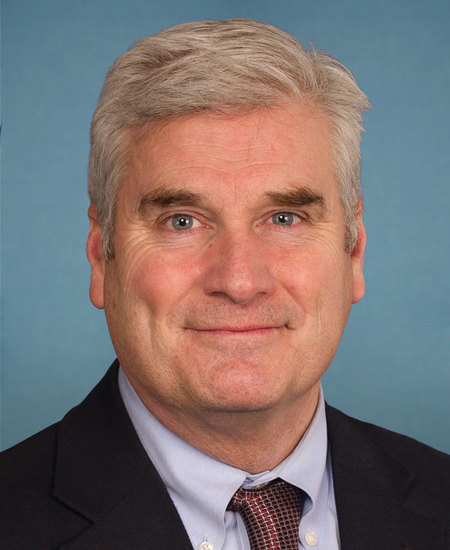
Rep. Tom Emmer
Sponsored bills
Government Office Realignment And Closure Act of 2022 or the GORAC Act This bill directs the Government Accountability Office (GAO) to provide for an independent evaluation of federal agencies and programs to identify duplicative, wasteful, or outdated functions and provides for congressional consideration of legislation to implement recommendations from the evaluation. Specifically, the GAO must (1) procure the services of a nonfederal auditor to evaluate each federal program carried out in the previous 20 years, make recommendations on federal agencies and programs that should be realigned or eliminated, and report on such recommendations; and (2) take steps to assure that any work performed by such auditor complies with standards established by the GAO for audits of federal establishments, programs, activities, and functions. The GAO must provide for the relocation of federal employees whose positions are eliminated as a result of the implementation of recommendations included in the report.
Protecting Access for Hunters and Anglers Act of 2022 This bill bars the Department of the Interior and the Department of Agriculture from prohibiting or regulating the use of lead ammunition or tackle on federal land or water that is under the jurisdiction of such departments and made available for hunting or fishing. The bill makes exceptions for specified existing regulations and where the applicable department determines that a decline in wildlife population at the specific unit of federal land or water is primarily caused by the use of lead in ammunition or tackle, based on the field data from such unit, and the state approves the regulations.
Major Richard Star Act This bill provides that combat-disabled uniformed services retirees with fewer than 20 years of creditable service may concurrently receive, without reduction, veterans' disability compensation and retired pay or combat-related special compensation.
Global Malnutrition Prevention and Treatment Act of 2021 This act sets out programs and otherwise directs the U.S. Agency for International Development (USAID) to carry out activities to prevent and treat malnutrition globally. Specifically, USAID may leverage resources to address malnutrition through the Global Nutrition Coordination Plan (an interagency effort to strengthen the impact of U.S. investments in nutrition) and its role on the board of directors of the U.S. International Development Finance Corporation. USAID must also select countries based on specified malnutrition-related indicators for purposes of targeting malnutrition prevention and treatment programs and update the selection within five years. Additionally, USAID may establish the Nutrition Leadership Council to coordinate federal government activities to prevent and treat malnutrition; and target resources and nutrition interventions to the populations most susceptible to severe malnutrition and otherwise support efforts to prevent and treat malnutrition globally. The act also requires USAID to provide to Congress an implementation plan and annual reports concerning its programs for treating and preventing malnutrition. The act's provisions terminate seven years after its enactment.
Presidential Budget Accountability Act This bill restricts the use of federal funds for presidential travel if the President's budget is not submitted to Congress by the first Monday in February as required by law. Specifically, if the President's budget is not submitted to Congress on or before the first Monday in February of a year, federal funds may not be used for the travel expenses of the President during the period beginning on the first Tuesday of February of that year and ending on the date the budget is submitted.
Presidential Accountability for Yearly Submission of The United States' Budget Act or the PAYSTUB Act This bill restricts the use of federal funds for the salaries or expenses of political employees if the President's budget is not submitted to Congress by the first Monday in February as required by law. Specifically, if the President's budget is not submitted to Congress on or before the first Monday in February of a year, federal funds may not be used for the salary or expenses of any political employee during the period beginning on the first Tuesday of February of that year and ending on the date the budget is submitted. On the earliest possible date after the President's budget is submitted, political employees whose salaries or expenses were not paid during a period in which the President's budget had not yet been submitted must be paid for that period.
Credit Union Board Modernization Act This bill revises the frequency of meetings required to be held by a credit union's board of directors. Specifically, the bill requires monthly meetings for new credit unions during their first five years and for credit unions with a low soundness rating. All other credit unions must hold at least six meetings annually, with at least one meeting held during each fiscal quarter. Currently, all credit union boards must meet at least once a month.
Simplifying Grants Act of 2022 This bill sets forth procedures for simplifying the grant process for nonurbanized areas, for both existing and new grant programs. Each agency must make publicly available a checklist for covered local governments with respect to each grant program of the agency for which such governments are otherwise eligible that includes each requirement for every step of the grant process. The Office of Management and Budget must report to Congress (1) within 270 days of this bill's enactment, evaluating the extent to which agencies have simplified the requirements and made the checklist available; and (2) each April 1st, evaluating the amount of technical assistance provided and the amount of funds awarded.
Russia and Belarus SDR Exchange Prohibition Act of 2022 This act prohibits the Department of the Treasury from engaging in any transaction involving the exchange of Special Drawing Rights (SDRs) held by Russia or Belarus and requires Treasury to take actions to oppose financial assistance to Russia or Belarus. The SDR is an international reserve asset maintained by the International Monetary Fund (IMF) based on contributions from IMF member countries. SDRs may be exchanged between member countries and may also be exchanged for currencies. Treasury must also (1) vigorously advocate for IMF member countries to prohibit transactions involving the exchange of SDRs held by Russia or Belarus, and (2) direct U.S. representatives to each international financial institution to oppose providing financial assistance to Russia or Belarus except to address the basic human needs of their civilian populations. The act's provisions shall be in effect until the earlier of (1) five years after this act's enactment, or (2) 30 days after the President reports to Congress that the governments of Russia and Belarus have ceased destabilizing activities directed at Ukraine's sovereignty and territorial integrity. The President may also waive the provisions upon reporting to Congress that doing so is in the national interest of the United States.