

Maddy summaryThe GUARDRAILS Act (HR 8031) repeals the December 11, 2025 Executive Order on Artificial Intelligence, which previously established a national policy framework for AI development. By removing this executive order, the bill prevents the federal government from using funds to implement, enforce, or administer the policies outlined in that directive. This change directly affects federal agencies and any organizations that were relying on the executive order's framework for AI regulation. The legislation does not create new AI rules but instead eliminates the existing executive mandate that had been in place.
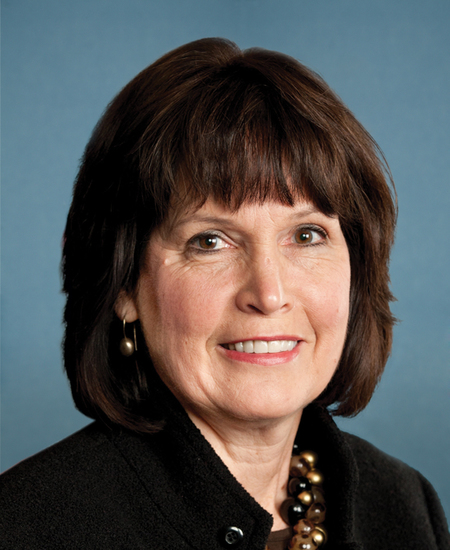
Rep. Betty McCollum
Sponsored bills
Maddy summaryThis bill establishes a comprehensive regulatory framework to phase out the production, use, and release of perfluoroalkyl and polyfluoroalkyl substances, commonly known as 'forever chemicals.' It directly affects manufacturers, users, and importers of these chemicals by requiring annual reporting, mandating phaseout plans within 10 years, and prohibiting the sale of specific consumer products like carpets, food packaging, and cosmetics on staggered timelines. The legislation creates Centers of Excellence at universities and national laboratories to advance detection and remediation technologies, while also modifying bankruptcy laws to prevent the discharge of liability for exposure to persistent, bioaccumulative, and toxic chemicals. Federal agencies must comply with state and local regulations, and the EPA is given expanded authority to enforce compliance through inspections, penalties, and citizen lawsuits.
Maddy summaryHR 7477, the Fair Markets and Sports Integrity Act, prohibits registered financial entities (like exchanges and brokers) from listing, facilitating, or clearing financial contracts based on sporting events or casino-style games. It bans contracts referencing outcomes of sports competitions (like professional or college games) or casino games (such as slots, blackjack, or poker). This directly affects financial market operators by restricting certain types of derivative products tied to sports and gambling. The law creates a clear ban on these specific financial instruments under the Commodity Exchange Act. It does not impact individual betting or gambling activities, only financial market transactions involving them.
Maddy summaryThe Energy Bills Relief Act aims to lower household energy costs and accelerate the development of low-cost, clean energy by modifying federal tax credits, expanding weatherization programs, and streamlining permitting processes. Key provisions include restoring tax incentives for renewable energy projects, increasing funding for low-income heating assistance, and requiring federal agencies to treat wind, solar, and storage projects with the same procedural fairness as oil and gas projects. The bill also establishes new incentives for upgrading the electricity grid, such as tax credits for transmission lines and grants for wildfire prevention measures, while creating mechanisms to ensure utilities serve public interests and protect consumers from price volatility.
Maddy summaryThe Feeding Families Not Fear Act of 2026 reverses specific provisions from the One Big Beautiful Bill Act of 2025 by restoring funding and benefits that were previously cut. It directly affects low-income families and individuals who rely on the Supplemental Nutrition Assistance Program (SNAP) by reinstating benefits that were reduced under earlier legislation. The bill achieves this by repealing two sections that increased funding for immigration and customs enforcement and another section that modified SNAP benefits under the Food and Nutrition Act of 2008. By removing these changes, the legislation returns SNAP provisions to their previous state as if the 2025 law had not been enacted.
Maddy summaryThis bill requires the Department of Veterans Affairs (VA) to cover abortion care, counseling, and related medication as part of standard hospital and medical services for eligible veterans and certain dependents. It amends VA healthcare law to explicitly include these services under existing coverage for veterans qualifying under section 1703 and dependents eligible under section 1781(a). The policy directly affects veterans and their dependents enrolled in VA healthcare programs by expanding covered benefits to include abortion-related care. This is a concrete policy change to VA healthcare benefits, not a broader abortion law.
Maddy summaryThis bill establishes a new excise tax on crude oil extracted or imported by large oil companies and uses the revenue to provide rebates to eligible consumers. The tax would be imposed on companies that extract or import over 300,000 barrels of crude oil per day, at a rate of 50% of the difference between the current Brent crude oil price and a 2025 baseline price, adjusted for inflation. All revenue from this tax would be deposited into a new "Protect Consumers from Gas Hikes Fund." This fund would then be used to provide refundable tax credits, or rebates, to eligible individuals, with the rebate amount determined by the Secretary based on fund revenues and the number of eligible individuals. These rebates would be phased out for individuals with adjusted gross incomes exceeding certain thresholds, such as $150,000 for joint filers.
Maddy summaryThis bill designates the Chí'chil Biłdagoteel Historic District, a traditional cultural place significant to Western Apache and other Native American tribes, as protected land within the Tonto National Forest. It prohibits mining, toxic waste disposal, pipeline construction, and other development activities on the area to preserve its cultural and natural integrity. The legislation requires the Secretary of Agriculture to maintain the land in its natural condition, consult with affected tribes, and ensure continued access for traditional religious and cultural practices. By withdrawing the land from public land laws and mining rights, the bill prevents future extraction projects that could damage sacred sites, water sources, and ecosystems.
Maddy summaryHRES 1114 is a ceremonial resolution recognizing the 114th anniversary of the Girl Scouts of the United States of America (founded March 12, 1912). It formally celebrates the organization’s mission of building girls’ courage, confidence, and character through programs focused on leadership, STEM, community service, and inclusive spaces. The resolution specifically honors Girl Scouts who earned the Gold Award in 2025 and encourages continued support for their work in developing future women leaders. As a non-binding resolution, it has no legal effect but serves as a symbolic expression of congressional appreciation for the Girl Scouts’ community impact.
Maddy summaryThis bill, known as the Diabetes Foot Health Access and Modernization Act of 2026, makes two main changes to federal healthcare programs. First, it allows Medicaid to cover foot and ankle care services provided by podiatric physicians, ensuring patients have access to this specialized care. Second, it updates Medicare rules to clarify documentation requirements for diabetic shoes, specifying conditions under which patients can receive extra-depth or custom-molded footwear. The changes take effect on January 1, 2026, for Medicaid services and January 1, 2028, for Medicare shoe coverage.