

Maddy summaryThe American Dream and Promise Act of 2025 would create pathways to permanent residency for certain immigrant youth who entered the U.S. as children (Dream Act component) and for individuals from countries with Temporary Protected Status or Deferred Enforced Departure (American Promise Act component). To qualify, applicants must meet continuous physical presence requirements (since January 1, 2021 for Dream Act applicants, and for 3+ years for American Promise applicants), pass background checks, and satisfy educational or employment criteria. Conditional permanent resident status would be granted initially, with the option to convert to full permanent residency after meeting additional requirements like earning a degree, serving in the military for two years, or demonstrating three years of earned income. The bill includes fee exemptions for low-income applicants, establishes a grant program to assist applicants with legal help, and creates specific procedures for background checks and appeals.
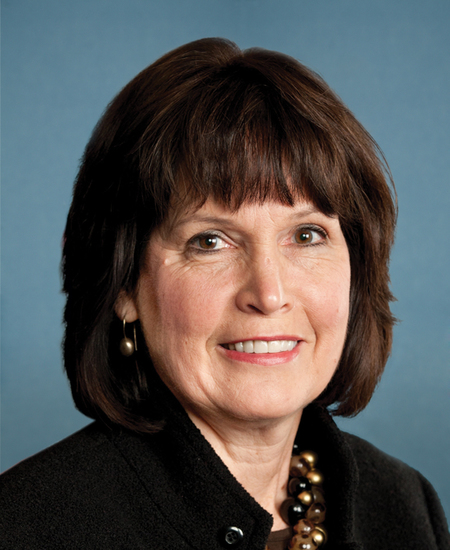
Rep. Betty McCollum
Sponsored bills
Maddy summaryThis bill awards a Congressional Gold Medal to the 761st Tank Battalion (known as the "Black Panthers"), the first predominantly Black armored unit in World War II's European Theater. It recognizes their combat service from 1944-1946, including key roles in the Battle of the Bulge and breaking the Siegfried Line, despite facing racial prejudice during and after the war. The medal will be displayed at the National Museum of African American History and Culture, with bronze duplicates available for sale to cover costs. The bill commemorates the battalion's 130,000 enemy casualties inflicted, 50% casualty rate, and their 1978 Presidential Unit Citation. It does not create new laws or affect current policies.
Maddy summaryThe RAISE Act of 2025 creates a new tax credit for teachers and early childhood educators, with a base of $1,000 plus additional amounts based on school poverty rates. Teachers working in schools where more than 39% of students live in poverty can receive up to $14,000 more in tax credits, calculated based on how much a school's poverty rate exceeds 39%. The bill also increases the deduction for teachers' classroom expenses from $250 to $500 and requires schools to maintain teacher pay levels to receive certain federal funds. This directly affects public school teachers, early childhood educators, and schools serving communities with high poverty rates.
Maddy summaryThe Democracy in Design Act requires the General Services Administration (GSA) to ensure all new federal public building designs follow the 1962 "Guiding Principles for Federal Architecture" report. Within 180 days of enactment, the GSA must create binding regulations establishing minimum design standards for federal buildings, after publishing draft rules for public feedback. This law directly affects the GSA and federal agencies responsible for designing or constructing public buildings. It mandates adherence to historical design guidelines without altering existing building codes or funding mechanisms.
Maddy summaryEthan's Law requires gun owners to store firearms securely in homes where minors live or where residents are legally prohibited from owning guns. It makes it unlawful to leave firearms unsecured if a minor or ineligible person could access them, with fines of $500 per violation and harsher penalties if injury or death occurs. The bill creates a federal grant program to help states implement similar secure storage laws and treats unsafe storage as negligence in legal cases. It directly affects households with children or residents who cannot legally possess firearms, aiming to reduce accidental shootings and unauthorized access.
Maddy summaryHRES 159 is a symbolic resolution expressing the U.S. House of Representatives' support for designating February 24-28, 2025, as "Public Schools Week." It does not create new laws or allocate funds but aims to highlight the importance of public schools in communities. The resolution cites reasons such as public schools serving 90% of U.S. students, fostering critical thinking, and requiring equitable funding - though these are context, not policy changes. It directly affects public schools and their communities by raising awareness of their role in education. As a non-binding resolution, it has no direct impact on school operations or funding.
Maddy summaryHR 1502 authorizes the creation of a Congressional Gold Medal to honor the volunteers and communities (primarily from Nebraska, Colorado, and Kansas) who supported the North Platte Canteen during World War II. The bill directs the Treasury Secretary to design and strike the medal, which will be presented to the individuals who contributed to the canteen’s operations and then permanently displayed at the Lincoln County Historical Museum in North Platte, Nebraska. It also permits the sale of bronze duplicates to cover production costs, with proceeds going to the U.S. Mint. This is a commemorative measure recognizing historical service, not a policy change affecting current laws or programs.
Maddy summaryThe Rare Earth Magnet Security Act of 2025 creates a tax credit for U.S. manufacturers producing rare earth magnets domestically. The credit pays $20 per kilogram for magnets with less than 90% of component materials sourced in the U.S., and $30 per kilogram if at least 90% of materials are domestically produced. The bill restricts the credit for magnets using components from "non-allied foreign nations" (with a temporary exception for certain materials until 2027) and phases out the credit after 2034 (reducing to 70% in 2035, 35% in 2036-2037, and 0% after 2037). The credit applies to taxable years beginning after December 31, 2024.
Goldie's Act This bill expands enforcement provisions under the Animal Welfare Act (AWA). Specifically, the bill directs the Department of Agriculture (USDA) to document and record detailed descriptions of violations of the act observed during inspections and investigations. USDA must provide a copy of all records documenting violations to state, local, and municipal animal control or law enforcement officials within 24 hours of such inspections or investigations. Inspections must be held at least once a year of each research facility, the premises of each animal dealer, and each exhibitor of animals. If violations are found during inspections, then USDA must conduct any necessary follow-up inspections until all the violations are corrected. Inspectors must confiscate or destroy in a humane manner animals found to be suffering physical or psychological harm as a result of failure to comply with the AWA. Violators are subject to civil penalties as outlined in the bill.
This concurrent resolution declares that Congress should not impose any new performance fee, tax, royalty, or other charge relating to the public performance of sound recordings on a local radio station for broadcasting sound recordings over the air, or on any business for such public performance of sound recordings.