

Maddy summaryHRES 321 is a symbolic resolution supporting the "Rise Up for LGBTQI+ Youth in Schools Initiative," which calls for communities to demand equal educational opportunities, civil rights protections, and inclusion for LGBTQI+ students in K-12 schools. It urges states and localities to adopt policies prohibiting bias-based discrimination, exclusion, and erasure of LGBTQI+ students - particularly transgender, nonbinary, Black, Indigenous, and disabled youth - while recognizing existing efforts like National Day of Silence. The resolution does not create new laws or allocate funds but formally endorses community-led advocacy to address hostile school environments documented in studies showing discrimination correlates with higher absenteeism, lower grades, and mental health challenges among LGBTQI+ students. It directly affects state education policies and school climates, encouraging local action without federal enforcement.
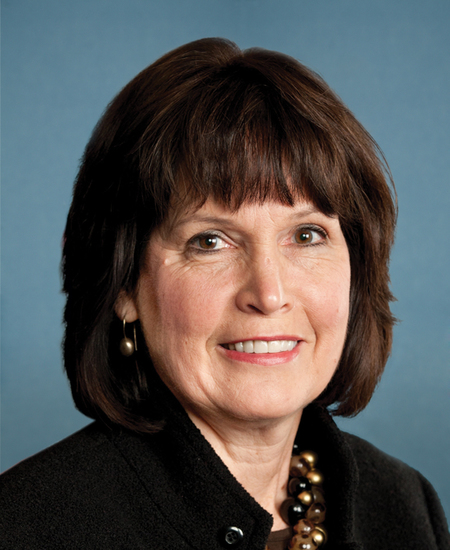
Rep. Betty McCollum
Sponsored bills
Maddy summaryHR 2762 establishes a new Title X Clinic Fund to expand federal funding for family planning clinics. It appropriates $512 million annually (2026-2035) for clinic grants and $50 million for infrastructure like construction and equipment. The bill requires clinics receiving this funding to provide nondirective pregnancy counseling, ensuring patients receive neutral information about all options - including prenatal care, adoption, and termination - upon request. This directly affects Title X clinics nationwide and the low-income patients they serve, primarily by increasing financial support and standardizing counseling practices.
Maddy summaryHR 2767, the BRAIN Act, aims to advance brain tumor research and improve patient care by requiring the NIH to create a public database of tumor samples collected with federal funding. It authorizes $50 million annually for a Glioblastoma Therapeutics Network to accelerate treatment development and $10 million for cellular immunotherapy research (including CAR-T therapies) targeting brain tumors. The bill also mandates a national awareness campaign to increase understanding of cancer clinical trials and biomarker testing, plus $5 million yearly for pilot programs studying survivor care coordination and follow-up services. Additionally, it directs the FDA to issue guidance ensuring brain tumor patients can access clinical trials. These provisions directly affect patients, researchers, and healthcare providers focused on brain tumors and rare cancers.
Maddy summaryThe American Family Act (HR 2763) establishes a new refundable child tax credit that provides monthly payments to eligible families with children. It would pay $300 per month for each child under age 6 and $360 per month (120% of $300) for each child age 6 or older, with income limits of $150,000 for joint filers and $112,500 for other filers. The bill creates a "period of presumptive eligibility" to determine eligibility for monthly payments, allowing families to receive advance payments based on information from previous tax returns. This would directly affect millions of families with children who meet the income requirements, providing more consistent financial support throughout the year rather than an annual tax credit.
Maddy summaryHR 2799, the Closing the Bump Stock Loophole Act of 2025, prohibits the sale, possession, and modification of devices that increase the firing rate of semi-automatic firearms to mimic machine guns (commonly called "bump stocks"). It specifically bans manual, power-driven, or electronic devices designed to speed up firing, as well as modified firearms that achieve this effect. Owners of pre-existing modified firearms must register them within 120 days of the law's enactment, with exemptions for government entities and firearms already lawfully modified and registered before the bill passes. The bill does not restrict standard semi-automatic firearms or require registration of unmodified guns.
Maddy summaryHR 2753, the Hands Off Medicaid and SNAP Act of 2025, is a procedural bill that would prevent Congress from using budget reconciliation to cut Medicaid or SNAP benefits. It amends the Congressional Budget Act to block reconciliation bills or amendments that reduce Medicaid enrollment/benefits (under Social Security Act Title XIX) or SNAP eligibility/benefits (under the Food and Nutrition Act of 2008). This rule would apply until January 20, 2029, and only affects the budget reconciliation process, not the programs themselves. The bill does not change current benefit levels or eligibility rules for Medicaid or SNAP recipients.
Maddy summaryThe Raise the Wage Act of 2025 gradually increases the federal minimum wage from $9.50 to $17.00 per hour over six years, with annual adjustments based on median wage growth. It raises the base wage for tipped workers from $6.00 to $17.00 per hour, phasing out their separate minimum wage structure by 2029. The bill also eliminates special minimum wage certificates for disabled workers after 2029, requiring employers to pay the standard minimum wage. These changes apply to most covered workers, including tipped employees and those under 20, with specific transition timelines for each group.
Maddy summaryThis bill establishes federal minimum standards for collective bargaining rights for public employees and supervisors. The Federal Labor Relations Authority would determine if state laws provide these rights, and if not, would establish them for affected employees. The bill guarantees public employees the right to form unions, bargain collectively, and engage in concerted activities, while requiring public employers to recognize unions and put agreements in writing. It also prohibits strikes or lockouts that would disrupt emergency services. This would apply to public employees in states that don't meet the federal standards for collective bargaining rights.
Maddy summaryHR 2737, titled the "ELON MUSK Act," is a procedural bill with a satirical title referencing Elon Musk. The bill prohibits "special Government employees" (as defined under 18 U.S.C. § 202) from entering into or benefiting from federal government contracts, requiring termination of any existing such contracts upon enactment. It uses standard legal terminology without creating new policy mechanisms beyond this contractual restriction. The bill does not directly affect specific individuals or entities but applies to a defined category of federal employees under existing law. The title's reference to Elon Musk is purely nominal and unrelated to the bill's actual provisions.
Maddy summaryThis bill requires the Secretaries of Defense and Veterans Affairs to evaluate existing and ongoing research on menopause, perimenopause, and mid-life health for women in the military and as veterans. It directs them to identify gaps in knowledge about treatments, the impact of military service (including combat roles and exposure to toxins like burn pits), mental health effects, and healthcare provider training needs. Within 180 days of enactment, the departments must submit a report with findings and a strategic plan to address identified gaps and prioritize future research. The bill ensures this work supplements, rather than duplicates, existing efforts by the Department of Health and Human Services.