

Maddy summaryHR 3408, the Pathways to Policing Act, authorizes $50 million annually from 2026 to 2030 to fund grant programs aimed at increasing diversity in law enforcement. It provides grants to states, local governments, and police agencies to support two key areas: up to 50% of funds for marketing/recruitment campaigns targeting underrepresented communities and nontraditional candidates, and up to 50% for "Pathways to Policing" programs that help new candidates overcome education barriers through financial support during training. These programs specifically assist individuals with no prior law enforcement experience who face obstacles to entering the field. The bill also directs the federal government to create nationwide recruitment campaigns and resources for local agencies, with a focus on recruiting officers who live in or will serve the communities they protect.
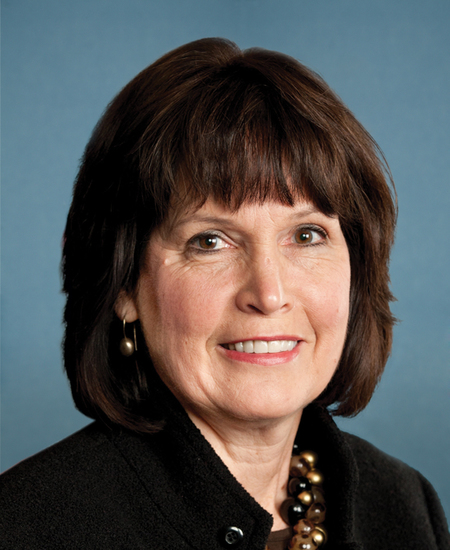
Rep. Betty McCollum
Sponsored bills
Maddy summaryThis bill establishes minimum nurse-to-patient ratios for hospital units across the country, requiring hospitals to maintain specific staffing levels (such as 1:1 in trauma units, 2:1 in critical care units, and 3:1 in emergency rooms) to improve patient safety and quality of care. Hospitals must develop transparent staffing plans that account for patient acuity, involve direct care nurses in planning, and document actual staffing levels for each shift. The bill includes strong whistleblower protections for nurses who object to unsafe staffing levels and prohibits hospitals from retaliating against nurses who report violations. It requires hospitals to comply with these standards as a condition for receiving Medicare and Medicaid payments, with enforcement through audits and civil penalties of up to $50,000 for repeated violations. The bill also includes provisions to support nurse recruitment and retention through workforce initiatives and training programs.
Maddy summaryHR 3368, the "Born in the USA Act of 2025," prohibits federal funding for Executive Order 14160 (which aimed to restrict birthright citizenship for children born in the U.S.). The bill directly affects federal agencies that might implement the executive order by blocking their use of funds for that purpose. Its key provision is a funding ban targeting the executive order and any similar future policies, without changing citizenship law. The bill does not alter birthright citizenship rights but prevents federal resources from being used to enforce the controversial executive order. It is a procedural measure focused on funding, not a substantive policy change to citizenship rules.
Maddy summaryHR 3349, the Healthy Dog Importation Act, requires importers to provide electronic health documentation before bringing dogs into the U.S., including proof of vaccinations, parasite treatment, health status, and permanent identification. It directly affects importers and import transporters who move dogs across borders, mandating these requirements for all dogs except specific exceptions like returning U.S. military working dogs or dogs under veterinary care. Key mechanisms include a centralized database for tracking health certificates, annual reporting on import origins and purposes, and penalties for noncompliance. The bill also establishes a 18-month timeline for implementing regulations and repeals outdated importation rules under the Animal Welfare Act.
Maddy summaryHR 3277, the Ensuring Lasting Smiles Act, requires group health plans and health insurance issuers to cover medically necessary outpatient and inpatient treatments for congenital anomalies or birth defects primarily affecting the eyes, ears, teeth, mouth, or jaw. This includes reconstructive procedures, dental/orthodontic support during treatment, and follow-up care, but excludes purely cosmetic surgery not tied to a medical diagnosis. Cost-sharing (like copays) for these services must not be stricter than for other medical benefits. The law takes effect for plan years beginning January 1, 2026, and mandates insurers to provide notice about this coverage to beneficiaries.
Maddy summaryHR 3243, the Therapeutic Fraud Prevention Act of 2025, bans the provision of paid conversion therapy aimed at changing a person's sexual orientation or gender identity, and prohibits advertising such therapy as effective, safe, or without risk. It directly affects LGBTQ+ individuals and their families who might be targeted by these practices, as professionals have determined conversion therapy is ineffective and harmful. The law treats violations as deceptive acts under consumer protection laws, empowering the Federal Trade Commission and state attorneys general to enforce it through civil actions. It explicitly excludes legitimate gender transition support and non-discriminatory counseling from the ban.
Maddy summaryThis bill amends the tax code to change how small business owners calculate a deduction for pass-through business income. It caps the deduction at $25,000 annually for eligible small businesses (defined as those with qualified business income under $25,000), while raising the income threshold for phaseout to $200,000 ($400,000 for joint filers). The changes simplify rules around loss carryovers and wage calculations for this deduction. The bill takes effect for tax years beginning after December 31, 2025.
Maddy summaryHRES 380 is a symbolic resolution supporting the designation of May 5-9, 2025, as "Teacher Appreciation Week." It does not create new laws or funding but formally recognizes teachers' contributions to education. The resolution affirms teachers' role in shaping students' futures and calls for including teachers in education policymaking at all levels. It highlights teacher survey data showing broad support for policies like equitable school funding and culturally responsive teaching, though the resolution itself only expresses support for the week's designation. This is a non-binding gesture with no direct impact on affected individuals or policies.
Maddy summaryThis bill expands OSHA safety protections to cover public employees, including teachers, police, and sanitation workers, who were previously excluded from federal workplace safety regulations. It directly affects state and local government workers by amending the Occupational Safety and Health Act to explicitly include "the United States, a State, or a political subdivision of a State" under OSHA coverage. The key mechanism is a technical amendment to the law’s definition of covered employees, ensuring public service workers fall under the same safety standards as private-sector employees. The bill takes effect 90 days after enactment for most workplaces, with a 36-month delay for state/local governments without existing OSHA plans.
Maddy summaryHR 3112, the Better CARE for Animals Act of 2025, strengthens enforcement of the federal Animal Welfare Act by requiring dealers and exhibitors to hold valid licenses for animal sales or transport (Section 4). It expands enforcement authority by allowing the Attorney General to sue violators for up to $10,000 per day, seize animals, and seek injunctions (Section 20), while clarifying that courts can address violations of related rules and regulations. The bill directly affects animal dealers, exhibitors, the USDA, and the Department of Justice, creating clearer pathways for holding violators accountable. Key provisions include updating definitions, broadening inspection powers to cover all regulations, and directing penalty funds toward temporary animal care costs during legal proceedings.