

Family and Medical Insurance Leave Act or the FAMILY Act This bill entitles every employee to a family and medical leave insurance (FMLI) monthly benefit payment of two-thirds of the employee's regular pay, limited to a maximum of $4,000, for not more than 60 days of qualified caregiving. The bill establishes the Office of Paid Family and Medical Leave within the Social Security Administration to administer the FMLI program. An FMLI benefit payment must be coordinated with any periodic benefits received under a state or local temporary disability insurance or family leave program. The bill imposes a tax on employers, employees, and self-employed individuals to fund FMLI benefits. It also establishes the Federal Family and Medical Leave Insurance Trust Fund to hold tax revenues.
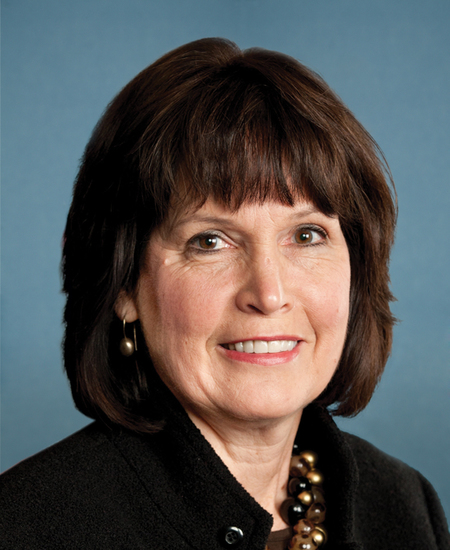
Rep. Betty McCollum
Sponsored bills
Scientific Integrity Act This bill revises provisions regarding the release of scientific research results by federal agencies. Each agency that funds, conducts, or oversees scientific research must (1) adopt and enforce a scientific integrity policy that includes requirements such as that scientific conclusions are not based on political considerations, and (2) submit such policy to the Office of Science and Technology Policy (OSTP) for approval. Each agency must make such policy available to the public and submit such policy to Congress. Agencies and the OSTP must periodically review the policies. The Government Accountability Office shall review implementation of the policies. Each agency shall (1) appoint a Scientific Integrity Officer, (2) establish a process for dispute resolution consistent with the scientific integrity policy, and (3) establish a specified training program for current and new employees.
Restoring Communities Left Behind Act This bill directs the Department of Housing and Urban Development to establish a grant program for local partnerships to carry out neighborhood revitalization support activities in economically distressed areas. Eligible activities include weatherization and energy efficiency improvements; housing accessibility improvements for seniors and persons with disabilities; purchasing delinquent mortgages; purchasing and developing vacant or distressed properties to create affordable rental housing and for other purposes; and improving parks, sidewalks, and street lighting.
FEMA Climate Change Preparedness Act This bill requires the Federal Emergency Management Agency (FEMA) to (1) revise its 2018-2022 Strategic Plan to ensure that the plan explicitly mentions climate change and addresses the implications of climate change on homeland security and near- and long-term national disaster risk, and (2) ensure that future strategic plans do likewise. The Department of Homeland Security must establish, as a subcommittee of the National Advisory Council, the Climate Change Subcommittee, which shall advise FEMA on how to best incorporate climate change, including risk assessments and strategies for adaptation and mitigation, into and throughout FEMA's policies, plans, programs, and operations. FEMA must publish as a report, submit to specified congressional committees, and make available to Congress and the public, a comprehensive assessment of climate change risks and preparedness.
Flood Resiliency and Taxpayer Savings Act of 2021 This bill requires federal agencies to take specified actions to evaluate and mitigate the risk of floods to federally funded projects. Specifically, the bill directs federal agencies to evaluate the potential for flooding throughout the planned lifetime or duration of a federally funded project to reduce the risk of financial and property losses and prevent the disruption of critical services during floods. Further, federal agencies must consider certain data and information (e.g., the most recent flood insurance rate map published by the Federal Emergency Management Agency) when evaluating whether a federally funded project is in a floodplain. If the agency determines the data and information are not adequate for understanding the flood risks to the project, then the agency must use an alternative design standard outlined by the bill. Finally, the bill directs the Federal Interagency Floodplain Management Task Force to issue guidelines for federal agencies related to flood risk management.
Health Care Affordability Act of 2021 This bill revises the tax credit for health care premium assistance to expand the eligibility of low-income taxpayers for such credit and reduce the cost of health care premiums.
Medical Debt Relief Act of 2021 This bill modifies requirements related to the reporting of medical debt. Specifically, a consumer reporting agency is prohibited from adding medical debt information to a consumer credit report if the debt was fully paid or settled, or is less than a year old. Additionally, a debt collector must notify the consumer prior to reporting medical debt to a consumer reporting agency.
Keep Our Promise to America's Children and Teachers Act or the Keep Our PACT Act This bill provides funding through FY2031 for grant programs operated by local educational agencies to provide supplementary educational and related services to low-achieving students and other students who attend elementary and secondary schools with relatively high concentrations of students from low-income families. Additionally, the bill permanently reauthorizes the grant program to assist states and outlying areas in providing special education and related services to children with disabilities.
COVID-19 Testing, Reaching, And Contacting Everyone (TRACE) Act This bill authorizes the Centers for Disease Control and Prevention to award grants for testing, contact tracing, monitoring, and other activities to address COVID-19 (i.e., coronavirus disease 2019). Entities eligible for these grants include certain clinics and hospitals, nonprofits, and schools.
USPS Fairness Act This bill repeals the requirement that the U.S. Postal Service annually prepay future retirement health benefits.