

Maddy summaryHR 3946, the FIGHT Act of 2025, amends the Animal Welfare Act to specifically prohibit gambling on animal fighting events and restrict the interstate transport of roosters used in such ventures. It defines "rooster" as male chickens over six months old and makes it unlawful to sponsor, exhibit, attend (for those under 16), or gamble on animal fighting events - whether in-person or broadcast. The bill creates a civil enforcement mechanism allowing any person to file a lawsuit to stop violations after providing 60 days' notice to authorities, with potential fines up to $5,000 per violation. It also establishes seizure of property used to facilitate violations and clarifies that state laws on animal fighting remain in effect unless directly conflicting with federal provisions.
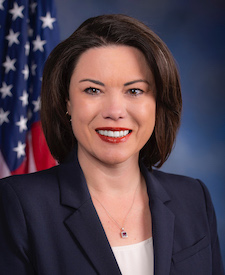
Rep. Angie Craig
Sponsored bills
Maddy summaryHR 3988 requires the Department of Housing and Urban Development (HUD) and the Census Bureau to jointly study how federal agencies track and record "housing loss" in the U.S. Housing loss is defined as involuntary displacement, including evictions, foreclosures, or displacement from natural disasters. The study must identify common types of housing loss, review existing federal data sources, assess data quality, and recommend improvements for better tracking. HUD and the Census Bureau must submit a report to Congress within six months detailing these findings and recommendations. This bill does not change current laws but mandates a federal review to improve how housing loss is measured.
Maddy summaryThe RISE Act (HR 3939) streamlines documentation for college students with disabilities by requiring institutions to accept multiple forms of proof, including past Individualized Education Programs (IEPs), Section 504 plans, or licensed professional evaluations, instead of demanding current documentation. It mandates that colleges establish transparent, accessible processes for determining accommodation eligibility and share these policies with students, parents, and faculty. The bill also requires institutions to report specific data on students with disabilities (like enrollment numbers and accommodations used) to federal databases, while authorizing $10 million for a national support center. These changes directly affect colleges receiving federal aid and students seeking disability accommodations in higher education.
Maddy summaryThe RAPID Reserve Act creates a federal program requiring drug manufacturers to maintain 6-month reserves of critical medicines with vulnerable supply chains - such as those concentrated in single regions or with few producers. Eligible manufacturers (with FDA-registered facilities and strong quality records) must store these reserves domestically or in OECD countries and share them during emergencies, like shortages or public health crises. The program prioritizes domestic production, allocates $500 million for fiscal year 2026, and mandates HHS to publish a list of covered drugs and report on the program’s effectiveness. It directly affects drug manufacturers and distributors selected to participate in the reserve system.
Maddy summaryThis bill codifies existing protections for designated roadless areas within the National Forest System by prohibiting new road construction, road reconstruction, and logging in these areas. It directly affects National Forest lands already identified as "inventoried roadless areas" under the current Roadless Rule, which covers roughly 58 million acres. The key mechanism requires the Secretary of Agriculture to enforce these prohibitions, maintaining current protections without expanding restrictions to other lands or altering existing multiple-use management. The bill does not create new protected areas but legally solidifies the existing regulatory framework to preserve ecological and recreational values.
Maddy summaryThe STOP CSAM Act of 2025 would strengthen protections for child victims and witnesses in federal court by creating a new definition of "covered person" to include minors under 18 who are victims or witnesses of abuse, exploitation, or kidnapping. The bill requires internet service providers to report apparent child sexual exploitation to the CyberTipline within 60 days, with civil penalties of $50,000-$250,000 per violation and criminal fines up to $1 million for non-compliance. It also creates new civil remedies allowing victims to sue platforms that host or promote child sexual exploitation, with minimum $300,000 in damages. Additionally, large platforms would be required to submit annual reports to the Attorney General and FTC detailing their safety measures and child exploitation on their platforms.
Maddy summaryHR 3906, the Medical Research for Our Troops Act, restores funding levels for military medical research by increasing the Defense Health Agency's research budget from $40.395 billion to $41.576 billion in the 2025 appropriations act. It ensures Congressionally Directed Medical Research Programs funds are used consistently with the Consolidated Appropriations Act, 2024, requiring the Defense Secretary to support all previously identified research programs and maintain existing funding allocations. The bill directly affects military medical research initiatives and the Defense Health Agency's budget implementation. This is a procedural funding adjustment, not a new policy, maintaining continuity for ongoing research projects.
Maddy summaryThis bill requires private firearm transfers between individuals to go through a licensed dealer who must conduct a background check. It applies to most private sales but includes exceptions for transfers between family members (like parents and children), law enforcement, emergencies preventing harm, and temporary loans at shooting ranges or for hunting. Dealers must provide background check notices in both English and Spanish. The law aims to prevent prohibited individuals from obtaining firearms through private transactions while maintaining existing state authority on firearm laws.
Maddy summaryThe RNs for Rural Health Act of 2025 expands Medicare coverage to allow rural health clinics to bill for "personalized prevention plan services" when provided directly by licensed registered nurses (RNs). This change specifically affects rural health clinics and their patients in underserved areas, enabling RNs to deliver these services without requiring physician supervision for billing purposes. The bill amends Medicare law to include RNs as eligible providers for these specific preventive services, treating them the same as physician-provided services under existing coverage rules. The policy change applies to services furnished on or after the bill's enactment date.
Maddy summaryHR 3868, the Enhanced Background Checks Act of 2025, modifies federal firearm background check procedures to address delays. It requires federal firearms licensees to wait 10 business days after a background check query if the system doesn’t immediately flag a transfer, unless the buyer submits an electronic petition confirming they aren’t prohibited from owning firearms. The petition process includes a 10-day response deadline from the Attorney General, with licensees allowed to proceed if the system remains silent after 10 days. The bill also mandates detailed annual reports from the FBI on petition delays and GAO reports on implementation, focusing on how these changes affect firearm transfers to prohibited individuals.