

Maddy summaryThis House resolution (HRES 669) honors the victims and survivors of the August 27, 2025, mass shooting at Annunciation Catholic Church and School in Minneapolis, which killed 2 children and injured 21 others. It condemns the violence, offers condolences to affected families, and commends first responders, medical staff, and community members who aided victims. The resolution expresses solidarity with the Minneapolis Catholic community and affirms that everyone deserves safety in places of worship and schools. As a symbolic gesture with no policy changes, it does not impose new laws or funding requirements.
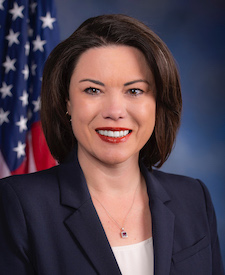
Rep. Angie Craig
Sponsored bills
Maddy summaryHR 5098, the Strengthening Our Workforce Act of 2025, creates a pathway to conditional lawful permanent residency for certain undocumented workers. It directly affects immigrants who have been continuously present in the U.S. since January 1, 2024, without lawful status, or with deferred action (like DACA), and who have worked at least 100 days in one of 24 designated essential professions (e.g., healthcare, agriculture, construction, domestic care, or disaster recovery work). To qualify, applicants must pay a fee, meet employment requirements (100 days annually for two years), and avoid specific criminal inadmissibility grounds (with limited waivers). After two years of conditional status, the residency automatically converts to permanent without visa caps, provided they pay a fee and pass a background check. The bill targets workers in critical sectors to address labor shortages while establishing a defined adjustment process.
Maddy summaryHR 5094, the "Protect Patients from Costly Care Act," repeals two specific provisions from a prior reconciliation law (Public Law 119-21) that would have increased patient costs. It restores Medicaid cost sharing rules to their pre-2023 state, directly affecting Medicaid beneficiaries by preventing higher out-of-pocket costs. It also reverses changes to orphan drug exclusions under the Drug Price Negotiation Program, bringing those medications back under federal price negotiation rules for manufacturers. The bill does not create new policies but undoes specific cost-increasing changes to existing programs.
Maddy summaryHR 5056, the Teachers Are Leaders Act of 2025, creates a federal grant program to support teachers in high-need schools who maintain classroom roles while taking on leadership responsibilities. The bill provides funding for eligible school district-university partnerships to offer teachers one year of professional development leading to a teacher leadership credential, plus up to two additional years of support. This includes training in areas like curriculum development, peer coaching, and cultural competencies, with selection criteria requiring at least three years of teaching experience and certification. Grants cover 50% of stipends in the first two years and 33% in the third year, and teachers may repay credential costs if they leave the program early. The program directly affects classroom teachers in high-need schools and aims to improve student achievement through data-driven instructional practices.
Maddy summaryHR 1569, the CATCH Fentanyl Act, establishes a 5-year pilot program to test nonintrusive inspection technologies at U.S. border ports of entry. The bill requires U.S. Customs and Border Protection (CBP) to evaluate at least five technology enhancements - including AI, machine learning, and quantum sensing - to improve detection of contraband, drugs, weapons, and threats while reducing inspection wait times. Pilot projects must prioritize cost-effective solutions that integrate with existing systems, adhere to privacy protections, and report findings on performance metrics like detection rates and throughput. The program mandates detailed reports to Congress on effectiveness, implementation plans, and privacy impacts, using existing funding without new appropriations.
Maddy summaryHR 4965, the Counseling for Career Choice Act, requires schools to strengthen career guidance programs for students. It directly affects K-12 school counselors and students by mandating specific components, including identifying local job market trends with workforce agencies, providing financial aid awareness, and developing personalized career plans. Key provisions require schools to create systems for counselors to access workforce data, offer professional development, and connect students to apprenticeships, internships, dual enrollment, and job training programs. The law also encourages using technology like AI tools to support career counseling and evaluate student outcomes. This focuses on preparing students for college and careers through structured, data-informed school counseling services.
Maddy summaryThe Election Mail Act (HR 4915) establishes new standards for handling voting-by-mail materials in Federal elections. It requires the Postal Service to process absentee ballots the same day received, add postmarks showing mailing dates, and treat election mail as first-class with free postage for completed ballots. States must provide ballot return envelopes with tracking barcodes and accept mailed ballots postmarked on election day if received within 7 days. These provisions apply to Federal elections starting in 2026, with some requirements taking effect sooner.
Maddy summaryThis bill requires the U.S. Department of State to include specific, detailed reporting on reproductive rights in its Annual Country Reports on Human Rights Practices. It mandates descriptions of each country's policies regarding access to contraception, abortion services, and comprehensive reproductive health care, alongside data on pregnancy-related deaths, discrimination against women and LGBTQI+ individuals, and disparities based on race, disability, or other factors. The bill also directs the State Department to consult with civil society organizations and health experts to ensure thorough reporting on these issues. This change aims to align U.S. reporting with international human rights standards and address past omissions of reproductive rights from these reports.
Maddy summaryHRES 628 is a ceremonial resolution recognizing the 20th anniversary of the Renewable Fuel Standard (RFS), a policy established in 2005 and expanded in 2007. It highlights the RFS's historical role in supporting rural economies (through 2,700+ renewable fuel facilities and 644,000 jobs), reducing greenhouse gas emissions via mandatory fuel standards, and lowering consumer fuel costs. The resolution does not create new policy or alter the RFS; it solely commemorates the program's past impacts on energy security, agriculture, and environmental performance. It affirms the RFS as a foundational element of U.S. energy policy without proposing any legislative changes.
Maddy summaryThis bill adjusts health insurance subsidies by modifying the premium tax credit structure under the Internal Revenue Code. It replaces previous income thresholds with a sliding-scale formula, increasing subsidies for households earning between 150% and 400% of the federal poverty level - reducing their required premium payments as income rises within these tiers. The changes apply to tax years beginning after December 31, 2025, directly affecting middle-income individuals and families purchasing coverage through health insurance marketplaces. It also repeals specific provisions from a prior reconciliation law related to health care.