

Maddy summaryHR 5309, the Congressional Tribute to Constance Baker Motley Act of 2025, authorizes a posthumous Congressional gold medal for Constance Baker Motley, a pioneering civil rights attorney and judge. The bill directs the Treasury Secretary to strike the medal with her image and name, to be presented to her son, Joel W. Motley III, and her niece, Constance Royster. It also permits the sale of bronze duplicates at cost to cover expenses, with proceeds going to the U.S. Mint fund. This is a commemorative measure with no substantive policy changes, honoring Motley’s legacy as the first African-American woman appointed to a federal judgeship.
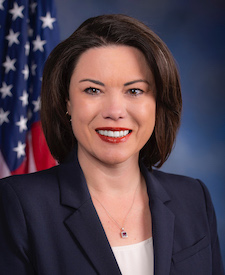
Rep. Angie Craig
Sponsored bills
Maddy summaryThe ACCESS Act (HR 5295) requires states to run public awareness campaigns - including social media - to inform secondary students about career and technical education programs and skilled trade opportunities. It also mandates that local workforce programs provide career counseling and exploration services that include information on high-skill, high-wage, or in-demand jobs available in the local area. These provisions directly affect secondary students, community-based organizations, and state workforce agencies administering federal job training programs. The bill focuses on connecting students with training pathways in growing industries through concrete policy changes.
Maddy summaryHR 5306, the Gun Suicide Prevention Act of 2025, requires firearm manufacturers and retailers to attach a specific label to all firearms. The label must be clearly visible in both English and Spanish, include the National Suicide Prevention Lifeline phone number (988), and feature a yellow triangle with an exclamation mark before the suicide prevention message. This applies to all firearms sold or offered for sale, directly affecting manufacturers and retailers under the Consumer Product Safety Act.
Maddy summaryThe FLAME Act requires the U.S. Fire Administration to provide Congress 60 days' notice before canceling 25% or more of the National Academy’s annual courses, including details on affected departments and justifications. It mandates notifying enrolled firefighters and fire chiefs at least 45 days before cancellations, with reimbursement for fire departments’ travel and staffing costs (like overtime) unless cancellations are due to "good cause" (e.g., facility closures or national emergencies). The bill also directs a GAO study by March 2026 to analyze how large-scale cancellations impact fire department readiness, interoperability, and the Academy’s role in training. This directly affects fire departments nationwide that send personnel to the Academy for in-person or virtual training.
Maddy summaryHRES 697 is a symbolic House resolution recognizing suicide as a preventable public health issue and supporting the designation of September as "National Suicide Prevention Month" and September 10, 2025, as "World Suicide Prevention Day." It does not create new laws or allocate funds but formally expresses congressional support for these designations to raise awareness. The resolution cites statistics showing suicide as a leading cause of death across age groups, including among veterans and adolescents, and emphasizes mental health as equally important as physical health. It acknowledges the need for diverse prevention strategies without specifying new policies or programs. This resolution is purely declarative, aiming to bolster public awareness rather than enact concrete changes.
Maddy summaryThis bill amends Medicare regulations to include "blood culture contamination" as a hospital-acquired condition starting in fiscal year 2026. It directly affects Medicare-participating hospitals, requiring them to maintain blood culture contamination rates below 1% to avoid penalties. The key provision establishes a specific 1% threshold for contamination rates that hospitals must meet under Medicare's quality reporting system. This change aims to improve diagnostic accuracy by holding hospitals accountable for preventing contamination in sepsis testing.
Maddy summaryThe RESULTS Act (HR 5269) changes how Medicare calculates payment rates for clinical diagnostic laboratory tests. It requires Medicare to collect data on private payor rates for widely available non-Advanced Diagnostic Laboratory Tests (non-ADLTs) from a qualifying independent claims data entity (a national nonprofit organization meeting specific criteria) rather than relying on data reported directly by laboratories. For tests where data is unavailable, the bill establishes default payment rates based on previous years' rates adjusted for inflation. The law also requires Medicare to publicly explain payment rates with supporting data, affecting Medicare beneficiaries, clinical laboratories, and private payors that provide services covered by Medicare.
Maddy summaryHR 5252, the HOPE Act, amends the 21st Century Cures Act to allow states and tribes using federal grant funds to purchase and distribute public access opioid overdose reversal kits. These kits contain opioid reversal medication and clear instructions for use. The bill specifically permits grant funds previously designated for prevention to also cover acquiring, making available, and maintaining these kits. It directly affects state and tribal health agencies administering the relevant federal grants.
Maddy summaryHRES 684 is a non-binding House resolution designating September 9, 2025, as "National Firearm Suicide Prevention Day." It aims to raise public awareness about firearm suicide statistics (including that firearms were used in 55% of U.S. suicides in 2023) and promote safe firearm storage as a key suicide prevention strategy. The resolution encourages health professionals to discuss safe storage with patients and supports existing awareness efforts led by organizations like Brady and End Family Fire. It directly affects the public and healthcare providers by emphasizing evidence-based prevention practices, not by creating new laws.
Maddy summaryThis bill modifies the Family and Medical Leave Act (FMLA) to extend eligibility to school support staff, including paraprofessionals, cafeteria workers, bus drivers, and clerical staff. It allows these employees to qualify for FMLA leave if they work 60% of their expected monthly hours (instead of the standard 1,250 hours), based on their school’s assigned schedule. Employers must maintain records of expected hours for each staff member. The change directly benefits part-time and seasonal education support staff who previously faced barriers to FMLA coverage.