

United States Grain Standards Reauthorization Act of 2025 This bill reauthorizes the U.S. Grain Standards Act (USGSA) through FY2030 and modifies authorities under the act. Under the USGSA, the Department of Agriculture (USDA) establishes official marketing or quality standards for certain grains (e.g., corn, soybeans, and wheat), and the Federal Grain Inspection Service (FGIS) conducts and supervises official grain inspections and weighing services. Most provisions of the act are permanently authorized; however, several expire on September 30, 2025. Specifically, the bill reauthorizes through FY2030 FGIS's authority to collect fees for required federal supervision of inspections and weighing services; the 30% cap on administrative and supervisory costs which may be incurred for services performed, with exceptions; standardization and compliance activities and monitoring of foreign ports; and the Grain Inspection Advisory Committee. The costs associated with equipment and the development of technology are excluded from the current 30% cap for administrative and supervisory costs for services. The bill also includes a technical change that specifies fees are part of a trust fund , instead of the current fund . Under the bill, USDA may inspect domestic non-export grain that is loaded or unloaded at an export port, as needed. Further, USDA must prioritize the adoption of improved grain grading technology to provide for efficient, accurate, and consistent grading of grain. Additional revisions include allowing USDA to work in cooperation with official agencies in a continuing research program, expanding reporting requirements, and allowing an advisory committee member to serve until a new member is appointed.
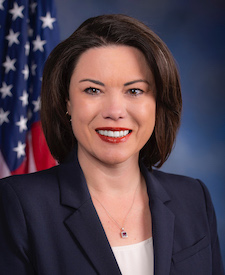
Rep. Angie Craig
Sponsored bills
Maddy summaryThis joint resolution designates October 2025 as Head Start Awareness Month to symbolically recognize the program's 60-year impact. It highlights Head Start's service to over 40 million children and families nationwide, emphasizing its role in early childhood development, health screenings, and educational support. The resolution serves as a ceremonial acknowledgment of the program's legacy and achievements, not as a policy change or funding measure. It was introduced by multiple representatives to honor Head Start's contributions to child well-being and educational outcomes.
Maddy summaryHR 5849, the USCP Act, ensures Capitol Police officers continue receiving pay during government shutdowns. It directs funds from the Treasury to cover Capitol Police salaries and expenses if discretionary funding lapses after the bill's enactment. This directly affects U.S. Capitol Police employees, guaranteeing they are paid even when the federal government is partially closed. The bill provides a specific funding mechanism to prevent pay interruptions during shutdowns. It does not alter Capitol Police duties or create new requirements.
Maddy summaryThe FARM Act requires farm equipment manufacturers (OEMs) to provide owners and independent repair shops with repair parts, tools, software, documentation, and farm equipment data on "fair and reasonable terms." This means OEMs cannot impose unreasonable restrictions (like forcing repairs through authorized dealers) or charge excessive fees for these materials. The law also prohibits manufacturers from disabling safety features or enabling modifications that would violate emissions or safety standards. The Federal Trade Commission enforces these requirements, with penalties up to $5,000 per day for violations.
Maddy summaryThe GRAD Act (HR 5850) prevents colleges from changing or ending a student's enrollment status if federal financial aid under Title IV is delayed due to a government shutdown. It directly affects students receiving federal aid and the institutions that award it. The bill amends the Higher Education Act to require schools to maintain enrollment status during disruptions caused by lapses in government funding. This ensures students aren’t penalized for aid delays beyond their control during shutdowns.
Maddy summaryHR 5816, the HELP FEDs Act, protects federal employees from student loan penalties during government shutdowns. It prevents late fees, additional interest, and credit damage on qualified education loans (like federal student loans) when employees miss payments due to a funding lapse causing government operations to halt. The law requires the Department of Education to coordinate with loan servicers and credit agencies to remove any inaccurate negative credit reports from these missed payments, applying retroactively to shutdowns after October 1, 2025. The bill does not eliminate the need to repay loans but pauses penalties and credit impacts during covered disruptions.
Head Start Shutdown Protection Act of 2025 This bill requires the Department of Health and Human Services to reimburse a state, local government, or school district that uses its funds to maintain participation in the Head Start program or the Early Head Start program during a government shutdown in which there is a lapse in federal appropriations for the programs. The Head Start programs provide comprehensive early childhood education and development services to low-income children. The programs seek to promote school readiness through the provision of educational, health, nutritional, social, and other services.
Maddy summaryThis bill requires FEMA to reimburse fire departments for specific expenses when National Fire Academy courses or activities are canceled due to a government funding gap. It covers travel costs and "backfill" expenses (like overtime pay for staff covering shifts) incurred by departments that planned to send personnel to in-person, off-campus, or virtual courses. Fire departments must submit an itemized claim within 30 days after funding resumes, and reimbursement must be issued within 90 days. Exceptions apply if cancellation is due to "good cause," such as facility closures unrelated to funding, instructor unavailability, or national emergencies.
Maddy summaryThis bill restores the pre-January 20, 2025, administrative structure of the Head Start program within the Department of Health and Human Services. It establishes a central Office of Head Start with 12 regional offices, requiring the Secretary to maintain all prior staffing levels, organizational structure, and functions. The bill prohibits the Secretary from restructuring the office or reducing staff without providing 60 days' notice to Congress and the public, ensuring continuity in program oversight. It directly affects the Office of Head Start, its regional offices, and HHS staff managing Head Start operations.
Maddy summaryThis bill prohibits the Department of Veterans Affairs (VA) from discriminating against transgender veterans in healthcare, specifically requiring the VA to provide medically necessary treatments for gender dysphoria. It directly affects transgender veterans seeking VA health services by mandating that the VA cannot deny such care or misgender patients based on gender identity. The law adds a new section to VA healthcare law explicitly banning gender identity discrimination and ensuring access to gender dysphoria treatments, aligning with existing protections under the Affordable Care Act. Additionally, it requires the VA to provide quarterly reports to Congress on how transgender veterans receive healthcare services under this new standard.