

Maddy summaryHR 7155, the Stop Fraud in Federal Programs Act of 2026, increases penalties for fraud involving federal funds and adds audit requirements for the summer food service program. It amends federal law to raise the maximum prison term for theft or bribery from 10 to 20 years and establishes a new "covered amount" for fines - defined as the greater of $250,000 or twice the value of stolen property. The bill also requires annual third-party audits of accounts for summer food service program providers, with audits submitted directly to the Secretary and prohibiting sponsors or service institutions from conducting the audits themselves. These changes directly affect contractors, program participants, and organizations receiving federal funds, particularly those operating under the National School Lunch Act.
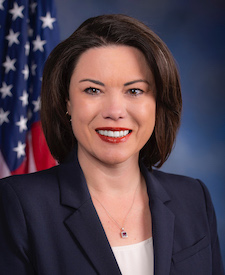
Rep. Angie Craig
Sponsored bills
Maddy summaryHR 7145 defines "essential health systems" as hospitals serving large numbers of Medicaid and low-income patients, specifically targeting non-Federal, nonprofit, or government-run hospitals that meet one of three criteria for at least two of the past three years (e.g., high Medicaid patient percentage, high uncompensated care, or top 16th percentile in state rankings for low-income care). The bill requires MACPAC to annually publish an "essential health system index" ranking qualifying hospitals nationally, by state, and within local areas, using data from Medicare reporting. Hospitals designated as essential health systems receive a five-year designation, renewable if they maintain eligibility. This framework aims to identify facilities providing critical community care for vulnerable populations through standardized metrics.
Maddy summaryThe PATH to Education Act creates federal grants to help public transportation providers partner with educational institutions like community colleges, Head Start programs, and career schools to improve transit access for students. Grant funds can be used for adding bus stops or routes near campuses, increasing service frequency, or adjusting schedules to help students and Head Start participants commute. The bill allocates $1 million in 2027, rising to $5 million by 2031, with priority given to projects involving schools where over 25% of students receive Pell Grants. This policy directly affects transit agencies and eligible schools by funding concrete transit improvements to support education access.
Maddy summaryHRES 996 is a resolution introduced by multiple House members to impeach Kristi Lynn Arnold Noem, the Secretary of Homeland Security, for alleged violations of law and the Constitution. It outlines three articles of impeachment: obstructing congressional oversight by denying access to detention facilities and withholding funds, violating public trust through warrantless arrests and excessive force (including tear gas on children), and self-dealing by awarding federal contracts to associates without competitive bidding. If approved by the House, this resolution would formally charge Noem, triggering a Senate trial to determine her removal from office. The resolution itself does not enact new policy but initiates the constitutional impeachment process against a sitting Cabinet official.
Maddy summaryHR 7060, the "No Political Enemies Act," prohibits federal officials from targeting individuals or domestic entities for exercising constitutionally protected speech or assembly. It creates an affirmative defense for defendants who show government enforcement actions were "substantially motivated" by such protected activity (Section 4), allows civil lawsuits for injunctions against politically motivated actions (Section 6), and enables damage claims if officials knowingly targeted protected speech (Section 7). The bill also requires the Justice Department to submit quarterly reports on sensitive investigations to Congress (Section 10) and bans federal funding for enforcement actions based on protected speech (Section 9). It directly affects government officials who initiate enforcement actions and covers individuals or organizations engaging in protected expression.
Maddy summaryThis bill requires the National Center for Science and Engineering Statistics (NCSES) to create and update a plan for collecting and analyzing data about the skilled technical workforce. Specifically, it amends existing law to mandate that NCSES develop this data collection plan within one year of the bill's enactment, with updates required biennially thereafter. The plan must focus on gathering data through surveys specifically about the skilled technical workforce, replacing previous requirements for general workforce assessments. This change directly affects how federal data on technical workforce needs is systematically collected and analyzed.
Maddy summaryThis bill establishes minimum salary and wage standards for paraprofessionals and education support staff in public schools. It requires states to set a minimum annual salary of $45,000 for full-time staff (increasing with inflation after 2030) and a minimum hourly wage of $30 for part-time staff (also inflation-adjusted). The federal government will provide $25 billion in FY2026, with annual funding increases, to help states implement these standards through grants. States must ensure all local schools meet these minimums within 4 years of receiving funds, with 98% of grant money allocated directly to schools for salary increases or professional development.
Maddy summaryHR 6088, the *Restoring Food Security for American Families and Farmers Act of 2025*, repeals specific sections (10101-10108) from a prior reconciliation law. This action revives previous provisions related to food security programs that were modified by those repealed sections. The bill directly affects federal food assistance and agricultural support programs by restoring their prior legal framework. It does not create new policies but reverses recent changes to existing food security measures.
Maddy summaryThis bill updates federal nutrition law to include Puerto Rico in the Supplemental Nutrition Assistance Program (SNAP), allowing it to transition from its current funding method to the same SNAP benefits available to U.S. states. Puerto Rico must submit a 180-day plan to the USDA detailing its transition to SNAP, with approval required within another 180 days. The transition period lasts up to 5 years from the bill's effective date, during which Puerto Rico would continue receiving block grants while preparing for full SNAP participation. This change directly affects Puerto Rico's 1.4 million residents who currently receive nutrition assistance under a separate funding structure.
Maddy summaryHR 5017, the Greyhound Protection Act of 2025, prohibits commercial greyhound racing, live lure training, open field coursing, and related betting across state lines. It bans activities like using live animals as bait, conducting interstate simulcast betting, and transporting greyhounds for racing purposes. The law amends the Animal Welfare Act to make these actions unlawful, with penalties including fines and up to 7 years in prison per violation. It applies to conduct occurring on or after October 1, 2027, and does not override existing state laws banning these activities. The bill directly affects greyhound racing industry participants and the animals involved in these practices.