

Historic Tax Credit Growth and Opportunity Act of 2021 This bill increases the rehabilitation tax credit and modifies certain requirements for the credit. The bill increases the rate of the credit for qualified rehabilitation expenditures in taxable years beginning after December 31, 2019, and before January 1, 2027, after which the rate reverts to 20%. The bill increases the rate of the credit to 30% for certain small projects whose qualified rehabilitation expenditures do not exceed $2.5 million. The bill also expands the types of buildings eligible for rehabilitation by decreasing the rehabilitation threshold from 100% to 50% of project expenses. It also eliminates the basis adjustment requirement for the credit and modifies rules relating to tax-exempt use property eligible for the credit.
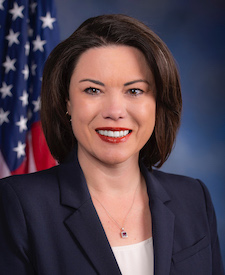
Rep. Angie Craig
Sponsored bills
Supporting Accurate Views of Emergency Services Act of 2021 or the 911 SAVES Act This bill requires the Office of Management and Budget, by 30 days after the bill's enactment, to categorize public safety telecommunicators as a protective service occupation under the Standard Occupational Classification System.
PPP Extension Act of 2021 This bill extends the Paycheck Protection Program, established to support small businesses in response to COVID-19 (i.e., coronavirus disease 2019), through June 30, 2021. Currently, the program is set to expire on March 31, 2021. For the final 30 days of the program (i.e., from June 1 until June 30), the Small Business Administration may only process applications submitted prior to June 1, and it may not accept any new loan applications. The bill excludes the budgetary effects of this bill from PAYGO scorecards under the Statutory Pay-As-You-Go Act of 2010 and from Senate PAYGO scorecards.
Resident Physician Shortage Reduction Act of 2021 This bill increases the number of residency positions eligible for graduate medical education payments under Medicare for qualifying hospitals, including hospitals in rural areas and health professional shortage areas. Current law provides for an increase of up to 200 positions per fiscal year beginning in FY2023, with a total increase of 1,000 positions; each hospital may receive up to 25 additional positions. The bill provides for an additional increase of 2,000 positions per fiscal year from FY2023-FY2029; during this period, each hospital may receive up to 75 additional positions in total under the bill and current law. Additionally, one-third of the positions that are made available under the bill must be allocated to hospitals that are already operating above applicable resident limits. The bill also requires the Government Accountability Office to report on strategies to increase the diversity of the health professional workforce, including with respect to representation from rural, low-income, and minority communities.
Strengthening Local Processing Act of 2021 This bill revises provisions related to meat and poultry processing establishments, including smaller establishments (i.e., those with between 10 and 500 employees) and very small establishments (i.e., those with fewer than 10 employees or annual sales of less than $2.5 million). For example, the Department of Agriculture (USDA) must establish a searchable database of peer-reviewed validation studies for use in developing Hazard Analysis and Critical Control Points plans for smaller and very small establishments. The bill increases the maximum federal cost share from 50% to 65% that USDA may provide to assist states in creating meat and poultry inspection programs. Additionally, USDA must conduct outreach with states that have meat and poultry inspection programs, but that do not have Cooperative Interstate Shipment programs. The Cooperative Interstate Shipment program allows state-inspected facilities to operate as federally-inspected facilities and ship their products in interstate commerce and internationally. USDA must also award competitive grants for activities to adapt production, processing, distribution, and sales systems to respond to and recover from the effects of the COVID-19 pandemic, including activities that support (1) the health and safety of meat and poultry plant employees, suppliers, and customers; (2) increased processing capacity; and (3) the resilience of the small meat and poultry processing sector. Further, the bill establishes grant programs to (1) establish or expand career training programs at community colleges, vocational schools, and universities related to meat and poultry processing; and (2) support smaller and very small establishments by offsetting the cost of training new meat and poultry processors.
American Innovation and Manufacturing Act This bill establishes within the Small Business Administration a credit facility to provide financial assistance to investment companies that finance small manufacturing businesses.
Willie O'Ree Congressional Gold Medal Act This bill provides for the award of a Congressional Gold Medal to Willie O'Ree or, if unavailable, to a member of his family, in recognition of his contributions and commitment to hockey, inclusion, and recreational opportunity.
Emmett Till and Mamie Till-Mobley Congressional Gold Medal Act of 2021 This bill provides for the posthumous presentation of a Congressional Gold Medal in commemoration of Emmett Till and Mamie Till-Mobley. After the award the medal shall be given to the National Museum of African American History and Culture.
Access to Genetic Counselor Services Act of 2021 This bill provides for coverage under Medicare of genetic counseling services that are furnished by genetic counselors. Covered services include those services, as well as incidental services and supplies, that would otherwise be covered under Medicare if provided by a physician.
Ensuring Parity in MA and PACE for Audio-Only Telehealth Act of 2021 This bill allows audio-only diagnoses that are made via telehealth to be used for purposes of determining risk adjustments to payments under Medicare Advantage. Additionally, the bill requires payments for Medicare telehealth services that are furnished during the public health emergency relating to COVID-19 (i.e., coronavirus disease 2019) to be made in the same amounts as those for in-person services.