Protecting Kids from Fentanyl Act This bill allows states and local educational agencies to use unexpended COVID-19 elementary and secondary school emergency relief funds for additional purposes. In particular, these funds may be used for (1) purchasing naloxone or other opioid antagonists; (2) providing training to school nurses, teachers, school administrators, and school resource officers on how to administer naloxone or other opioid antagonists; and (3) providing fentanyl awareness classes or materials to students.
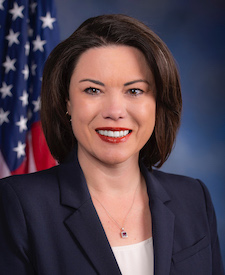
Rep. Angie Craig
Sponsored bills
Social Security Fairness Act of 2021 This bill repeals provisions that reduce Social Security benefits for individuals who receive other benefits, such as a pension from a state or local government. The bill eliminates the government pension offset , which in various instances reduces Social Security benefits for spouses, widows, and widowers who also receive government pensions of their own. The bill also eliminates the windfall elimination provision , which in some instances reduces Social Security benefits for individuals who also receive a pension or disability benefit from an employer that did not withhold Social Security taxes. These changes are effective for benefits payable after December 2021.
Telehealth Benefit Expansion for Workers Act of 2022 This bill expands the exception for stand-alone telehealth benefits plans from certain requirements that generally apply to private health insurance plans under the Patient Protection and Affordable Care Act. Under the bill, employers may offer stand-alone telehealth benefits to all employees. This includes employees who are eligible for enrollment in their employer's group health plan. Currently, employers may offer telehealth benefits to employees who are otherwise ineligible for the employer's group health plan. This flexibility applies during any plan year beginning before the end of the COVID-19 emergency.
Peace Corps Reauthorization Act of 2022 This bill reauthorizes through FY2024 and modifies operations of the Peace Corps. Changes include increasing the readjustment allowance paid to volunteers when their service terminates and providing statutory authority for an executive order that grants returned volunteers noncompetitive eligibility for federal civil-service positions. Additionally, the bill entitles returned volunteers to sixty days of health care benefits. The Peace Corps must also provide volunteers with information about enrolling in U.S. health plans before service termination and mental health care during and after service. The bill also includes provisions to address involuntary termination of Peace Corps service in emergencies, including by expediting re-enrollment of involuntarily terminated volunteers. The Peace Corps must also adequately insure volunteers' safety and must coordinate with the Department of State to periodically update agreements concerning the security of Peace Corps volunteers and staff abroad. The bill also authorizes Peace Corps to recruit domestically based volunteers to serve in the United States at the request of another agency or to provide services in a host country virtually, modifies the Peace Corps National Advisory Council's membership and functions, expands whistleblower protections for volunteers, increases the rate of pay that applies to a volunteer's workers compensation claim, requires Peace Corps to implement a zero tolerance drug use policy regarding volunteer involvement with illegal drugs, and emphasizes the use of the internet in Peace Corps programs. Furthermore, the bill requires reporting, including on the provision of mental health services to volunteers.

Maddy summaryHR 8868, the Solidify Iran Sanctions Act of 2022, repeals the sunset provision in the 1996 Iran Sanctions Act, making existing sanctions against Iran permanent. It removes the expiration date from the sanctions regime, ensuring they remain in effect without needing periodic renewal. This bill directly affects the enforcement of current U.S. sanctions targeting Iran’s weapons programs, ballistic missile development, and support for terrorism, as defined under the 1996 Act. The key change is procedural, maintaining the status quo of existing sanctions without introducing new penalties or altering the scope of prohibited activities.
Improving Seniors' Timely Access to Care Act of 2022 This bill establishes several requirements and standards relating to prior authorization processes under Medicare Advantage (MA) plans. Specifically, MA plans must (1) establish an electronic prior authorization program that meets specified standards, including the ability to provide real-time decisions in response to requests for items and services that are routinely approved; (2) annually publish specified prior authorization information, including the percentage of requests approved and the average response time; and (3) meet other standards, as set by the Centers for Medicare & Medicaid Services, relating to the quality and timeliness of prior authorization determinations.
Supporting Medicare Providers Act of 2022 This bill extends a payment increase under Medicare's physician fee schedule through the end of 2023 (currently set to expire at the end of 2022).
Maddy summaryHRES 1346 is a non-binding congressional resolution supporting the designation of September 11-17, 2022, as "Celebrate Community Week." It recognizes the community service efforts of Lions Clubs International, Rotary International, Kiwanis International, and Optimist International, highlighting their global volunteer projects focused on youth development, health, education, and local needs. The resolution encourages these organizations to continue promoting community service and volunteerism, particularly for young people. It does not create new laws or funding but formally expresses congressional backing for their initiatives.
Ride-Along Resolution This resolution requires any Member of the House of Representatives serving a first term as a Member of the House to participate in one shift in a passenger seat of a law enforcement vehicle observing the work day of a local law enforcement officer in the respective congressional district of the Member not later than one year after the date such Member is sworn in. The Committee on House Administration shall promulgate regulations to carry out this resolution. If the Committee on Ethics determines that a Member has not satisfied the requirement to participate in such a ride-along by the deadline, the committee must publish the name of the Member on a readily available, public list on the committee's website; and cause to be published in the Congressional Record information with respect to the failure of the Member to satisfy such requirement.
Maddy summaryThe You Earned It, You Keep It Act would make Social Security benefits tax-free (by removing them from gross income), establish a $250,000 threshold above which Social Security taxes no longer apply to wages and self-employment income, and adjust Social Security benefit calculations to include earnings over $250,000. This would primarily affect high earners with incomes exceeding $250,000, particularly those with multiple employers who would have their Social Security taxes recalculated to prevent double taxation on income above the threshold. The bill would change how Social Security benefits are calculated to include higher earnings, potentially increasing benefits for higher earners who reach the $250,000 threshold. The provisions would take effect for calendar years after 2022 and taxable years beginning after December 31, 2022.