

Maddy summaryThis bill is a non-binding resolution that expresses the House of Representatives' sentiment to honor public servants for their dedication to the United States. It specifically acknowledges the work of federal, state, and local government employees, as well as uniformed service members, who deliver essential services and support the economy. The resolution calls on the American public to observe Public Service Recognition Week with ceremonies and activities that recognize these contributions. Because it is a symbolic expression of the House's feelings rather than a law with enforceable rules, it does not create new policies or mandate specific actions.
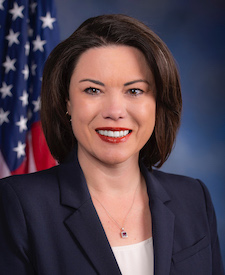
Rep. Angie Craig
Sponsored bills
Maddy summaryThis bill proposes to ban Members, officers, and employees of the House of Representatives from trading in prediction markets that bet on specific events or contingencies. The rule would prohibit these individuals from entering into contracts or agreements involving excluded commodities, though it explicitly allows for standard insurance policies and legal sports betting. Additionally, the resolution expresses the House's preference that the executive and judicial branches adopt similar restrictions to prevent conflicts of interest.
Maddy summaryH.R. 1243 is a House resolution that formally recognizes May as Asian American, Native Hawaiian, and Pacific Islander Heritage Month to celebrate the contributions of these communities to U.S. history. The bill highlights the diverse populations, historical milestones, and significant achievements of Asian Americans, Native Hawaiians, and Pacific Islanders in government, the military, and society. It also acknowledges the ongoing challenges faced by these groups, including a rise in hate crimes and historical discrimination. As a commemorative resolution, the measure does not create new laws or funding but serves to express official congressional appreciation and awareness.
Maddy summaryThe GUARD Act requires companies that offer AI chatbots designed to simulate human friendship to verify the age of every user and block access for anyone under 18. To comply, these platforms must collect verifiable age data, clearly disclose that the chatbot is not a human, and ensure the AI does not claim to be a licensed professional like a therapist or doctor. The law also makes it a federal crime to design or distribute such chatbots that encourage minors to engage in sexually explicit acts or promote self-harm and violence, with penalties of up to $100,000 per violation.
Maddy summaryHR 2424, the Modern, Clean, and Safe Trucks Act of 2025, repeals a 12% federal excise tax on new heavy trucks, tractors, and trailers. This tax currently adds significant costs - $7,000+ for trailers, $20,000+ for clean diesel trucks, and up to $50,000 for advanced technology trucks - discouraging replacement of older, less efficient vehicles. The bill directly affects truck manufacturers, dealers, and fleet operators by removing this cost barrier, making newer, cleaner models more affordable. It aims to accelerate the adoption of modern trucks with improved safety and environmental features, particularly benefiting electric and alternative-fuel vehicles that face higher upfront costs.
Maddy summaryThis bill, titled the Protecting Human Rights and Public Health in Foreign Assistance Act, aims to cancel specific regulations issued by the Department of State. It directly affects the federal government by prohibiting any department or agency from enforcing, implementing, or proposing rules related to protecting life, combating discriminatory equity ideology, and combating gender ideology in foreign aid programs. The legislation treats these cancelled rules as if they never existed, effectively nullifying their impact on future foreign assistance policies.
Maddy summaryThe Investing in the American Dream Act expands eligibility for Small Business Administration loans to include small businesses owned by certain non-citizens. Specifically, it allows businesses to qualify if they are at least 51 percent owned and controlled by individuals who are lawfully present in the United States and authorized to work, such as refugees, asylees, permanent residents, and specific nonimmigrant visa holders. The bill also permits businesses owned by individuals living outside the United States to apply for these loans. This change aims to broaden access to federal financial support for small enterprises by removing previous restrictions based on the citizenship or permanent residency status of the business owners.
Maddy summaryThis legislation establishes a new Commission on Americans Living Abroad within the executive branch to study the impact of federal laws on U.S. citizens residing overseas. The ten-member commission will be appointed by the President and tasked with examining issues such as tax compliance, access to federal benefits, and voting rights for Americans living abroad. Within one year of enactment, the commission must submit a report to Congress and the President containing findings and recommendations to reduce regulatory burdens on Americans living abroad. The commission is authorized to operate for two years with a funding allocation of $2 million before it terminates.
Maddy summaryThis bill prohibits the Department of Homeland Security from using federal funds to create or expand new immigration detention facilities, including warehouses, tents, and modular structures. It directly affects immigration enforcement agencies by banning the construction, renovation, or operation of non-traditional detention centers and preventing the transfer of funds to such projects. The legislation requires any money previously allocated for these facilities to be redirected toward affordable healthcare and housing services instead. Effective immediately upon enactment, the ban applies to all existing federal funds and prevents the use of current budgets for establishing or operating alternative detention models.
Maddy summaryThis resolution designates April as "Community College Month" to recognize the significance of community colleges across the United States. It celebrates over 1,000 institutions for their role in providing accessible higher education and workforce training, and for contributing to the nation's economic prosperity.