

Maddy summaryThe RIFLE Act of 2025 amends federal firearm licensing laws to create a more structured process for addressing violations by licensed firearm businesses. It establishes graduated penalties for violations, with non-willful violations requiring notification and a reasonable timeframe to correct, while willful violations could lead to license suspension (up to 30 days for first-time offenders) or revocation. The bill adds procedural protections including written notice requirements, administrative hearings with due process, and a 90-day period to liquidate inventory after license expiration or revocation. It also requires the Attorney General to reconsider denied applications from former licensees and reverse certain past license revocations made under specific ATF orders. The bill aims to balance enforcement with due process for firearm licensees while maintaining public safety standards.
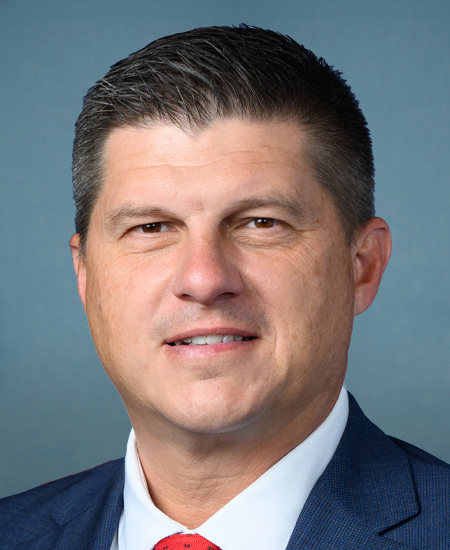
Rep. Brad Finstad
Sponsored bills
Maddy summaryHR 7 prohibits federal funds from being used for abortions or health insurance plans covering abortion, with exceptions for pregnancies resulting from rape, incest, or when a woman's life is endangered. It blocks federal premium tax credits under the Affordable Care Act for health plans covering abortion (except in specified cases) and requires clear disclosure of abortion coverage and related surcharges in plan materials. The bill allows individuals or employers to purchase separate abortion coverage using non-federal funds, such as out-of-pocket payments, without affecting federal subsidies. It directly affects federal health programs, ACA marketplace plans, and health insurance issuers offering coverage that includes abortion services.
Maddy summaryHR 578, "Sarah’s Law," requires mandatory detention for certain non-citizens (aliens) charged with crimes resulting in death or serious bodily injury. It directly affects non-citizens facing such charges and their victims' families. Key provisions mandate that the Department of Homeland Security detain these individuals immediately and notify victims or their closest living relatives (like parents or spouses) about the alien’s identity, immigration status, custody details, and removal efforts. The bill adds specific categories of non-citizens to the mandatory detention list, including those whose visas were revoked or who are deportable for prior immigration violations. This creates a formal process for victim notification while expanding detention requirements under immigration law.
Maddy summaryHR 502, the Protecting Infrastructure Investments for Rural America Act, modifies the rural surface transportation grant program under Title 23, U.S. Code. It redefines "small community" as areas outside urbanized zones with populations of 5,000 or less (down from 200,000), and requires that 5% of annual program funds support projects in these communities. The bill increases the federal share for eligible projects in small communities to 90% and mandates that projects must benefit economic development or quality of life in the community. These changes directly affect rural areas and small towns by prioritizing infrastructure funding for the smallest communities.
Maddy summaryThis bill amends U.S. immigration law to deny entry to noncitizens convicted of or admitting to certain violent crimes, and to make them deportable. It directly affects noncitizens who have been convicted of or admitted to sex offenses, domestic violence, stalking, child abuse/neglect, or violating protection orders involving threats of violence. Key provisions add these offenses as grounds for denying entry (inadmissibility) under Section 212(a)(2) and as grounds for deportation (deportability) under Section 237(a)(2). The law specifies that domestic violence and protection order violations are included regardless of whether the jurisdiction received specific federal grant funding.
Maddy summaryThis bill creates a new tax deduction for cash tips received by workers in specific service occupations that traditionally accepted tips before 2024 (like servers, barbers, and beauticians). It allows a deduction of up to $25,000 per year for qualified tips included on employer statements, but excludes employees who earned over a certain threshold ($220,000 in 2023) from the same employer the previous year. The deduction applies to taxable years beginning after December 2024 and is designed to reduce taxable income for eligible workers. It directly affects service industry workers in qualifying tip-dependent jobs who receive cash tips, not the general public.
Maddy summaryThis bill makes permanent the increased standard deduction amounts for individual income tax filers. It raises the single filer standard deduction from $4,400 to $18,000 and the married filing jointly amount from $3,000 to $12,000 under the Internal Revenue Code. The bill also requires annual inflation adjustments to these amounts, using a specific formula based on the cost-of-living adjustment. These changes directly affect millions of American households that use the standard deduction instead of itemizing deductions on their federal tax returns.
Chiropractic Medicare Coverage Modernization Act of 2025 This bill expands Medicare coverage of chiropractic services to include all services provided by chiropractors, rather than only subluxation corrections through manual manipulation of the spine.
This bill increases the annual limit on the tax credit for qualified railroad track maintenance expenses (also referred to as the short line railroad tax credit) and expands eligibility for claiming the credit. Under current law, the tax credit is limited each tax year to $3,500 multiplied by the sum of the number of miles of railroad track owned or leased by the taxpayer (miles owned or leased) and the number of railroad track miles assigned to the taxpayer by a Class II or III railroad (miles assigned). This bill increases the annual limit to $6,100 multiplied by the sum of miles owned or leased and miles assigned. The $6,100 amount used in the calculation of the tax credit limit is adjusted for inflation for tax years beginning after 2025. The bill also expands eligibility for the tax credit to include gross expenses for maintaining railroad tracks owned or leased as of January 1, 2024. Under current law, the tax credit is limited to gross expenses for maintaining railroad tracks owned or leased as of January 1, 2015.
Maddy summaryHR 551, the "Make the Migrant Protection Protocols Mandatory Act of 2025," would require U.S. border officials to apply the Migrant Protection Protocols (MPP) to all eligible asylum seekers at the southern border, rather than allowing discretion. The bill amends the Immigration and Nationality Act to change the language from "may" to "shall" in Section 235(b)(2)(C), meaning officials must send asylum seekers back to Mexico to await their immigration hearings. This directly affects asylum seekers who would no longer have the option of remaining in the U.S. during processing. The key mechanism is a technical legal change to make the existing MPP policy mandatory for all applicable cases.